Large or giant
We call a hosta large when its leaf mound reaches about 50–75 cm, and giant above that. For planning, width matters more than height: a mature giant can cover two square metres, and its flower stems rise well above the leaves. Check the spacing on each product page before you choose the spot.
Choosing a big hosta by colour
Blue
Most big blues descend from Hosta sieboldiana. Elegans is the old garden classic, Blue Angel builds an elegant mound of heart-shaped, blue-grey leaves, and Big Daddy has round, cupped, heavily puckered ones.
Gold and green
Sum and Substance is one of the largest hostas of all, with thick chartreuse-gold leaves. Green giants such as T Rex, Kingsize and Lakeside Maverick make a calm, lush backdrop, and Royal Standard adds fragrant flowers in late summer. Fried Bananas brings gold at a slightly smaller scale and copes with more sun.
Variegated
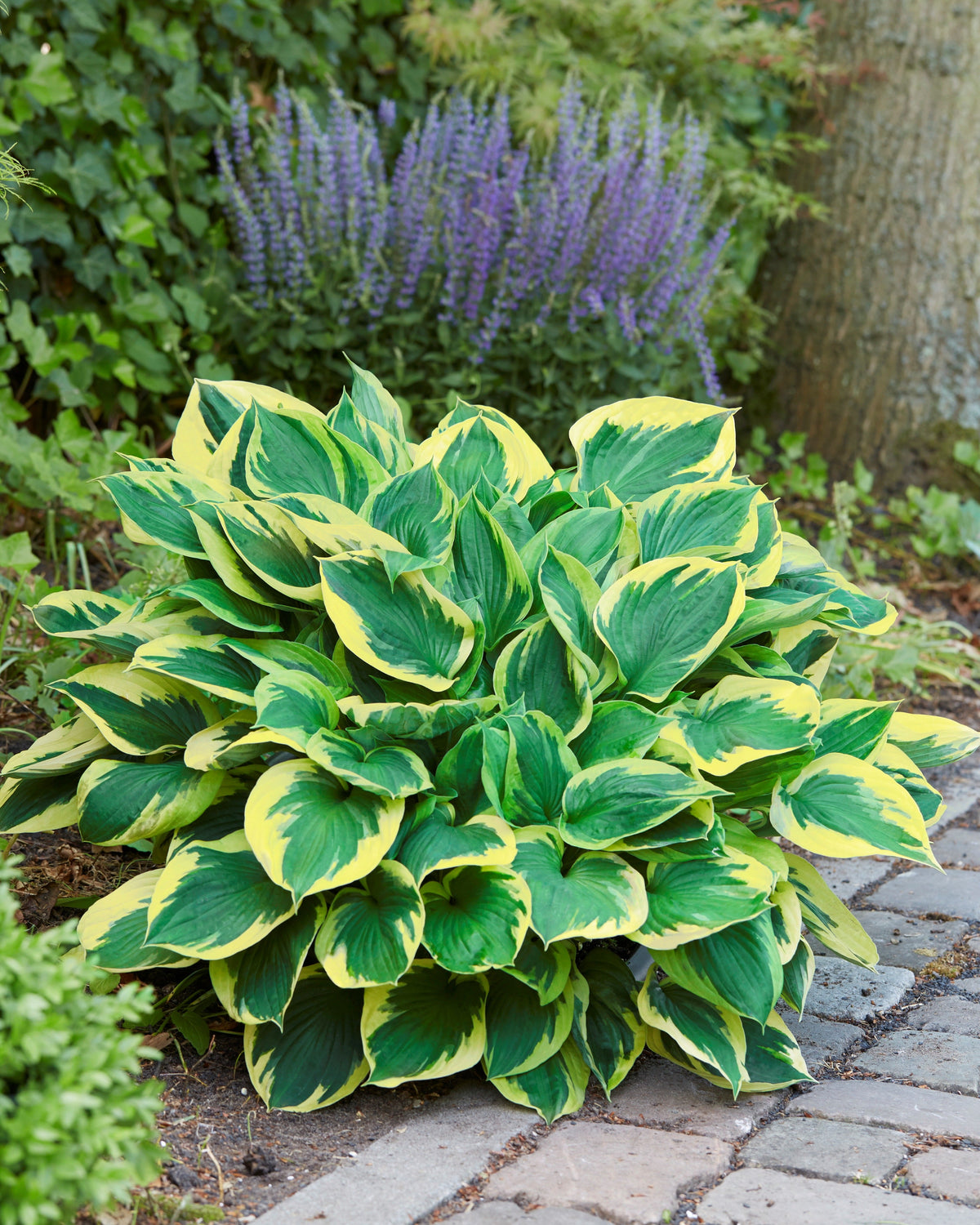
Sagae and Liberty light up the back of a border with cream and gold margins. Regal Splendor edges silvery blue leaves in white, Earth Angel edges blue-green ones in yellow, and Wu-La-La is a patterned sport of Empress Wu, one of the biggest hostas ever raised. Winter Snow, new in our range, is a white-edged sport of Sum and Substance.
Planting for the long run
A big hosta stays in one place for many years, so choose the spot with care: room for the full width, shelter from strong wind that can tear large leaves, and some distance from tree trunks, where roots take most of the water. Prepare a wide area rather than a single hole, mixing in plenty of compost, and water deeply in dry spells, as large leaves lose a lot of water on warm days.
Flowers on a grand scale
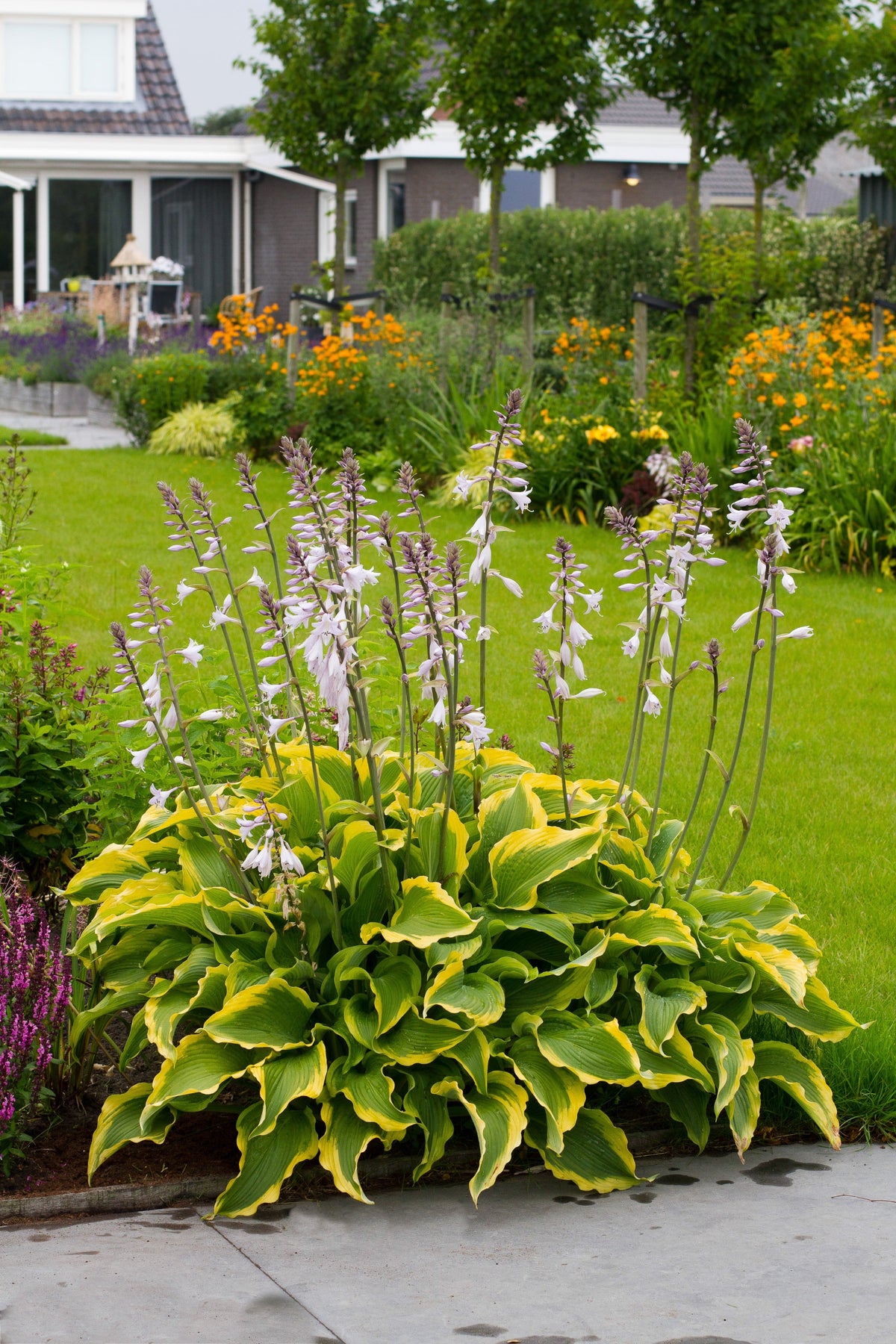
Big hostas often have tall flower stems to match. Victory carries near-white flowers well above its leaves in midsummer, Blue Angel has near-white flowers too, and Sum and Substance flowers pale lavender in August. If you grow giants mainly for their leaves, cut the stems once the flowers fade, or even before, to keep the outline clean.
Showing a giant at its best
Give a giant a plain background, such as a hedge, a fence or the dark trunk of a tree, so its outline stands out. Keep the plants in front of it low and leave a little space around it: a big hosta looks most impressive when the whole mound can be seen at once.
Filling the space while they grow
A young giant looks lost at its final spacing for the first year or two. Fill the gaps with ferns or with spring bulbs: snowdrops, crocuses and small daffodils flower before the hosta unfurls, and its leaves later hide the fading bulb foliage.