


Pre-Ordering Hostas: How It Works, When We Ship and What to Expect
Order and pay now, and your bare-root hostas ship from 1 March. Here is how pre-ordering works and what to expect when your plants arrive.
3 min read

Mouse Ears hostas are miniature and small hostas for the places where a big leaf will not fit: a trough, a pot on a shady step, a pocket in a rock garden. All of them carry “Mouse” in their names, and Blue Mouse Ears among them was Hosta of the Year in 2008.
Mouse Ears hostas
Between them they cover several leaf colours. Blue Mouse Ears is blue and resists slugs well, and Ruffled Mouse Ears gives the same cool tone a wavy edge. Funny Mouse, a sport of Blue Mouse Ears, frames blue leaves in white, Mighty Mouse rims green leaves in yellow, and Sun Mouse is yellow from edge to edge.
Each pack holds two plants of one variety, sent bare-root between 1 March and 1 July and covered by our 100% growing guarantee.
The name comes from Blue Mouse Ears, a miniature with small, rounded leaves. The other varieties here share the word “Mouse” and the scale, so the name tells you the size before you read a label: all of them are miniature or small, which on our size scale means up to about 30 cm tall.
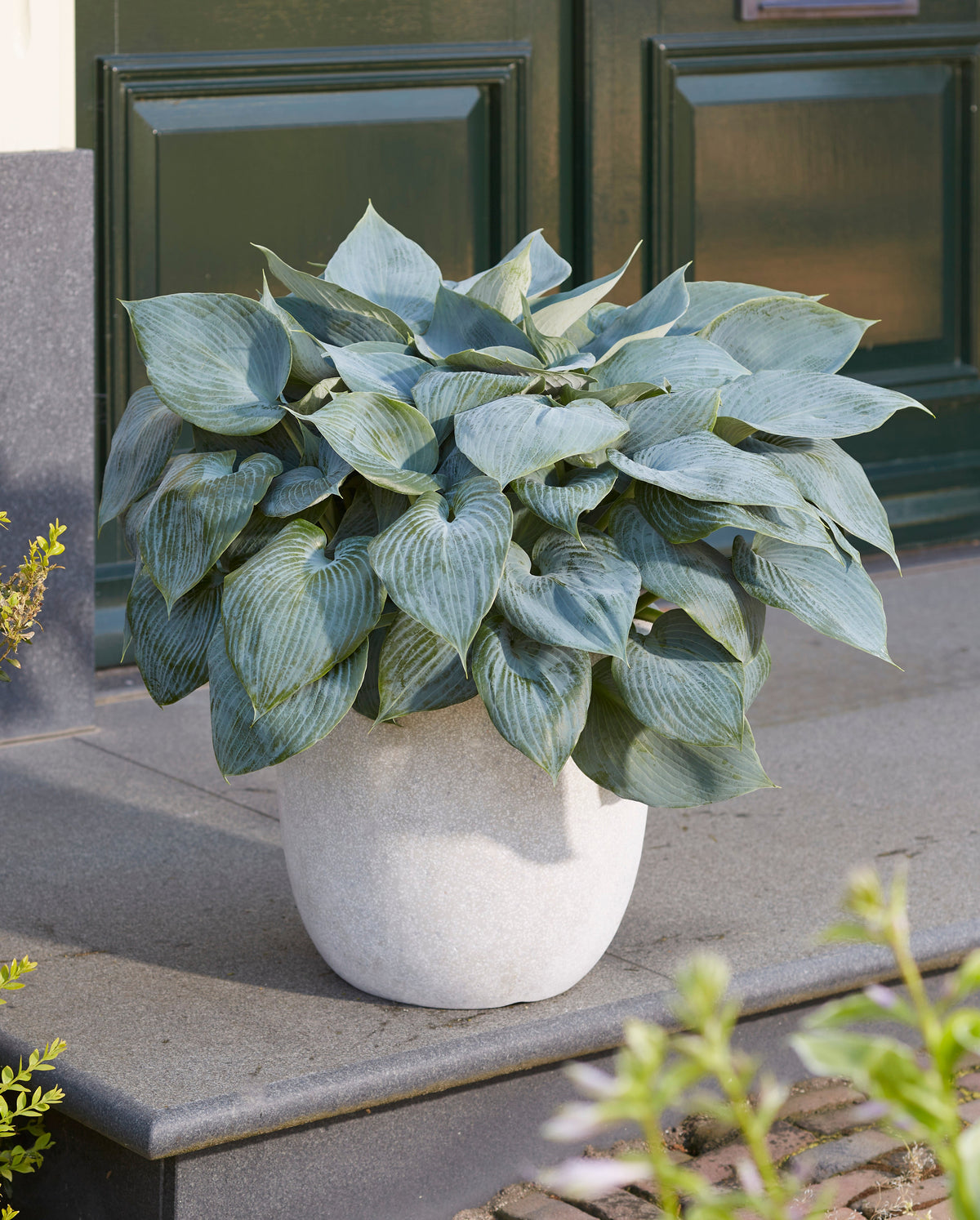
Blue Mouse Ears is the place to start: a miniature with a waxy blue surface and good slug resistance. Ruffled Mouse Ears is a little larger, a small hosta with wavy, blue-green leaves that add texture when you look down into a pot.
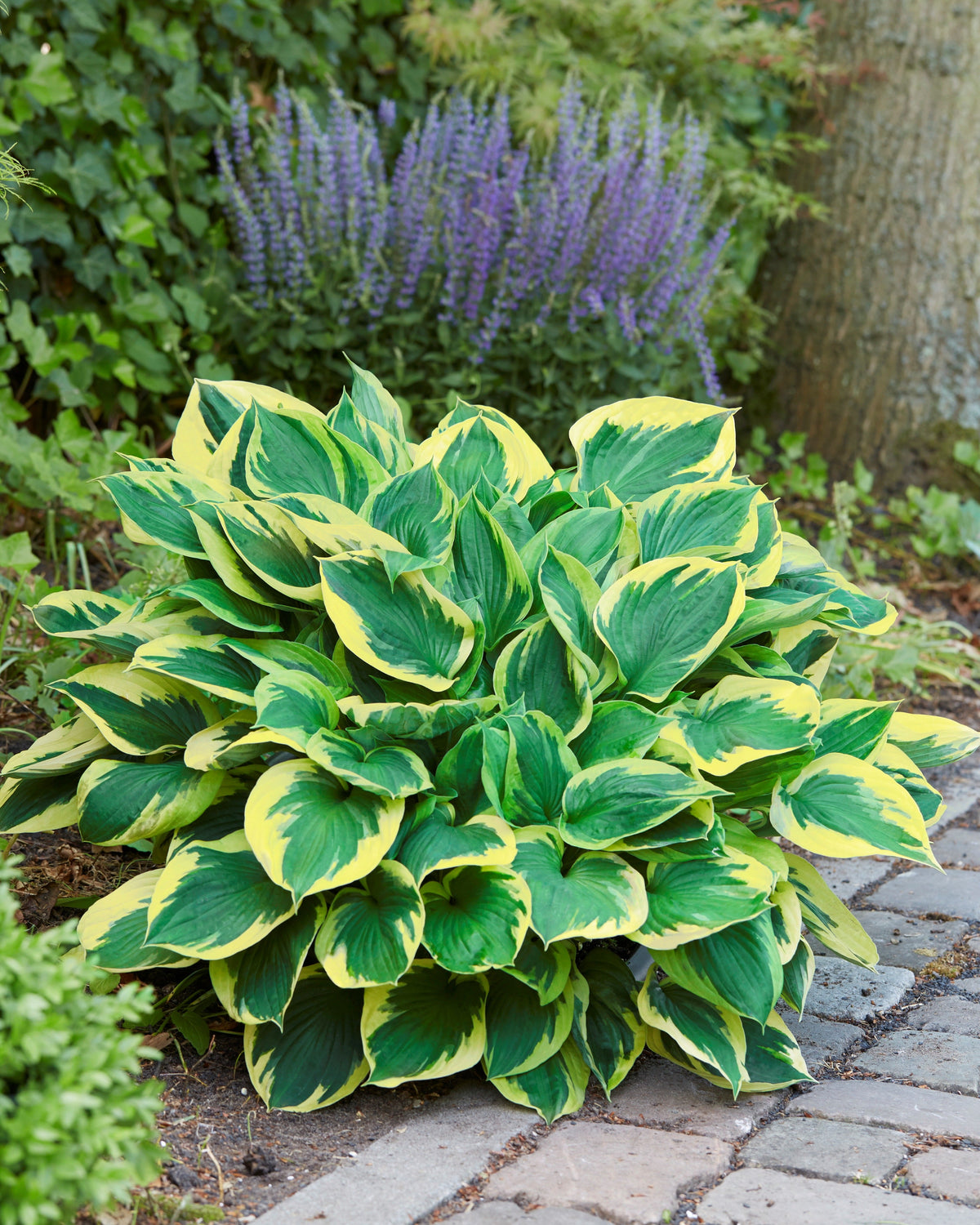
Funny Mouse keeps the blue of its parent and adds a white margin, so it reads clearly even in a dim corner. Mighty Mouse is a miniature with green leaves and a yellow rim, bright enough to lift a trough of plain-leaved plants.
Sun Mouse is the only all-yellow one. It likes a little morning sun, which keeps the colour bright, but not the hot afternoon sun.
Small hostas are easy to lose in a big border, so give them a stage of their own. A shallow trough on a terrace holds two or three side by side; a single plant fills a small pot; and in a rock garden they sit neatly among the stones. In open ground, leave about 30 cm between plants, or set them along the front of a shady bed where their leaves stay in view.
Little pots dry out much faster than a bed, and there is not much compost in them to hold water. Choose a pot that drains through the bottom, fill it with humus-rich compost, then water as soon as it feels dry a finger’s depth down. Shade or partial shade suits the whole group, and the blue varieties keep their colour longest out of the sun.
For a small planting that does not look uniform, combine Blue Mouse Ears, Mighty Mouse and Sun Mouse: blue, green-and-yellow and yellow at the same height. If you prefer one colour with different patterns, pair Blue Mouse Ears with Funny Mouse and Ruffled Mouse Ears instead. More compact varieties without the name are in our miniature and small hostas.
They stay miniature or small, up to about 30 cm tall. Blue Mouse Ears, Mighty Mouse and Sun Mouse are miniatures; Funny Mouse and Ruffled Mouse Ears are a size up, but still small. Planted out, they need roughly 30 cm each.
Yes, a pot or trough is where they look best. One plant per pot is plenty; make sure the pot drains, and check the compost often, because a small pot loses water fast.
Blue Mouse Ears, which has good slug resistance and is also in our slug-resistant hostas. With the other varieties, look over the young shoots in spring, especially after rain.
Only a little. Sun Mouse enjoys morning sun, and all of them want protection from hot afternoon sun. The blue ones colour best in shade.
Yes. Funny Mouse is a sport of Blue Mouse Ears: the same blue leaves, now with a white margin.
Order and pay now, and your bare-root hostas ship from 1 March. Here is how pre-ordering works and what to expect when your plants arrive.
3 min read
Bare-root or potted hostas? An honest comparison of price, choice, timing and how well each grows, so you can pick the right one for your garden.
4 min read
Problems & pests
Crisp brown edges on hosta leaves are usually scorch: the leaf loses water faster than the roots can supply it, because of dry soil, hot afternoon sun, wind or competing roots. Check the soil moisture and the light first. If the brown streaks stop at the veins, or the stems collapse at the base, look for foliar nematodes or crown rot instead.
4 min read