Bare-Root or Potted Hostas: Which Should You Buy?
Quick answer
Bare-root or potted hostas? An honest comparison of price, choice, timing and how well each grows, so you can pick the right one for your garden.
On this page
By Vitaliy Tonenchuk, Dutch Bulbs B.V. Updated 2 November 2026.
In summer a garden centre sells hostas in pots, fully leafed out. In winter an online nursery sells them bare-root: dormant, with no leaves at all. Both grow into the same plant. The difference is price, choice, timing and what you see on day one.
Quick answer: Choose bare-root if you want the widest choice of varieties at a lower price and can plant in early spring, then wait a few weeks for leaves. Choose potted if you need an instant leafy plant or are planting in summer. Planted at the right time, a bare-root hosta catches up with a potted one within a season or two.
What is the difference?
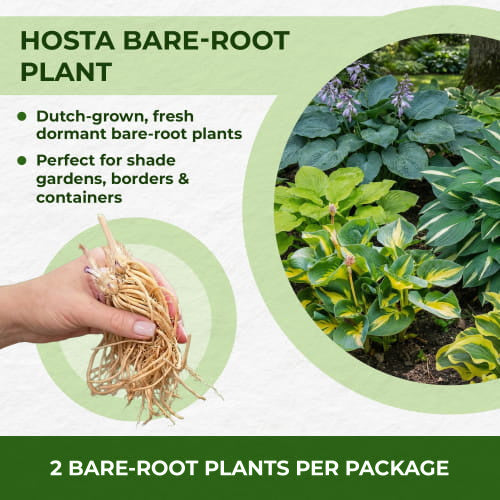
A potted hosta has been grown in a container and is sold in leaf. A bare-root hosta is a dormant division of the clump, sold without soil, with its fleshy roots and buds (pips). It has no leaves yet because hostas die back in autumn and rest through winter. What arrives in the parcel is shown in our bare-root guide.
Side by side
| Bare-root | Potted | |
|---|---|---|
| What you get | Dormant roots and buds, no leaves | A leafy plant in a pot |
| Choice | Very wide: we offer more than 300 varieties | Limited to what is grown in pots |
| Price | Lower: no pot, compost or weight to ship (from €4.90 for two plants) | Higher |
| Best planting time | Early spring, while dormant | Spring, or later with extra watering |
| Effect on day one | None yet; leaves unfold in a few weeks | Instant |
| Roots | Visible and healthy on arrival | Can be pot-bound |
When should you plant each?
University of Minnesota Extension says hostas can be planted throughout the growing season but spring is generally best, and summer plantings need more water until established. University of Georgia Extension is more specific: early spring, as the leaves begin to emerge. That is exactly when a bare-root hosta is meant to go in; a potted plant gives you more flexibility, which is its main advantage.

Do bare-root hostas grow as well?
Yes, planted at the right time. Hostas have fleshy roots that store moisture and nutrients, which University of Minnesota Extension says helps new divisions establish. Expect the first season to be about root-building; see your hosta’s first year.
How to plant each
- Soak bare-root plants in water for an hour or two.
- Choose light or dappled shade and soil that drains. University of Nebraska–Lincoln Extension warns that poorly drained sites cause root and crown rot (best soil for hostas).
- Set the level. Minnesota Extension: bare-root crowns level with the soil, growing tips visible; potted plants at the same level as in the pot.
- Firm, water, and keep moist through the first summer.
- Mulch after the soil warms, away from the crown.
Which should you choose?
Bare-root for a border or ground cover that needs several plants, for a rare variety, or if you can plant in March or April. Potted if you need a full plant today or are planting in midsummer. Many gardeners do both: bare-root for the main planting, one potted plant for instant effect.
Hosta Blue Mouse Ears – 2 plants · €4.90
A miniature blue hosta with thick, slug-resistant leaves; ideal for pots. Pre-order now, pay at checkout, and your plants ship from 1 March as bare-root divisions from Holland.
Pre-order Blue Mouse Ears → Slug-resistant hostas · Large and giant hostas
We ship within the EU.
Frequently asked questions
Is a bare-root hosta dead?
No, dormant. The buds grow into leaves once the plant is in the ground and the weather warms.
When should I plant bare-root hostas?
As soon as the ground is workable in spring, typically March to April (when to plant hostas).
Can bare-root hostas go in pots?
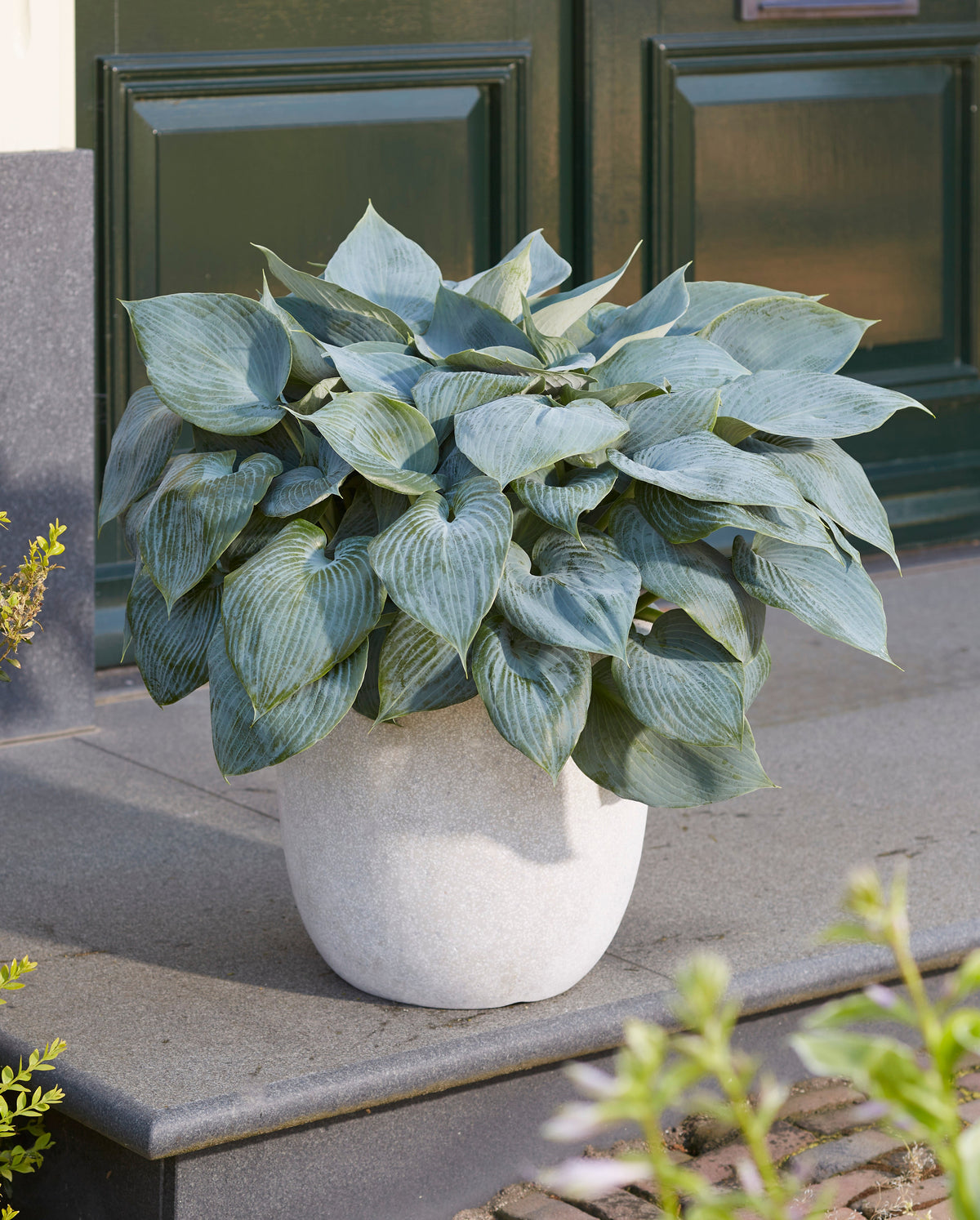
Yes, in a deep pot with drainage holes (hostas in pots).