Your hosta's first year: what to expect after planting
Quick answer
A newly planted hosta spends its first year making roots. Shoots usually appear two to four weeks after planting, the leaves stay small, and flowers tend to wait until the second year. Keep the soil moist all summer, protect young shoots from slugs and frost, and expect a full clump in three to five years.
On this page
Most of what a hosta does in its first season happens out of sight, underground. Here we follow a bare-root division from planting day to its third summer: what is normal, where it needs your help and when you can stop worrying.
What you plant: a division, not a young plant in leaf
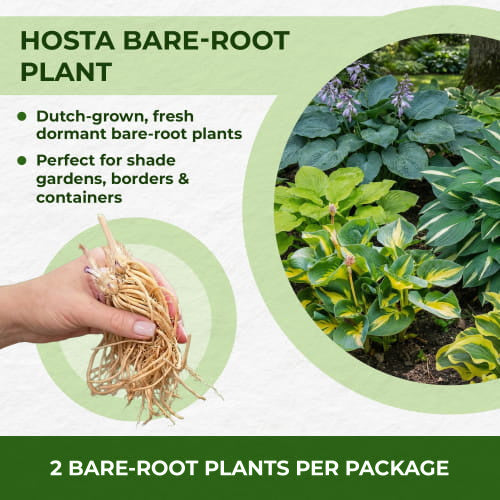
Our hostas travel as bare-root divisions, two plants of one variety in each pack. A division is a piece cut from a mature clump that the grower has lifted from the field: a crown with at least one firm bud, a bundle of roots, no soil and usually no leaves at all. Divisions leave us between 1 March and 1 July, while the plants are dormant or just stirring, and you can order whenever you like. Our sizes & quality explains how every division is checked before it is packed, and our guide to what arrives in a bare-root parcel shows a healthy one.

Planting takes a few minutes:
- Soak the roots in water for 1–2 hours while you get the spot ready.
- Dig a hole roughly double the width of the root spread and loosen the soil at the bottom.
- Spread the roots out and set the crown, where the buds begin, level with the surface or up to 2–3 cm below it.
- Fill the hole, firm the soil lightly with your hands and water thoroughly, even when the ground already feels damp.
Depth is the one detail worth getting exactly right. Iowa State University advises keeping the crown no deeper than 2.5–5 cm, and Walters Gardens, a large American wholesale grower of perennials, puts the buds at soil level or a fraction under it. Both say the same thing in the end: do not bury the crown. For soil preparation and spacing, see our planting and care guide.
How long before a new hosta shows shoots?
Usually two to four weeks. Iowa State gives that range for bare-root perennials and adds that the weather and the soil decide where in it your plant lands, which matches the few weeks our planting guide mentions. In a cold, late spring, expect the longer end.
Hostas are late risers anyway. The RHS describes them as dormant from late autumn until mid-spring, so in a cool March even established clumps elsewhere in the bed may show nothing yet. While you wait, keep the soil just moist rather than wet, and leave the division alone: digging it up to look does it no good. If four weeks have gone by in mild weather and there is still no sign of a shoot, our guide to a hosta that is not coming up lists what to check.
Protecting the young shoots
The first shoots are the most fragile part of a hosta's year, and two things threaten them.
- Slugs and snails. They prefer the soft, unfurling shoots, and the RHS lists hostas among the plants they damage most. Go out with a torch after dark or after a shower and pick off what you find. Thick-leaved slug-resistant hostas lose less, but even their first shoots are tender. Our guide to slugs and snails on hostas compares the methods that actually work.
- Late frost. Hostas are fully hardy, but a cold night can scorch leaves that have only just opened. When frost is forecast after the shoots are up, the RHS suggests covering them overnight with two or three layers of fleece.

Watering, mulching and feeding in the first summer
Water matters more than anything else this year. A division arrives with a compact root system and spends its first season building new roots as well as leaves, so a dry spell hits it harder than it would hit an established clump.
- How much. Check the soil once or twice a week, as Iowa State suggests, and water whenever it is dry around the roots. The RHS aims for soil that stays at least slightly damp 15 cm down. In summer, University of Missouri Extension reckons a hosta uses about 4 cm of water a week, roughly 40 litres for every square metre, so rain counts: check the soil before you reach for the hose.
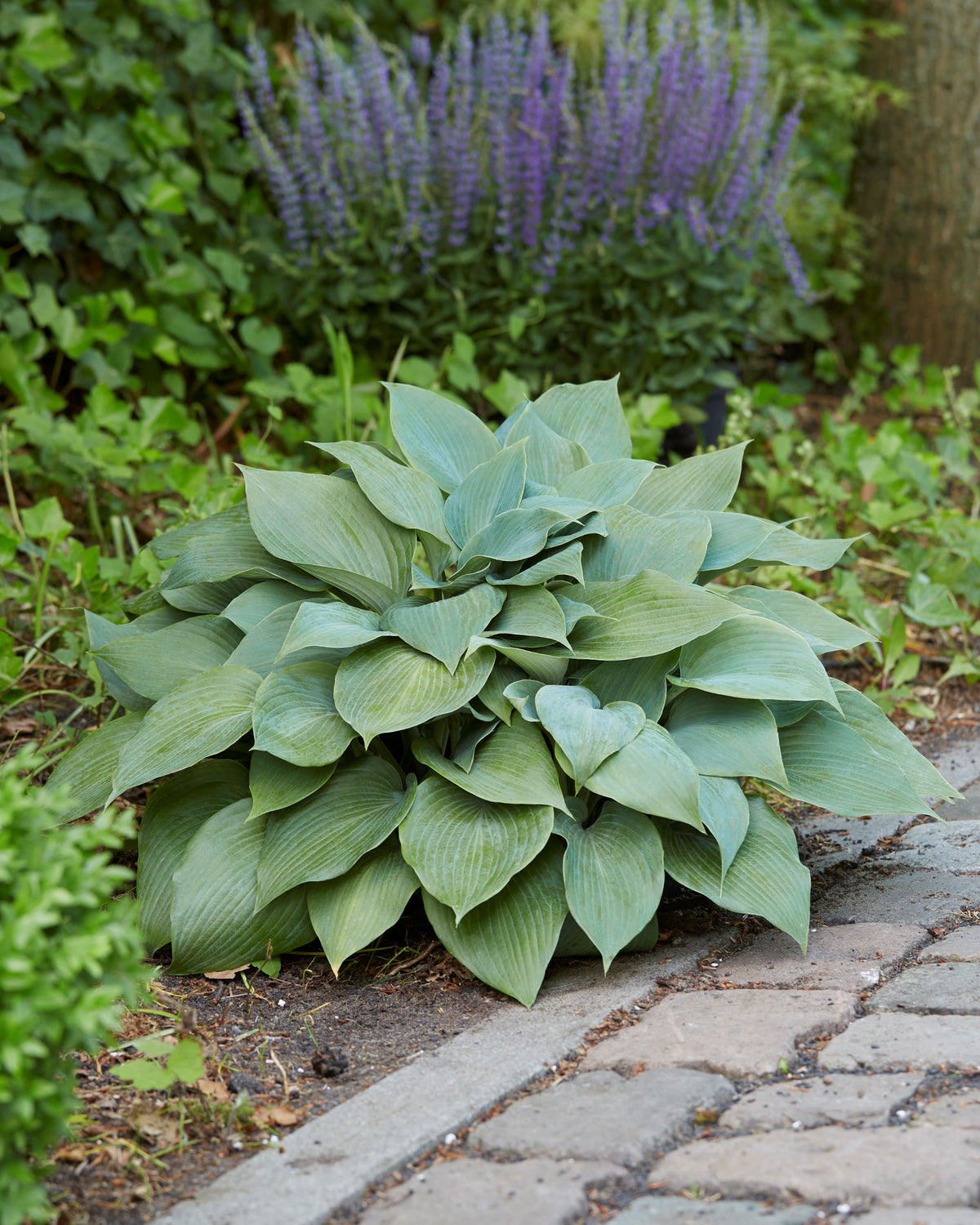
- How. Water the soil at the foot of the plant, preferably early in the morning, rather than the leaves. A strong spray also washes the waxy bloom off blue varieties, and that bloom is what makes them look blue. A low ring of soil around the planting spot, another Iowa State tip, keeps the water where the roots are.
- Mulch. Once the soil is moist, cover it around the plant with compost, leaf mould or shredded bark. The RHS recommends a layer at least 5 cm thick.
- Feeding. Hold back at first: Iowa State advises waiting at least four weeks after planting before any fertiliser goes on. After that, on fertile ground a yearly compost mulch is all a hosta needs, according to the RHS; on poor soil it suggests a general fertiliser in early spring. A hosta in a pot needs a liquid feed once a month while it grows, as our guide to hostas in pots explains.
Why the leaves are smaller than in the photos
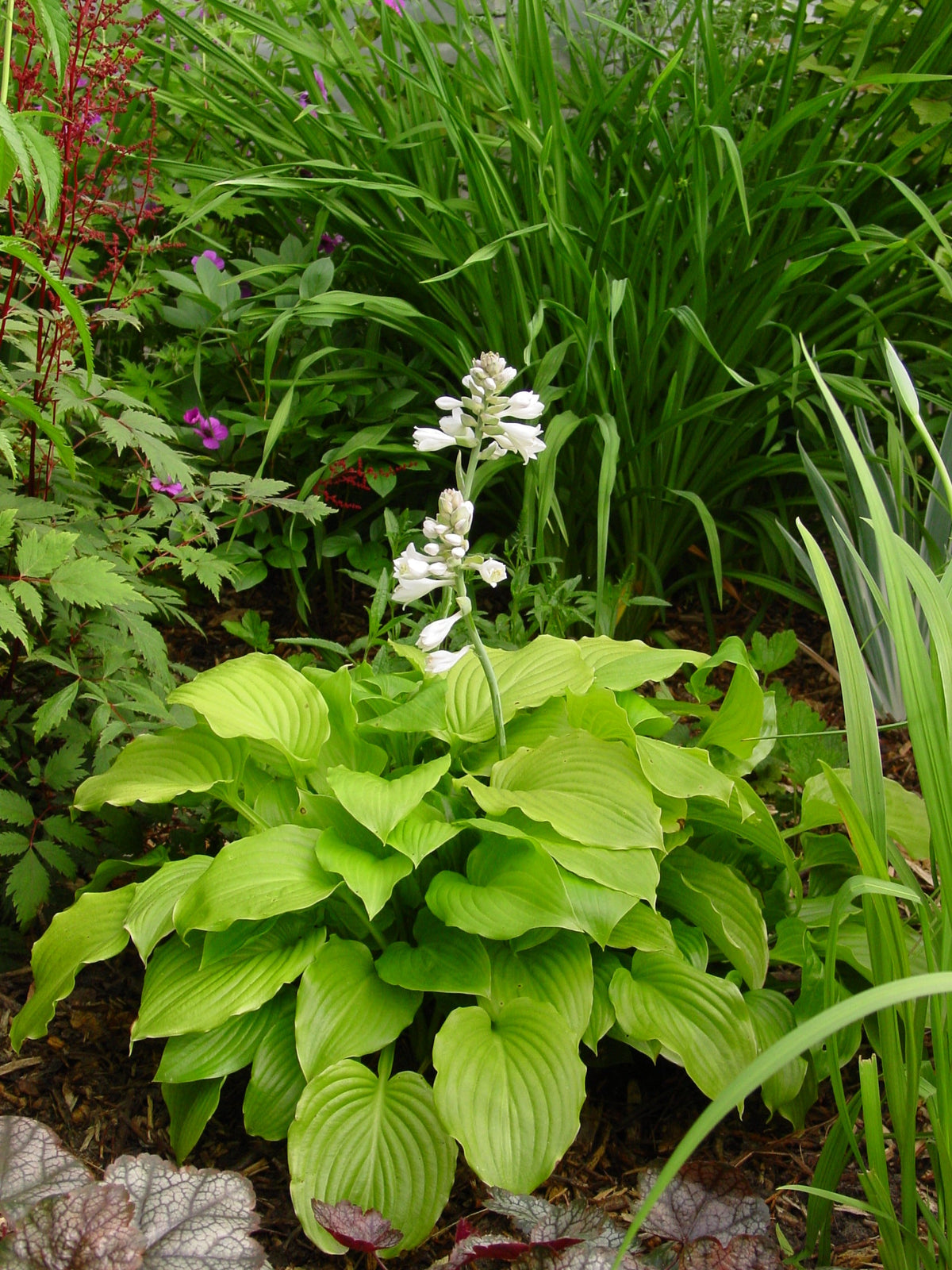
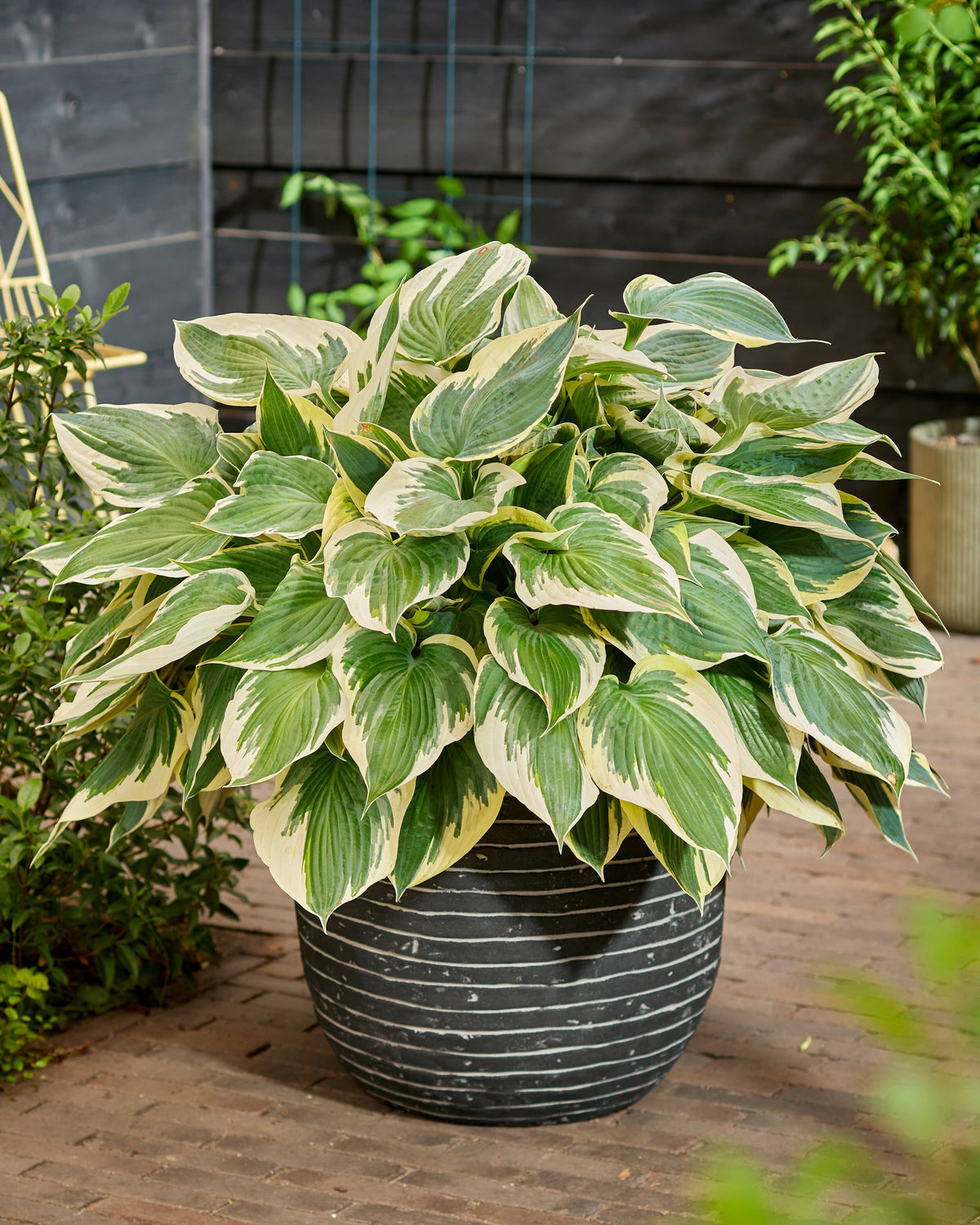
Because the plant is young, not because something is wrong. In its first season a division makes leaves and roots at the same time, and much of its strength goes into the roots. The photos on our product pages show established clumps, so a first-year plant with a modest handful of leaves is right on track.
Judge neither the variety nor your care by this first summer. Given rich, moist soil, a hosta comes back a little wider each spring, with bigger leaves than the year before.

Autumn and the first winter
When the nights turn cold, the leaves yellow and collapse, usually after the first frosts. That is the normal end of a hosta's season. Clear the collapsed leaves away and leave the crown where it is.
A hosta in the ground needs no winter wrapping. The RHS rates hostas as fully hardy, and gives Halcyon its top rating, H7, for plants that survive below −20 °C. The cold even helps: according to the American Hosta Society, hostas need about two months of rest below about 4 °C each winter to grow well again. Pots are the exception, because roots in a container feel the frost more than roots in a bed; the pots guide shows how to shelter them.
Before the leaves vanish, push a label or a short cane in beside the crown. In early spring the bed looks empty, and a marker stops you forking through a sleeping hosta while you weed.
Years two to five: when does a hosta reach full size?
Most hostas look settled in their second or third summer and reach full size after three to five years. The second summer is also when divisions usually flower for the first time, the RHS notes. Size decides the pace:
| Size group | Height when mature | Looks full-sized after about |
|---|---|---|
| Miniature and small | up to about 30 cm | three years |
| Medium | about 30–45 cm | three years |
| Large and giant | 45 cm and taller | four to five years, sometimes longer |
Other sources tell the same story. The RHS gives Halcyon two to five years to reach its ultimate size, and University of Missouri Extension says most varieties need about five years of undisturbed growth to form a full clump. The word that matters there is undisturbed: leave a young hosta where it is rather than moving or dividing it in its first few years.
Which hostas settle in fastest?
The variety makes a real difference. Some pointers from our range:
- Plain green leaves. Nebraska Extension notes that hostas with more white or cream in the leaf grow less vigorously, so plain green ones get going sooner. Devon Green, with thick, glossy dark green leaves, is a sound choice; our green hostas include many more.
- Early starters. Hi-Class emerges early and grows fast, filling its space sooner than most; its green leaves have a white edge and a heavy, firm texture.
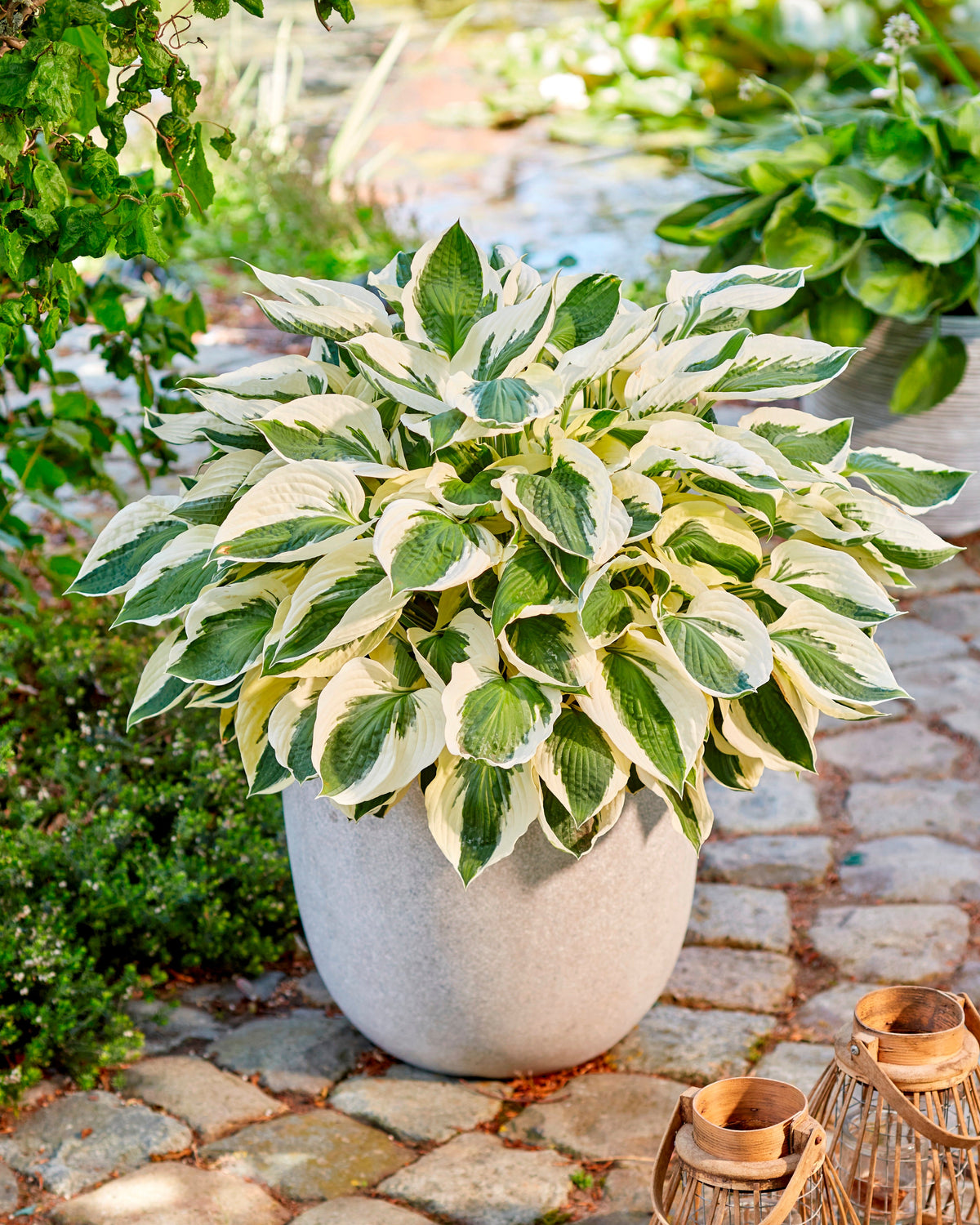
- Proven performers. Hosta of the Year winners have done well in a great many gardens. Patriot (1997) and First Frost (2010) are dependable first hostas, and our Hosta of the Year collection has the other winners we grow.
- Giants need patience. Victory, a giant with green leaves edged in cream, needs 75–100 cm of space and several years to fill it. Our large and giant hostas take longer than the small ones, so plant spring bulbs or ferns in the gaps meanwhile.


Common mistakes
- Digging up a division to check on it before four weeks have passed.
- Burying the crown deep in the hope of protecting it.
- Feeding straight after planting instead of waiting about a month.
- Letting the soil dry out in the first summer, even during one short dry spell.
- Moving or dividing a young plant before it has had a few years to settle.
- Judging a variety by its first-year leaves.
In short
- Plant the crown at soil level or just below it, and water it in well.
- Expect shoots after two to four weeks, then watch them for slugs and frost.
- Keep the soil moist all summer under a mulch, and feed no sooner than four weeks after planting.
- Clear the collapsed leaves after the first frosts and leave the plant outside for its winter rest.
- Give it three to five years in the same spot to reach full size.
Questions & answers
When do hostas come up in spring?
In mid-spring. The RHS describes hostas as resting from late autumn until mid-spring, and a cold spring can hold them back further. A newly planted division keeps its own timetable and usually shows two to four weeks after planting.
Should I cut off the flowers in the first year?
Either is fine. You can leave the stems until autumn, or cut them once the flowers fade, which the RHS suggests so the plant spends no energy on seed. Divisions usually flower properly from their second summer.
Can I move a hosta I planted this spring?
Better not. University of Missouri Extension says most hostas need about five years of undisturbed growth to form a full clump. If the spot really is wrong, move the plant in early spring as the shoots appear, the time our sources give for lifting and dividing, and water it well afterwards.
My hosta has still not come up after six weeks. What should I check?
Scrape a little soil away and look at the crown. Firm, pale tissue means it is alive and probably slowed down by cold soil; a soft, mushy or foul-smelling crown has rotted. Check that it is not planted too deep or sitting in waterlogged soil, and look for slugs, which can eat shoots as they appear. Should a plant fail to grow despite following our advice, the growing guarantee described on Our sizes & quality applies.
Will a young hosta grow faster if I feed it more?
Not really. On fertile soil a yearly compost mulch is enough, according to the RHS, and Walters Gardens warns that overfeeding can rot the roots. Rich, moist soil and steady watering do more for a young hosta than extra fertiliser.