Hostas in pots: how to plant, water and overwinter them
Quick answer
Yes, hostas grow very well in pots. Choose a frost-proof container with drainage holes, fill it with free-draining compost, and water whenever the surface feels dry. Feed through spring and early summer, check under the rim for slugs, and leave the pot outdoors in winter, because hostas need a cold rest to grow well the next year.
On this page
A pot lets you grow hostas on a balcony, a patio or a shady courtyard, and it brings the small varieties up to eye level, where their leaves are easiest to enjoy. Below you will find which hostas to choose, how big a pot they need, how to pot up a bare-root division and how to look after it through the year, winter included.
Why grow hostas in pots?
- Small varieties look their best up close. A miniature that would vanish in a border becomes a feature on a step or a table.
- You choose the light. A pot can follow the shade, so a blue or white-leaved hosta never has to sit in hot afternoon sun.
- The soil is up to you. Heavy, wet clay or a bed full of tree roots is no longer a problem.
- Problems show sooner. Slug damage, dry compost or a yellowing leaf are easy to spot when the plant sits at knee height.
The trade-off is more care: a pot dries out faster than a bed, the plant uses up the food in its compost, and its roots are more exposed to frost. All three are easy to manage once you know what to do.
Which hostas grow best in pots?
Almost any hosta can grow in a container, but miniature and small hostas are the easiest, because they stay in proportion with their pot for years. Good choices from our range:
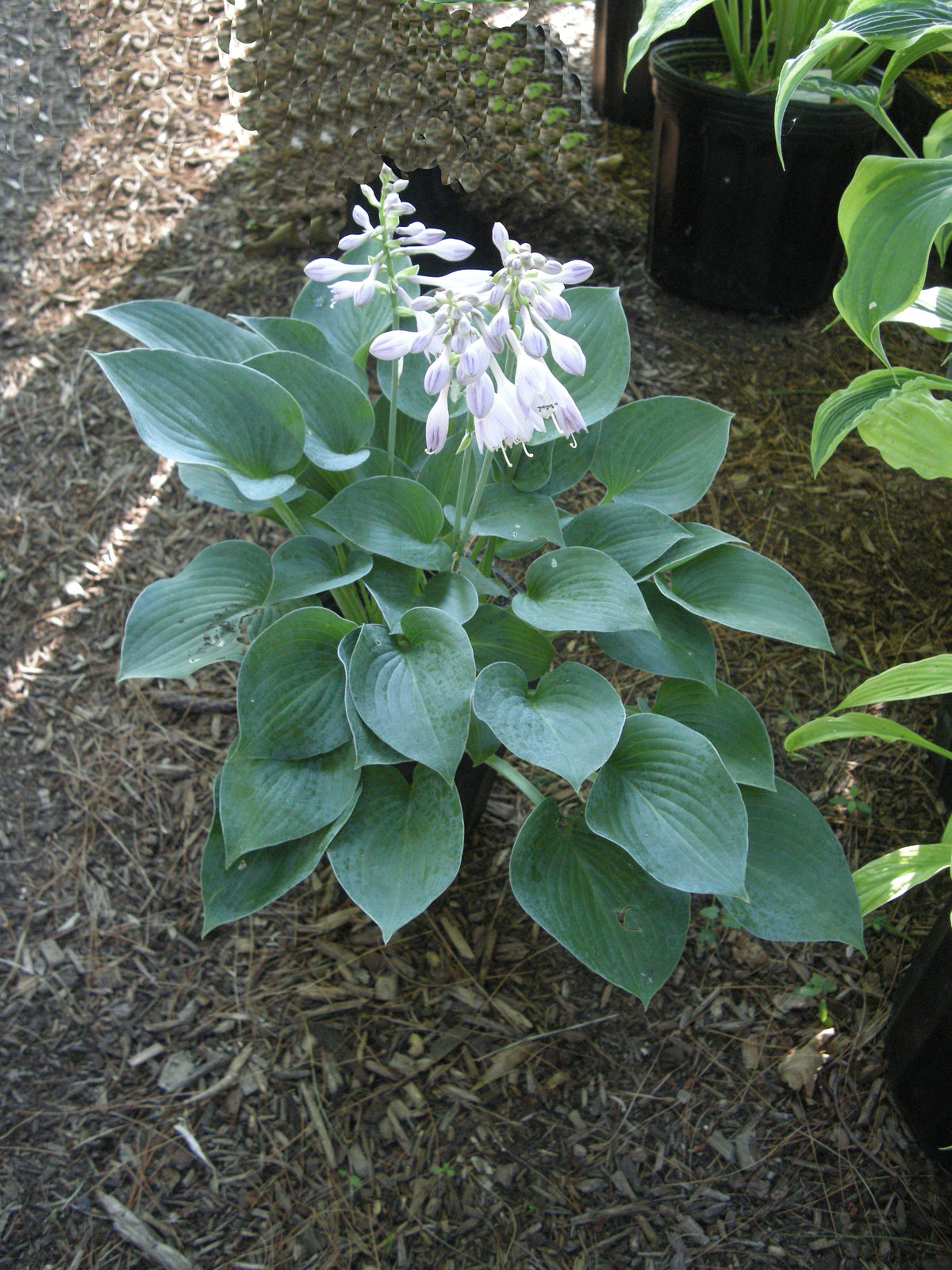
- Blue Mouse Ears: a blue miniature with round, thick leaves, Hosta of the Year 2008.
- Mini Skirt: tiny ruffled leaves with a broad yellow margin, Hosta of the Year 2024.
- Sun Mouse: a bright yellow miniature that takes some morning sun.
- Pandora's Box and Little Treasure: small, with cream or white centres, for a shady corner.

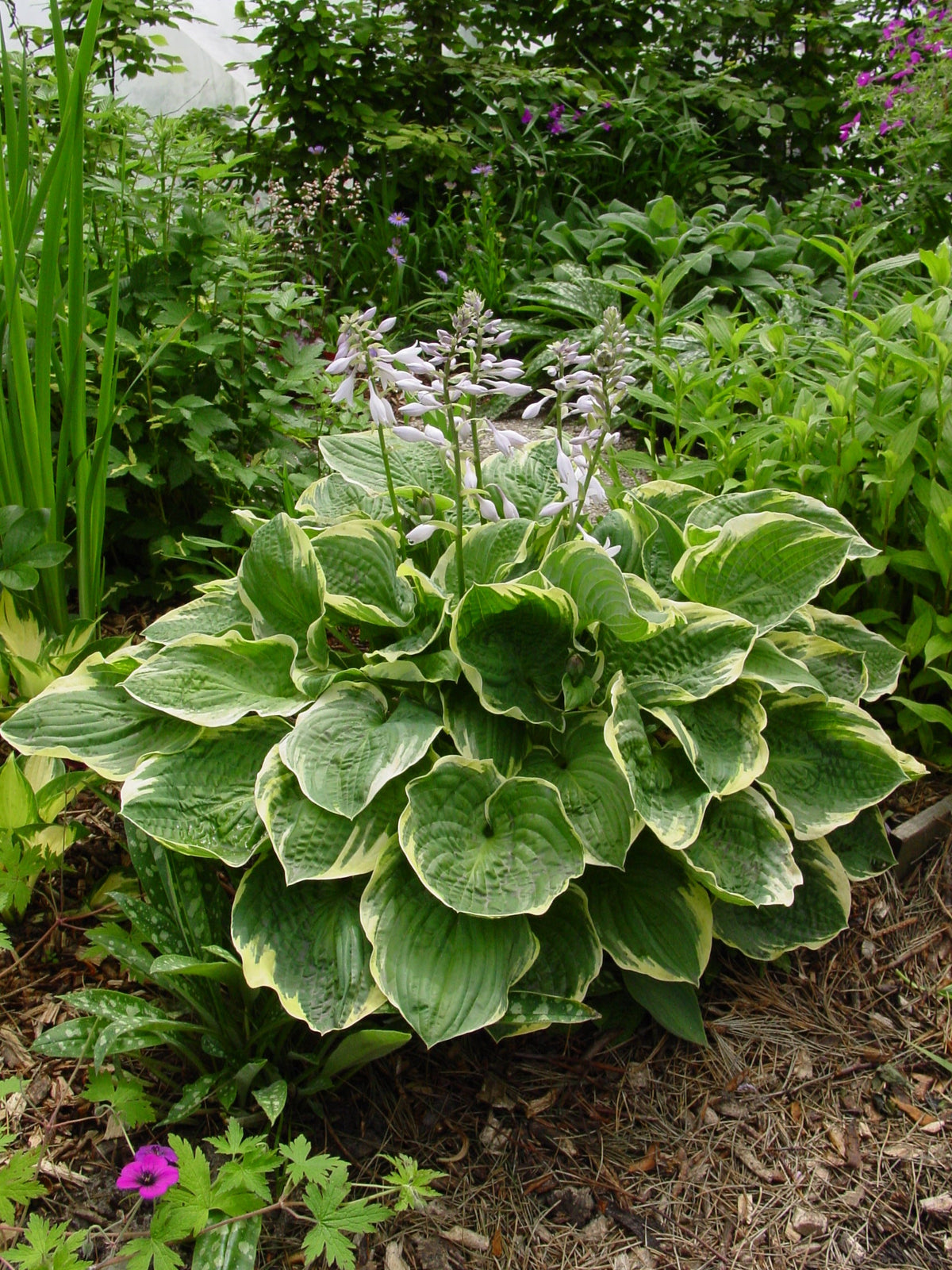
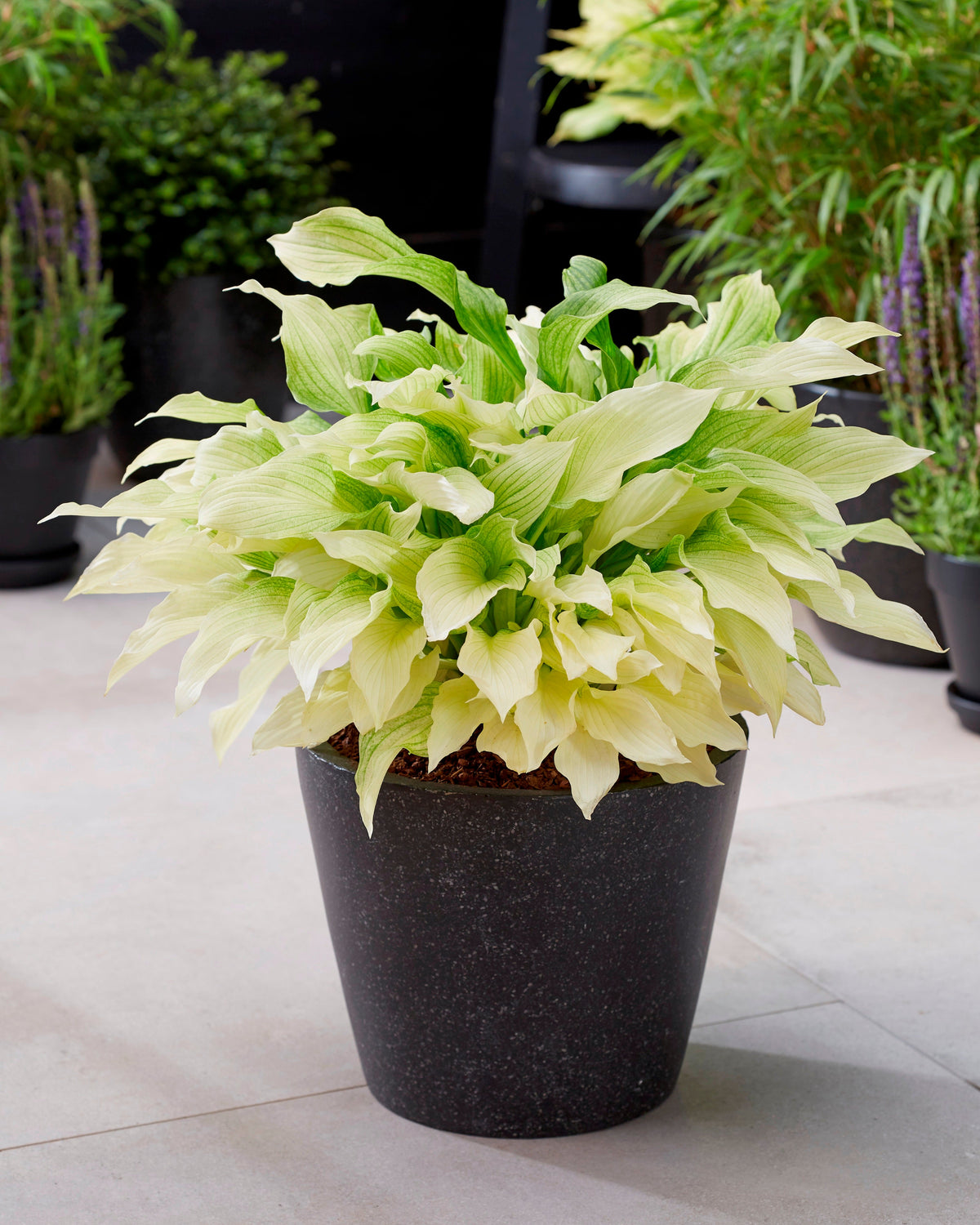
Medium hostas make a fine single plant in a larger pot: Patriot with its white edges, the pale White Feather™, or Cherry Berry, whose red stems show well at eye level. Large and giant hostas also grow in containers, but they need a big, heavy pot and much more water; our large and giant hostas include several that can be grown this way.

Where should a potted hosta stand?
Put the pot where the plant would be happy in the ground: somewhere shady or lightly shaded, away from the hottest afternoon sun. Blue and white-leaved varieties keep their colour best with little direct sun, while yellow ones such as Sun Mouse turn brighter in morning sun. A pot standing in full sun warms up and dries out quickly, so a bright spot always means more watering. Our guide to sun and shade for hostas goes into more detail, and the planting and care guide covers the basics for beds and borders.
Shade under a tree or along a north-facing wall suits hostas well, but check that rain actually reaches the pot there. Leaves of nearby shrubs and the overhang of a roof can keep a container almost dry even in a wet week.
What size pot does a hosta need?
Match the pot to the plant, not to the size it will reach in five years. A pot that is far too big stays wet long after watering, and containers are prone to waterlogging in winter. As a guide:
| Plant | Pot |
|---|---|
| A bare-root division, first season | about 30 cm across is plenty |
| Miniature and small hostas | a pot, bowl or trough not much wider than the leaves |
| A mature medium hosta | about 30–45 cm across |
| Large and giant hostas | the biggest, heaviest pot you can manage; treat 45 cm across as the minimum |
The 30–45 cm range is what the RHS suggests for hostas in containers, and BBC Gardeners' World starts new divisions in 30 cm pots. Whatever the size, the pot must have drainage holes. If it stays outside in winter, choose one sold as frost-proof, because freezing wet compost can crack a pot. Avoid metal: it heats up quickly in summer and gets very cold in winter, while hosta roots like to stay cool. A heavy pot is also less likely to blow over once the leaves are full size.
Which compost is best for hostas in pots?
Hostas want compost that holds moisture but never stays waterlogged. The RHS suggests either a peat-free multipurpose compost or a loam-based one such as John Innes No. 3. The loam-based kind is heavier, which helps keep a tall pot steady. For newly divided plants, BBC Gardeners' World uses equal parts of peat-free multipurpose compost and fine grit, a mix that drains freely, which matters most in winter.
How to pot up a bare-root hosta
We send hostas as bare-root divisions: a crown with buds and roots, but no soil and usually no leaves yet. Potting one up takes a few minutes.
- Soak the roots in a bucket of water for 1–2 hours.
- Put a layer of compost in the bottom of the pot.
- Spread the roots over it and set the crown, where the buds start, level with the surface or 2–3 cm below it.
- Fill in around the roots, firm gently and leave a gap under the rim so water can soak in rather than run off.
- Water well and stand the pot in shade or partial shade.
The first shoots usually appear within a few weeks, depending on the weather. Until then, keep the compost just moist. Our guide to bare-root hostas explains what a healthy division looks like and what to do if you cannot plant straight away.
Watering and feeding
A pot dries out much faster than a bed, and a hosta in full leaf can empty it in a warm day. Check the compost with a finger: when the top few centimetres are dry, water until it runs out of the drainage holes. Water the compost rather than the leaves, ideally in the morning; on blue varieties, a hard jet of water also strips the waxy coating that gives them their colour.
Plants in pots soon use up the food in their compost. The RHS advises a liquid feed every month while the plant is growing; a slow-release fertiliser mixed into the top of the compost each spring does the same job with less effort. Stop feeding by midsummer, so the plant can slow down and go dormant in autumn.

Slugs, snails and vine weevil in pots
Growing hostas in pots can cut slug damage, the RHS notes, but it does not stop it. Many gardeners also put copper tape around the rim or grit on the compost, yet in an RHS trial, barriers of copper tape, grit, wool pellets, pine bark and eggshells made no difference to the damage. What helps more is looking: check under the rim, under the pot and between the leaves after rain and at dusk, and remove what you find. Slug nematodes work when the compost is moist and between 5 and 20 °C, from spring to early autumn, and thick-leaved slug-resistant hostas suffer least. More options are in our guide to slugs and snails on hostas.
The same RHS advice adds a warning: pots invite vine weevil. The adult beetles leave irregular notches in leaf edges in spring and summer, which looks bad but rarely harms the plant. The real damage comes from the grubs, which eat the roots from autumn to spring; most losses happen between September and March, and plants in containers are the most at risk. A hosta that wilts even though its compost is moist may have lost its roots. Nematodes watered into the compost in August or early September control the grubs.

How do I overwinter hostas in pots?
Hostas need a cold winter rest to grow well the next year: commercial growers give them 10–12 weeks below about 4 °C. So leave them outside. The plants themselves are very hardy, and the RHS rates Halcyon H7, hardy below −20 °C. Roots in a pot, though, are more exposed to cold than roots in the ground, and pots easily become waterlogged in winter. To get a potted hosta through winter:
- move the pot to a sheltered spot, against a house wall or among other pots;
- stand it on pot feet or bricks so that rain drains away, and empty any saucer;
- keep the compost just moist, not wet, and do not water when frost is forecast;
- in a hard frost, wrap the pot (not the plant) in hessian or bubble wrap;
- once the leaves have collapsed after the first frosts, remove them, which also removes hiding places for slugs.
When the new shoots appear in spring, start watering and feeding again.
When to repot or divide a potted hosta
Roughly every third year the roots fill the pot, the compost dries out within a day and the leaves get smaller. That is the time to act, in early spring before the leaves unfold. Either move the hosta into a pot one size larger with fresh compost, or tip it out and cut the clump into pieces with a sharp knife, each with roots and several buds, and pot them up separately.

Common mistakes
- Using a pot without drainage holes, or leaving it standing in a full saucer in winter.
- Bringing hostas into a warm house for the winter: they need the cold.
- Letting the compost dry out completely in a warm spell, even once.
- Feeding late in summer, which gives soft leaves just before autumn.
- Planting a tiny division in a huge pot of wet compost.
In short
- Pick a small or medium variety and a frost-proof pot with drainage holes.
- Pot up the division with the crown level with the compost, then water well.
- Water whenever the surface is dry and feed until midsummer.
- Leave the pot outside in winter, raised on feet in a sheltered spot.
- Repot or divide in early spring when the roots fill the pot.
Questions & answers
Can hostas grow indoors as houseplants?
Not for long. Hostas need a cold, dormant winter, roughly 6–12 weeks below about 4–5 °C depending on the source, and a warm room gives them none. Keep potted hostas outside all year, in shade in summer and in a sheltered spot in winter.
Can a hosta stay in the same pot for years?
For a couple of years, yes. BBC Gardeners' World suggests dividing a potted hosta or moving it up a pot size about every third year; do it in early spring, before the leaves unfold.
Which pot material is best for a hosta?
Any material works if the pot has drainage holes and survives frost. Glazed ceramic, stone-effect and good plastic pots are all fine, and terracotta should be sold as frost-proof. Avoid metal, which gets hot in summer and very cold in winter.
How often should I water a hosta in a pot?
There is no fixed timetable. Check the compost often in warm weather and water whenever the top few centimetres feel dry; in a cool, wet spring the pot may need little extra water at all.
Can I grow two hostas in one pot?
Yes, in a wide pot or trough, especially with miniatures. Give each plant room to spread and choose varieties of similar size, so the stronger one does not smother the other.