Can hostas grow in full sun? The varieties that cope best
Quick answer
Most hostas prefer shade or part shade, but some cope with much more sun if the soil stays moist. Gold and yellow varieties colour best with plenty of light, while blue and white-centred ones fade or scorch first. Even sun-tolerant hostas need afternoon shade in hot, dry weather, and sun tolerance is never the same as drought tolerance.
On this page
Hostas are famous as shade plants, yet a sunny spot is not always the end of the story. Some varieties cope with much more light than others, and a few look their best with it. Below you will find which hostas take sun, what decides how much, and how to stop them scorching.
Do hostas tolerate sun?
Some do. Iowa State University Extension notes that although hostas are best known as shade plants, some varieties thrive in partial to full sun. Clemson University's Home and Garden Information Center is more cautious: some cultivars are sun-tolerant, it says, but all do best with shade in the afternoon. In practice that means morning sun and afternoon shade suits almost every hosta, and full sun all day only suits the toughest.
Two things are worth remembering. Sun tolerance depends on moisture: a hosta in sun needs soil that stays damp. And even sun-tolerant varieties can scorch. Purdue University Extension notes that in hot, dry weather in full sun, even sun-tolerant hostas may show leaf scorch (browning along the edges) and sunburn.
Leaf colour decides how much sun a hosta takes
| Leaf colour | Light it prefers |
|---|---|
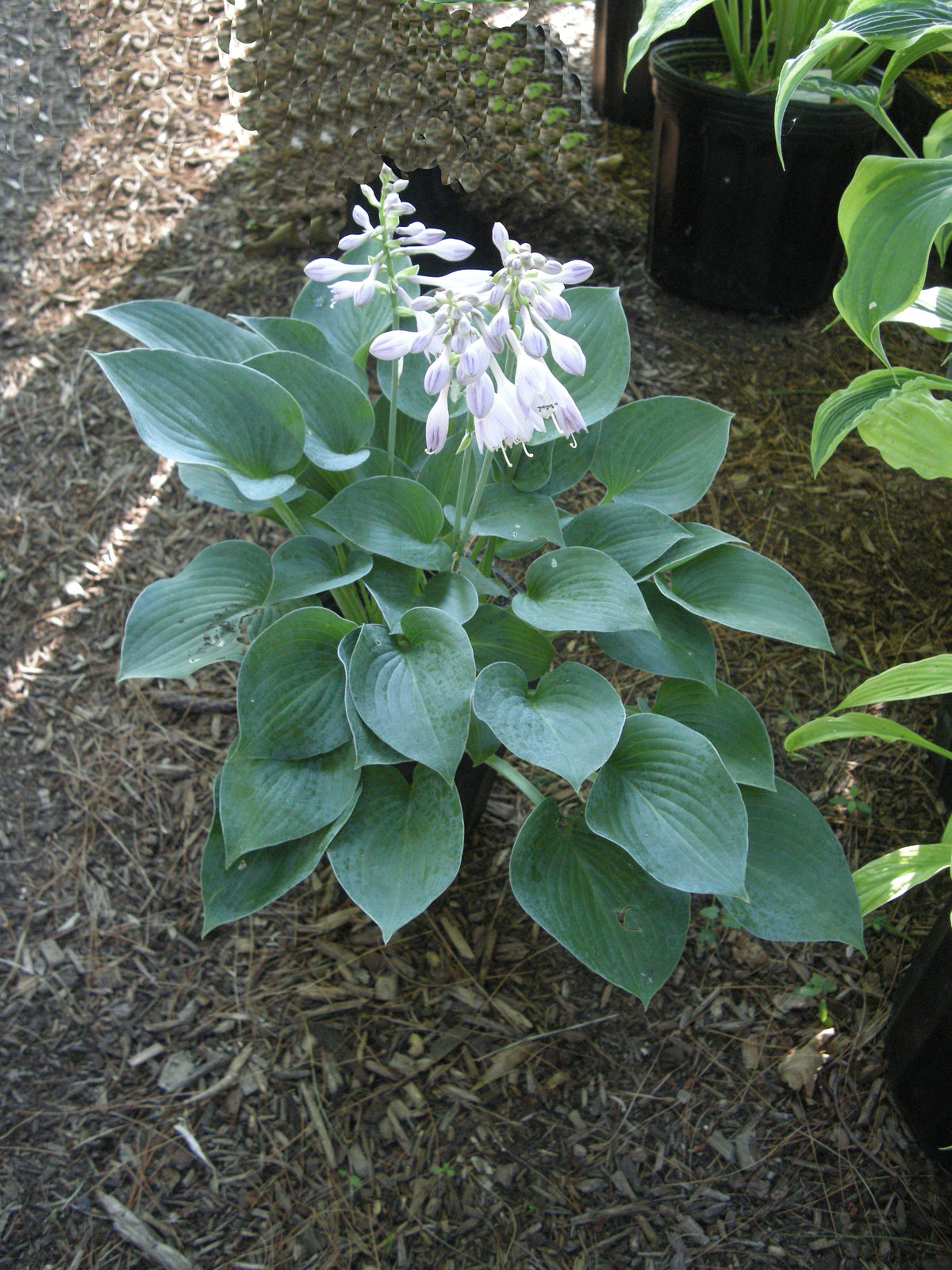
| Blue | The most shade. Their waxy coating melts in strong sun and heat (see best blue hostas). |
| White or cream centres | Shade or part shade; extra shade in hot climates. |
| Green | Shade to part sun; thick-leaved and plantaginea types take most. |
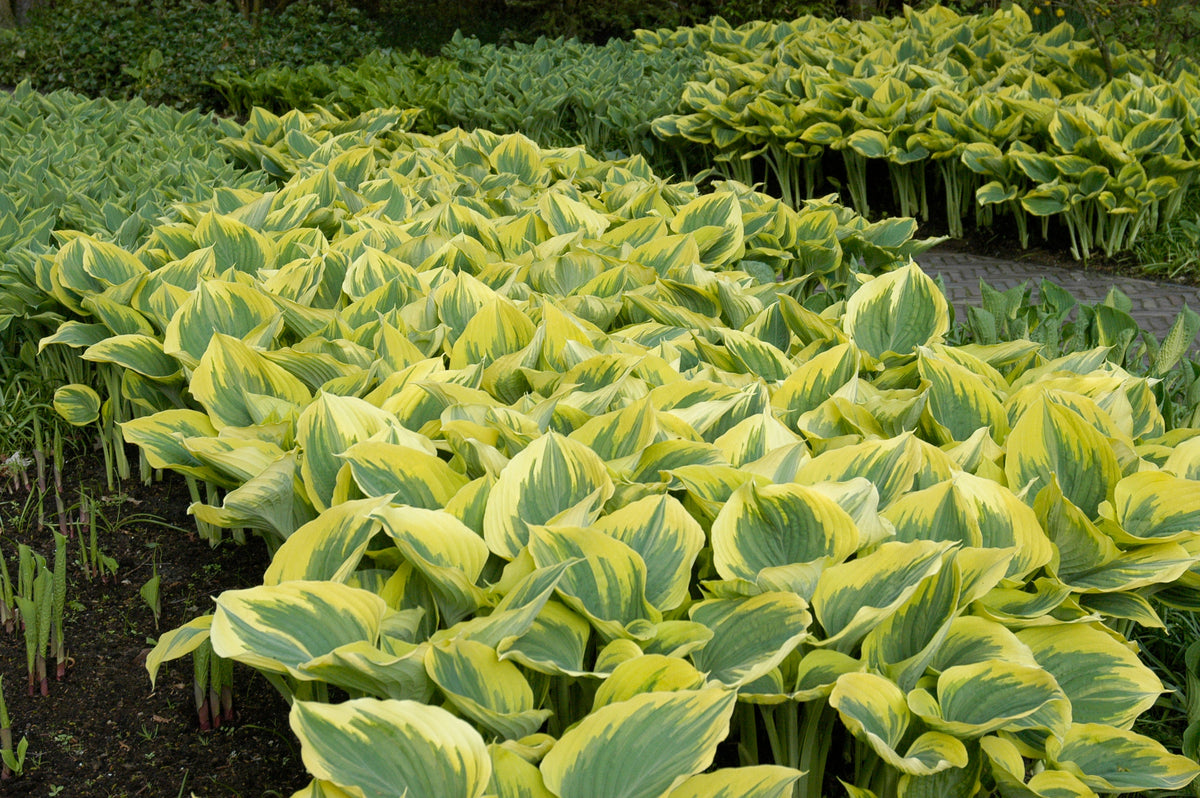
| Yellow and gold | The most light. Memorial University of Newfoundland Botanical Garden says yellow leaves need high light levels to keep their colour; in too much shade they turn chartreuse. |
Clemson also names the plantaginea hostas as the most heat- and sun-tolerant of all, able to grow from shade to about three-quarters of a day of sun. Sun in a hot American summer is harsher than in most of northern Europe, so treat these limits as a guide, not a promise.
Hostas that take more sun
These varieties from our range are tagged sun tolerant:
| Hosta | Size | Good to know |
|---|---|---|
| Sum and Substance | Extra large | Big, solid chartreuse-yellow leaves; Hosta of the Year winner. |
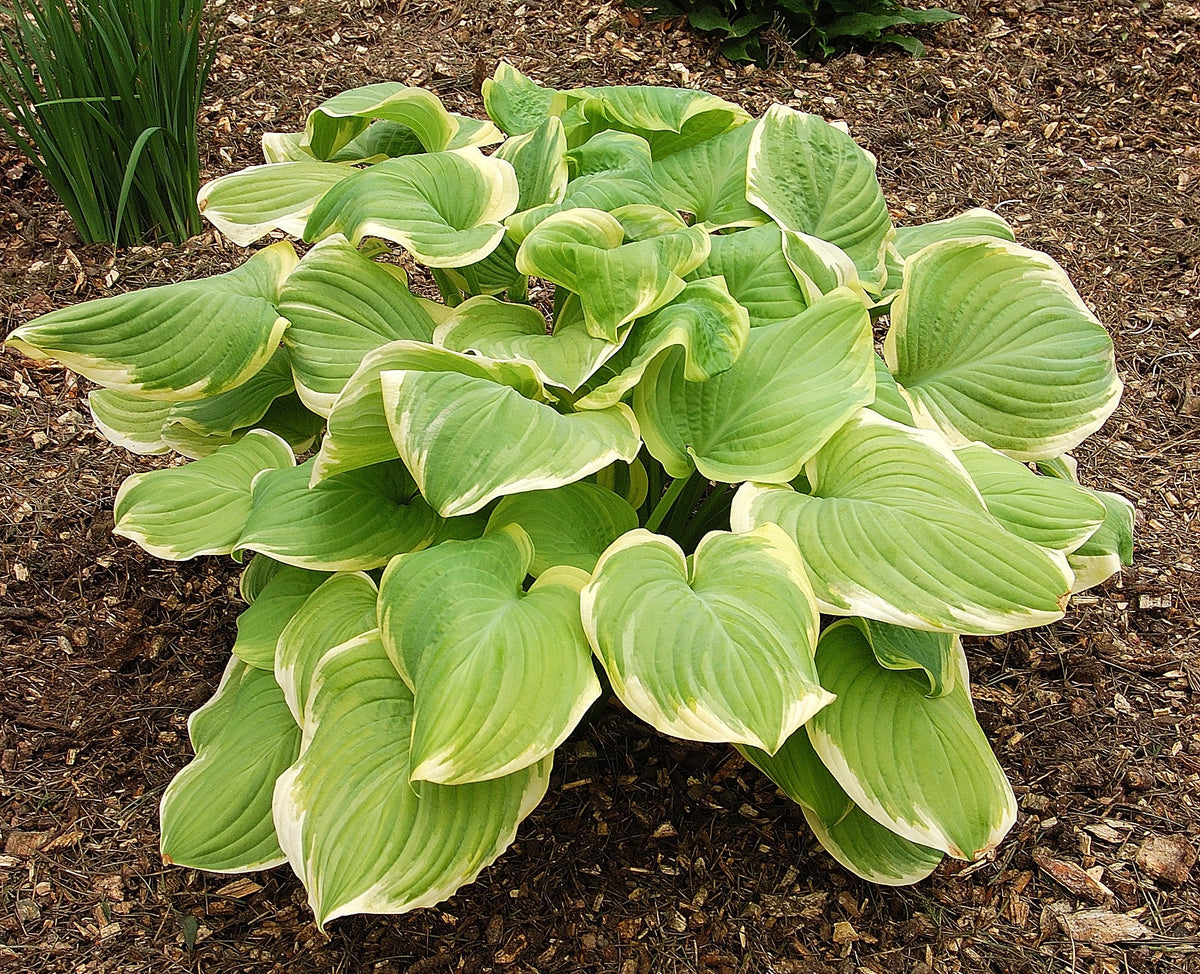
| August Moon | Medium to large | Puckered yellow leaves that colour best with light. |
| Fried Bananas | Medium to large | Solid gold leaves. |
| Sunny Halcyon | Medium | Yellow leaves; also slug resistant. |
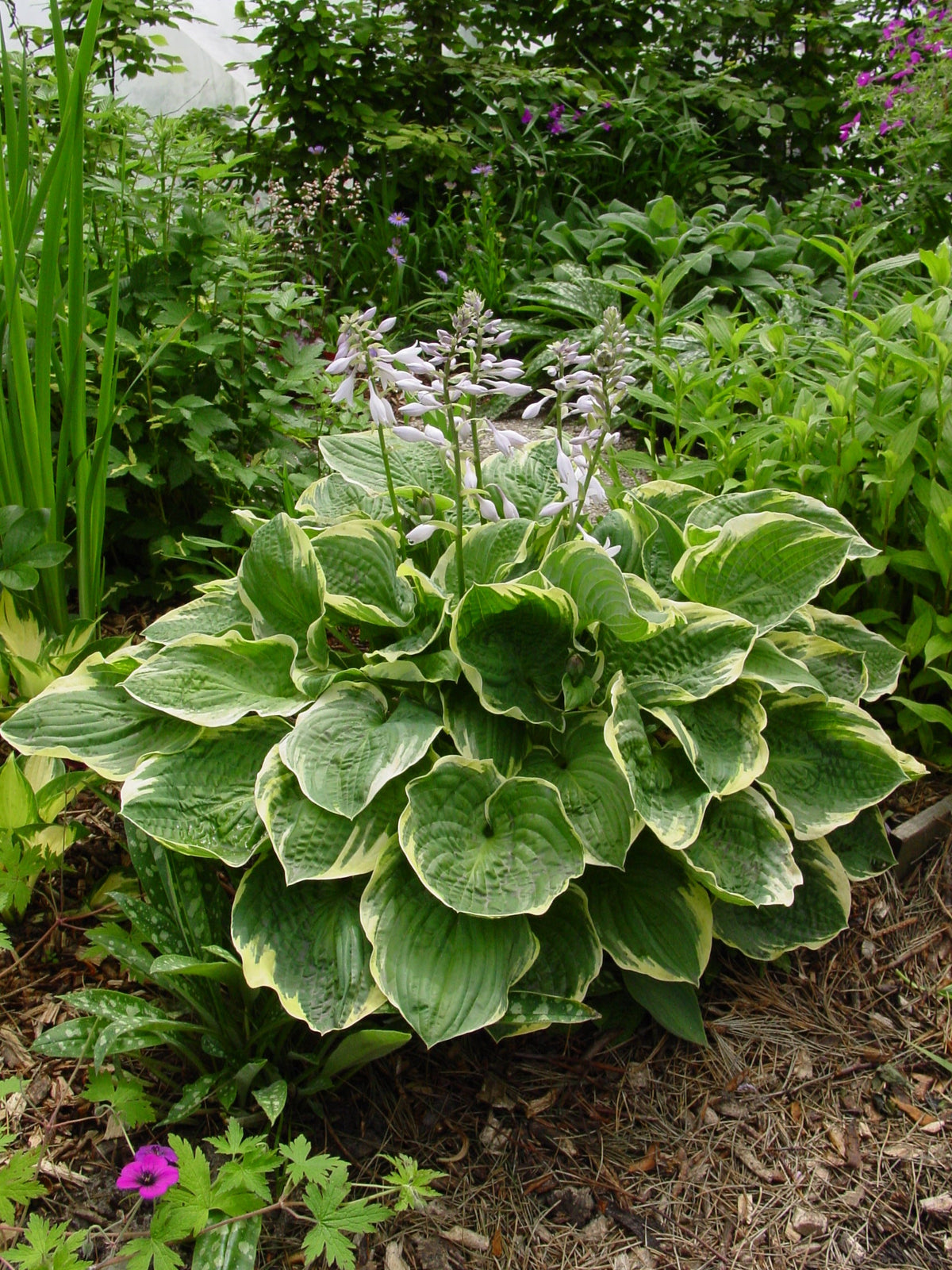
| Fragrant Bouquet | Medium to large | Green leaves with cream edges and fragrant flowers; Hosta of the Year winner. |
| Royal Standard | Medium to large | Green leaves, fragrant flowers. |
| Plantaginea Grandiflora | Medium to large | A plantaginea type, the group Clemson names as the most sun- and heat-tolerant; fragrant. |
| Liberty | Extra large | Blue-green leaves with gold edges; slug resistant; Hosta of the Year winner. |
See all our sun-tolerant hostas, or the yellow and gold hostas, which are the ones that enjoy light most.

How to grow hostas in sun
- Choose morning sun. The sun in the morning is gentle; the hours after midday do the damage.
- Improve the soil. Illinois Extension notes that hostas grown in full sun, especially in soil low in organic matter, develop yellow leaves with scorched margins. Dig in compost, as in our guide to the best soil for hostas.
- Mulch and water deeply. A layer of mulch holds moisture; see watering hostas for how much and how often.
- Be extra careful in the first year. A young plant has few roots to feed its leaves.
- Use pots with care. A pot in the sun heats up and dries out fast.
Signs of too much sun
Pale or bleached patches, leaf edges that turn brown and crisp, and colours that fade are the usual signs. The Missouri Botanical Garden describes scorch as browning of the leaf margins and yellowing or darkening between the veins, and sunburn as the same on the part of the leaf nearest the sun, bleached at first and then brown. Our guide to brown edges on hosta leaves shows how to tell scorch from other problems.
Common mistakes
- Planting a blue or white-centred hosta in all-day sun.
- Assuming that sun-tolerant means drought-tolerant.
- Putting a hosta in sun without improving the soil.
- Moving a shade-grown hosta into full sun in midsummer.
In short
- Most hostas prefer morning sun and afternoon shade.
- Gold, yellow, plantaginea and thick-leaved green hostas take the most sun; blue ones the least.
- Sun-tolerant hostas still need moist soil and can scorch in hot, dry spells.
- Improve the soil, mulch and water deeply.
Questions & answers
Can hostas take full sun?
Some can, if the soil stays moist. Iowa State University Extension notes that some varieties thrive in partial to full sun, but even then they do best with some afternoon shade, and hot, dry weather can scorch them.
Which hostas tolerate the most sun?
Gold and yellow varieties, plantaginea types and thick-leaved green hostas such as Sum and Substance cope best. Blue and white-centred varieties need the most shade.
Do yellow hostas need sun?
They need light to keep their colour. In deep shade yellow leaves turn chartreuse, which can still look attractive, according to Memorial University of Newfoundland Botanical Garden.
Why are my hosta leaves bleached or brown?
Bleached patches and brown edges are the signs of sunburn and scorch, often made worse by dry soil. See our guide to brown edges on hosta leaves.
Is a sun-tolerant hosta also drought-tolerant?
No. A hosta that tolerates sun still needs moisture at the roots, so mulch and water it in dry weather.