


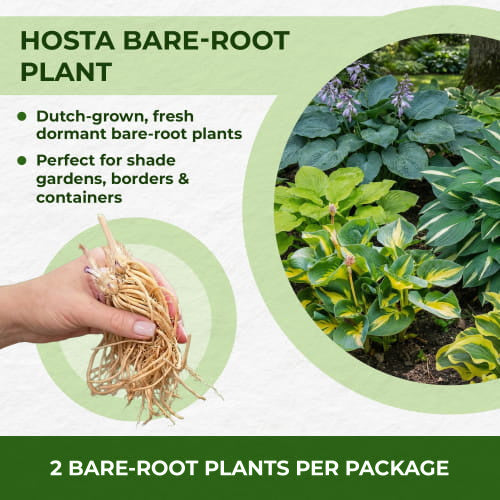
Pre-Ordering Hostas: How It Works, When We Ship and What to Expect
Order and pay now, and your bare-root hostas ship from 1 March. Here is how pre-ordering works and what to expect when your plants arrive.
3 min read

Hostas with red stems keep their colour low down, in the leaf stems, below green, yellow or white-centred leaves. This is what a real “red hosta” looks like: no hosta has red leaves, whatever some pictures online suggest.
Hostas with red stems
The red shows best from close by. Sorbet® pairs it with cream-edged leaves and good slug resistance, Raspberry Sundae and Cherry Berry with white centres, Gooseberry Sundae with plain green, and Lipstick Kiss and Funky Monkey with yellow.
You get two plants of the chosen variety per pack, shipped as bare roots from 1 March to 1 July and backed by our 100% growing guarantee.
On these varieties the colour is in the leaf stems, the stalks that join each leaf to the crown. The leaves themselves stay green, yellow or white with a green rim, so the red works as a warm line under the clump rather than a red plant. Pictures of hostas with red, pink or rainbow leaves, often sold as seeds, show plants that do not exist.
Gooseberry Sundae has plain green leaves, the calmest backdrop for its stems. Sorbet® adds a cream margin, comes up early in spring and has good slug resistance. Hear No Evil also has green-centred leaves.
Raspberry Sundae and Cherry Berry both have leaves that are white in the middle with a green edge. Raspberry Sundae is medium-sized; Cherry Berry stays small to medium, which suits a pot.
Lipstick Kiss has yellow centres framed in green, and Funky Monkey shiny yellow leaves. Lemon Snap has cupped, slightly corrugated yellow leaves and Lipstick Blonde plain yellow ones, while Lipstick Blush and Monkey Business turn it round, with green centres and yellow margins.
Red stems sit at the base of the clump, so they are easy to miss from a distance. Put these hostas where you look down into them: a pot on a patio or a step, the edge of a path, the front edge of a shady bed. A container raised a little nearer to eye level shows the colour best.
All of them are shade plants: full or part shade suits them, as long as the hot afternoon sun stays off. The yellow varieties welcome some morning sun, which brightens the leaves. Leave 30–50 cm between the small to medium varieties and about 50 cm for the medium ones, give them a good soak around the crown when it turns dry, and cover the soil with mulch.
For a planting that shows what red stems can do, combine Gooseberry Sundae, Sorbet® and Cherry Berry: plain green, cream-edged and white-centred leaves above the same red stalks. More plants with pale hearts are among our white and cream hostas.
No. Hostas come in green, blue, yellow and white or cream, and the red you can find is in the leaf stems. Photos of red or pink hosta leaves, and seeds sold with them, show plants that do not exist.
Among ours: Sorbet®, Raspberry Sundae, Cherry Berry, Gooseberry Sundae, Lipstick Kiss and Funky Monkey, plus the others listed on this page.
No, shade or partial shade suits them. The yellow-leaved ones like a little morning sun, but none of them wants hot afternoon sun.
Sorbet® resists slugs well, so you will also find it among our slug-resistant hostas. For the rest, check the new shoots in spring, especially after rain.
Yes, and a pot is one of the best places to see the stems. The pot needs holes in the base, and a container loses moisture sooner than garden soil, so water it more often.
Order and pay now, and your bare-root hostas ship from 1 March. Here is how pre-ordering works and what to expect when your plants arrive.
3 min read
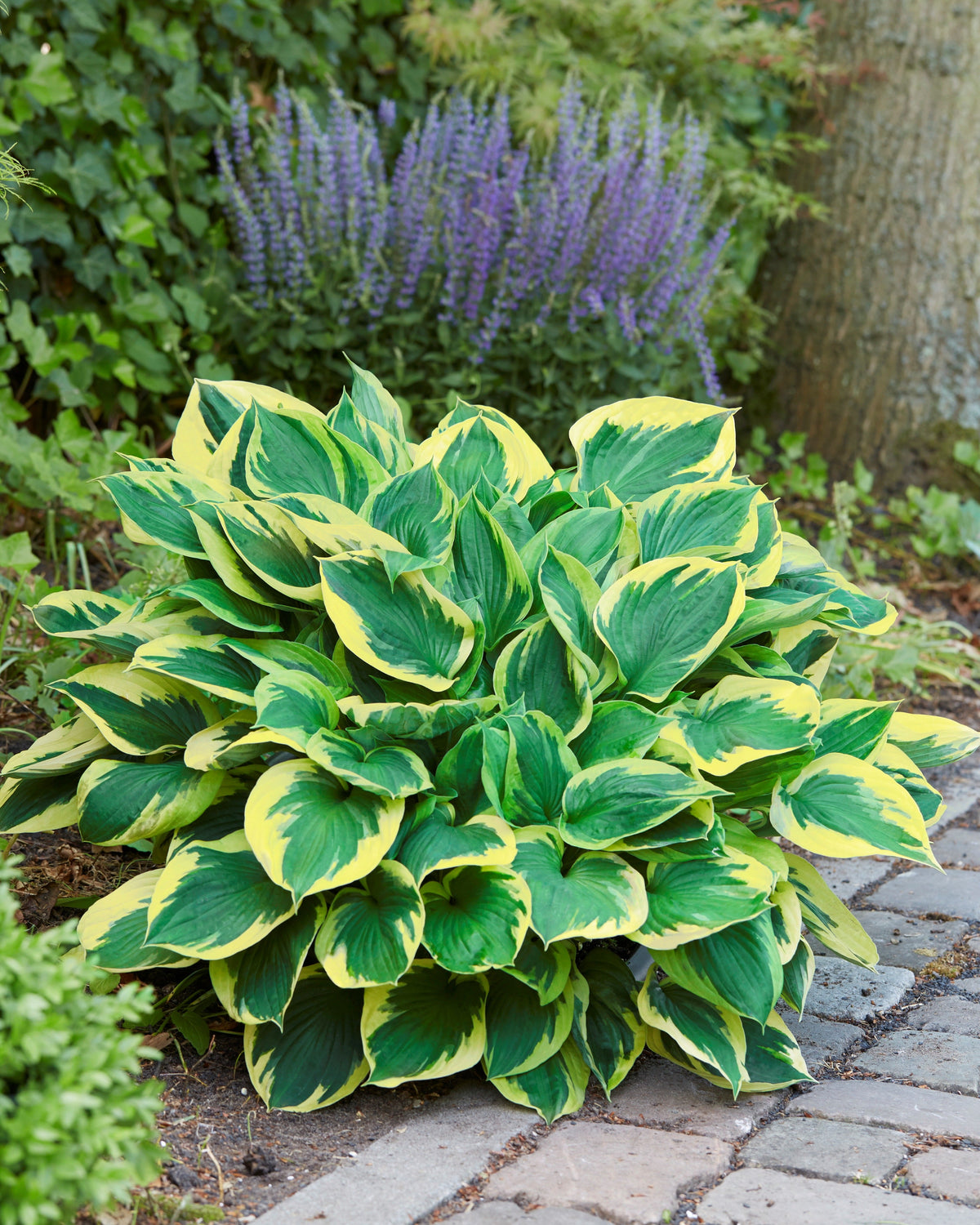
Bare-root or potted hostas? An honest comparison of price, choice, timing and how well each grows, so you can pick the right one for your garden.
4 min read
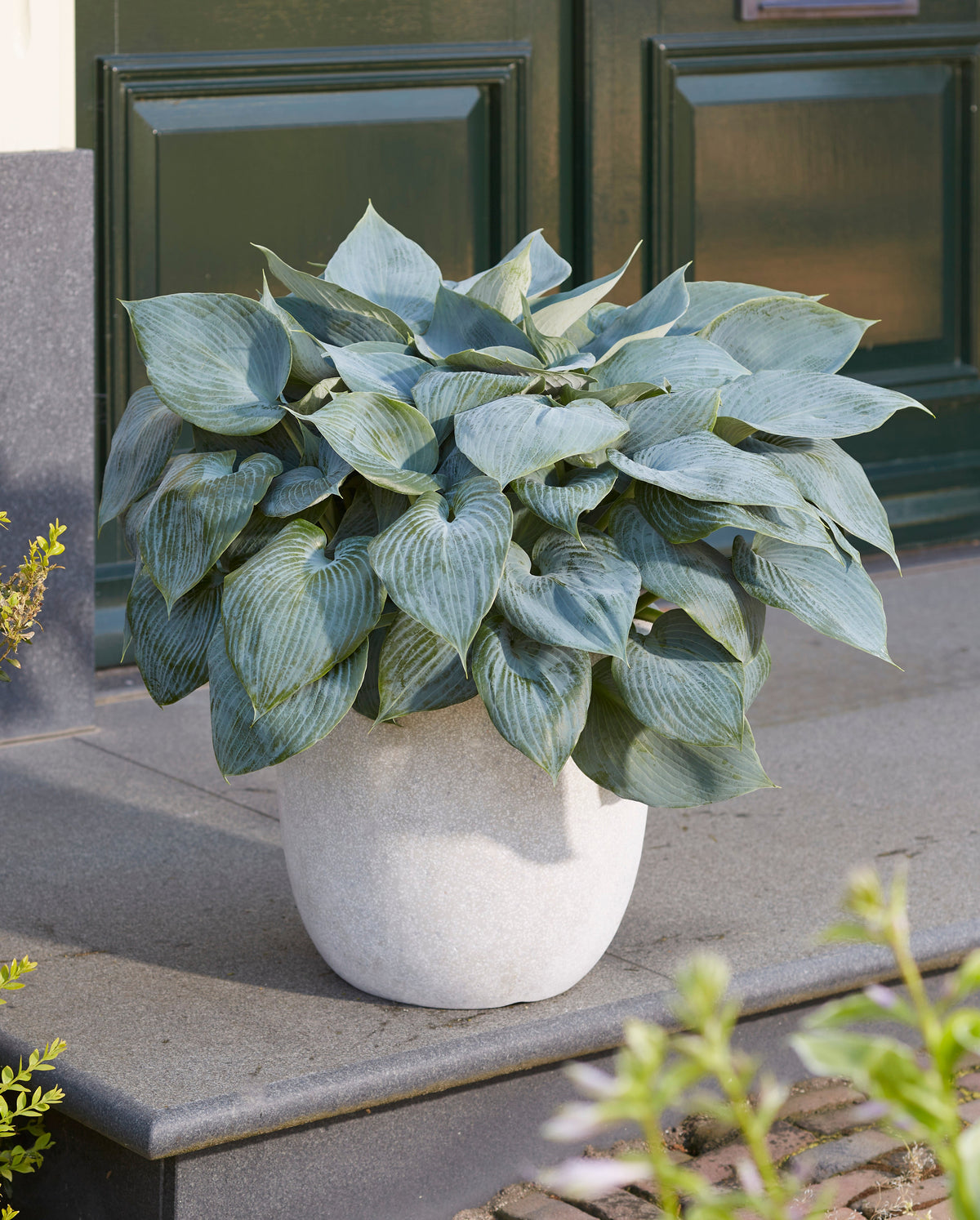
Problems & pests
Crisp brown edges on hosta leaves are usually scorch: the leaf loses water faster than the roots can supply it, because of dry soil, hot afternoon sun, wind or competing roots. Check the soil moisture and the light first. If the brown streaks stop at the veins, or the stems collapse at the base, look for foliar nematodes or crown rot instead.
4 min read