Slugs and snails on hostas: what really works
Quick answer
To stop slugs eating hostas, protect the young shoots in spring: check the plants at dusk and after rain, remove what you find, water in slug nematodes once the soil has warmed up, and grow thick-leaved varieties. Copper tape, grit, wool pellets and eggshells did nothing to reduce the damage when the RHS put them to the test.
On this page
Few things are as disheartening as a hosta that comes up in spring and is full of holes a week later. The good news is that you can grow beautiful hostas in a slug-filled garden. The trick is to know which methods are backed by evidence, which ones are folklore, and when your plants need protecting most.
Why do slugs and snails love hostas?
Hostas give slugs exactly what they want: soft, juicy leaves close to the ground, in the cool, damp shade where slugs spend their days. The RHS names hostas among the plants that slugs eat most severely. Snails do the same damage and are just as fond of shady corners, so everything below applies to both, unless we say otherwise.
The damage is done early. A shoot that is nibbled while it is still tightly furled opens into a leaf with a row of holes, so by the time you notice, the slug has often moved on. That is why protection has to start the moment the first shoots appear, not when the first holes do.
Is it slugs, or something else?
Usually slugs. Because they feed at night, the RHS points out, holes and slime trails are often the only clues: ragged holes in soft leaves and seedlings, with the culprit gone by morning. Vine weevil is the other common suspect. Its adults bite irregular notches out of leaf margins in spring and summer; it looks untidy, but the RHS says the plant rarely suffers. A torch check after dark settles the question, because that is when you catch slugs at work.
When are hostas most at risk?
- In spring, as the shoots come up. BBC Gardeners' World tells hosta growers to be on guard in early spring, as the shoots push through, and the RHS singles out the soft young shoots of herbaceous plants for targeted protection.
- On mild, damp nights. Slugs are most active in the dark when it is warm and wet, and in heat and drought they hide away, according to Gardeners' World. Which? adds that they are busiest from dusk, above all in damp springs and autumns.
- In a long wet spell. Day after day of damp weather gives slugs the best conditions to feed and move about.
Once the leaves have hardened in early summer, most hostas cope much better. A thick, mature leaf is far less appealing than a soft new shoot.
What really works against slugs on hostas?
Here is how the common methods compare, based on trials and advice from the RHS and other gardening bodies.
| Method | Does it work? | What to know |
|---|---|---|
| Checking plants at night and removing slugs | Yes | The simplest method: search with a torch on mild, damp evenings, especially in spring. |
| Slug nematodes | Yes, on slugs | A biological control for moist soil at 5–20 °C, from spring to early autumn. Unlikely to affect snails. |
| Thick-leaved varieties | Yes, partly | Thick, firm leaves are harder to chew. Fewer holes, not none. |
| Growing in pots | Partly | The RHS notes that pots can cut slug damage, but they invite vine weevil. |
| Beer traps | Partly | Jars of beer sunk into the soil catch slugs nearby; the RHS says to empty them every morning. |
| Copper tape, grit, wool pellets, bark, eggshells | No | In an RHS trial these barriers made no difference to slug damage. |
| Coffee grounds | No evidence | Strong caffeine solutions killed slugs in laboratory tests, but nothing shows that spent grounds keep pests away. |
| Slug pellets | Avoid | The RHS advises against all pellets, organic ones included, because of the harm to wildlife. |
Hand-picking at night
It sounds old-fashioned, but it is the one method that needs no equipment and harms nothing else in the garden. The RHS suggests a torch-lit search on mild evenings, especially damp ones, and Gardeners' World finds the best time about two hours after dusk. Look at the base of each hosta, under the rims of pots and on the undersides of leaves, and collect what you find in a container. A few evenings of this in spring make a real difference, because you catch the slugs before the leaves unfurl.
Slug nematodes
Slug nematodes are microscopic worms that infect and kill slugs in the soil. You buy them as a powder, mix them with water and water them onto moist soil around your plants, ideally in the evening, as the RHS advises. They need a soil temperature of 5–20 °C, which makes spring to early autumn their season; they may work less well in heavy clay, and there is no point applying them to cold soil in early March. Gardeners' World reckons one application keeps working for about six weeks.
Two limits are worth knowing. Nematodes are unlikely to affect snails, so where snails are the main problem, hand-picking is still the best answer. And they kill every kind of slug, harmless species included, so the RHS suggests using them only where they are needed, around the plants you want to protect.
Barriers: copper, grit and wool
Barriers are sold everywhere and promise a lot. In an RHS trial, rings of copper tape, sharp grit, wool pellets, pine bark and crushed eggshells were placed around lettuce plants, and none of them reduced slug damage. Lettuce is not a hosta, but the slugs are the same. If you already use a barrier, there is no harm in keeping it; just do not rely on it.

Coffee grounds
Coffee is a popular tip with a grain of truth behind it. In 2002, researchers at the US Department of Agriculture found that caffeine solutions of 1–2 % killed slugs, and that soil drenched with a 2 % solution killed 92 % of them within 48 hours. Spent grounds are another matter: there are no figures for how much caffeine is left in them, and Washington State University found no published evidence that grounds repel or kill garden pests. Put them on the compost heap instead.
Slug pellets
Here the experts disagree, and it helps to know why. The RHS looks at the whole garden: it advises against all slug pellets, organic ones included, because they harm wildlife, and prefers natural predators, good cultivation and biological control. BBC Gardeners' World and Which? judge ferric phosphate pellets mainly on how well they protect plants. Gardeners' World calls them just as effective as the old metaldehyde pellets and probably less harmful, as long as they are used sparingly.
Metaldehyde itself has been banned from sale and use in Great Britain since 1 April 2022, because of the risk to birds and mammals. Rules elsewhere in Europe differ, so check which products are allowed where you live. If you do use pellets, scatter a few thinly rather than in heaps, and keep them away from children and pets.
Which hostas do slugs leave alone?
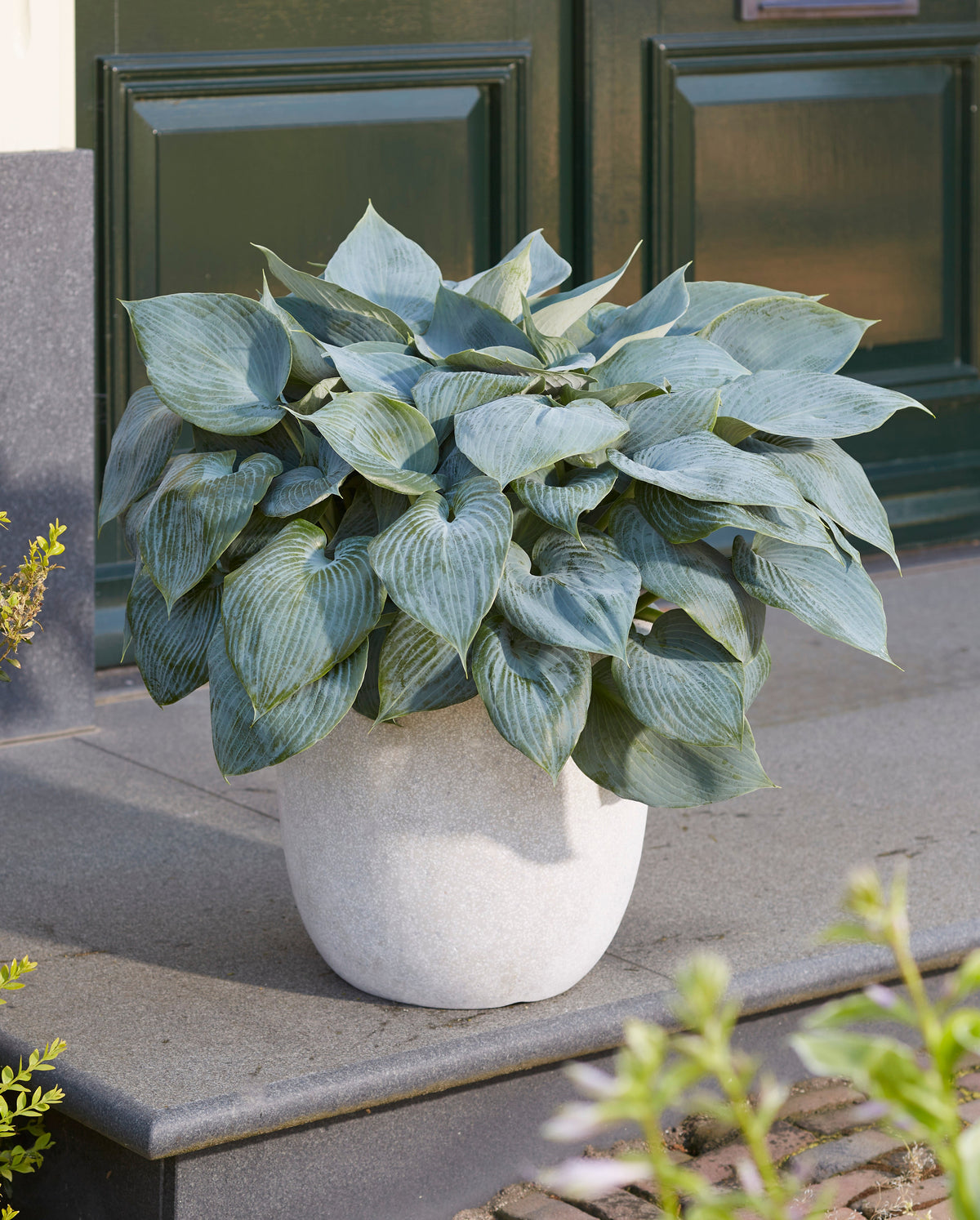
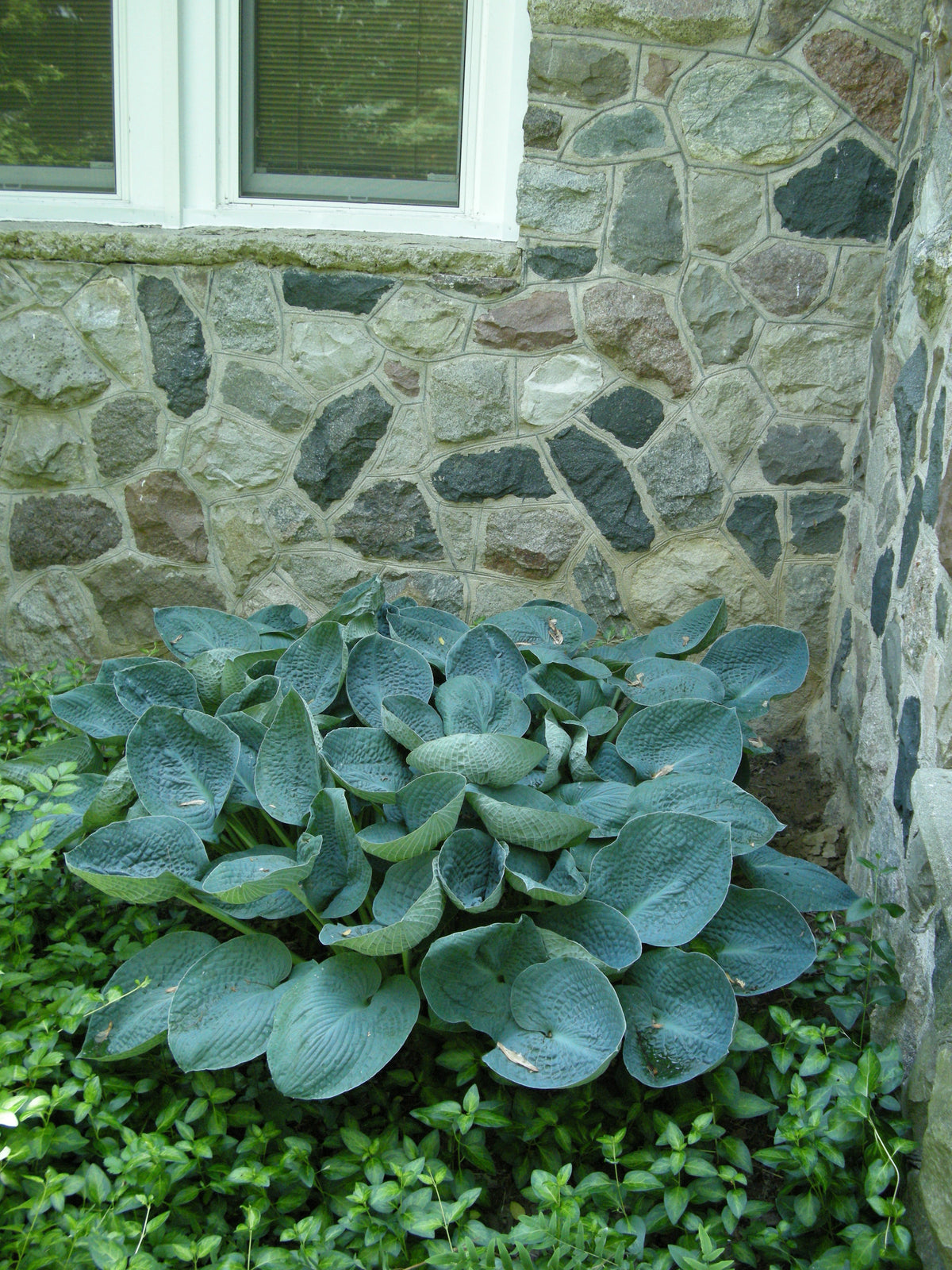
No hosta is completely safe, but some suffer far less. Varieties with thick, firm leaves are the hardest to chew, and these are often the blue ones. Good examples from our slug-resistant range:
- Big Daddy: a giant whose blue leaves are thick and puckered.
- Blue Angel: large and blue-green, a solid backbone for a shady border.
- Bullet Proof: a medium blue hosta that also suits large pots.
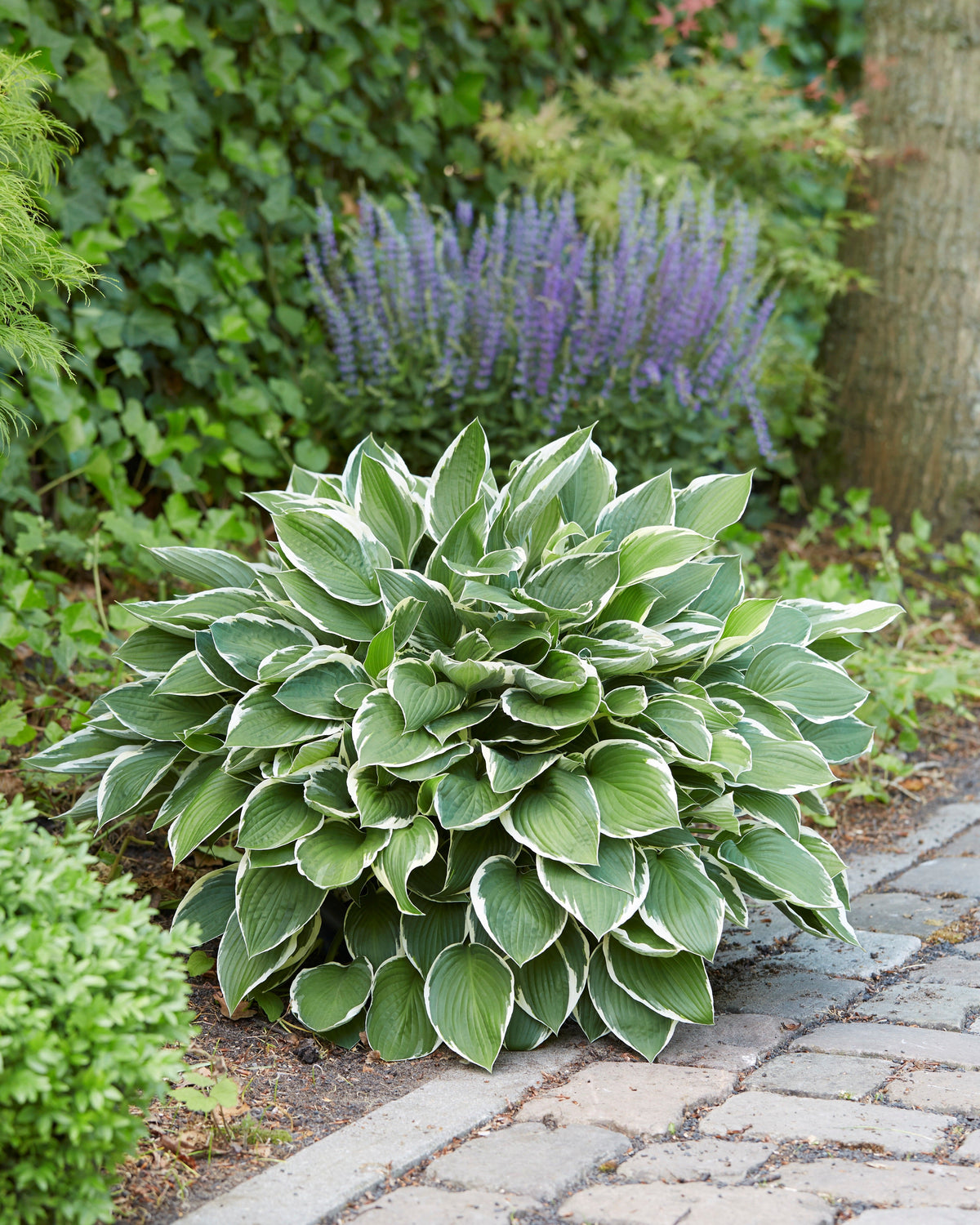
- Praying Hands: cream-edged, dark green leaves; Hosta of the Year 2011.
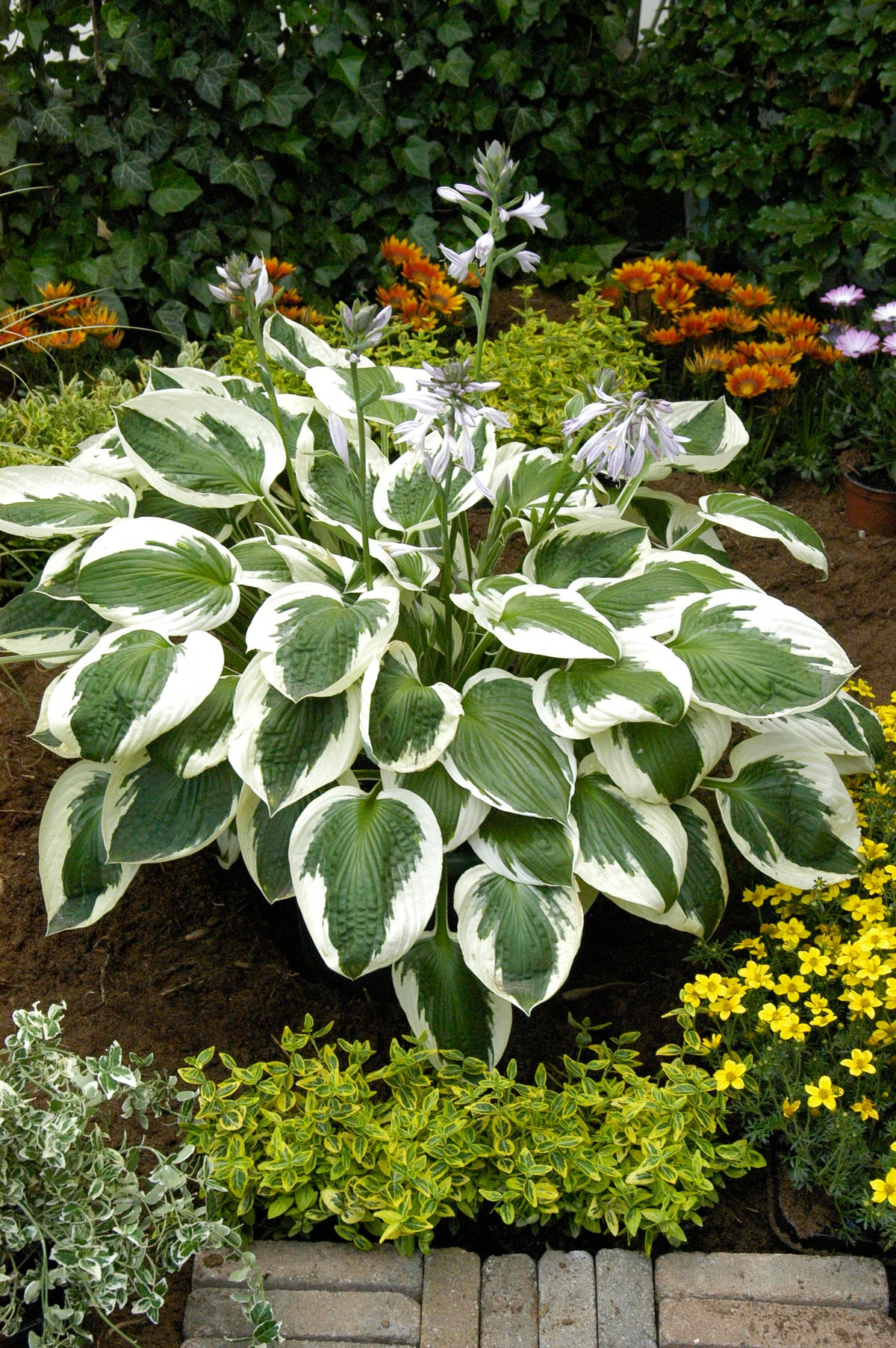
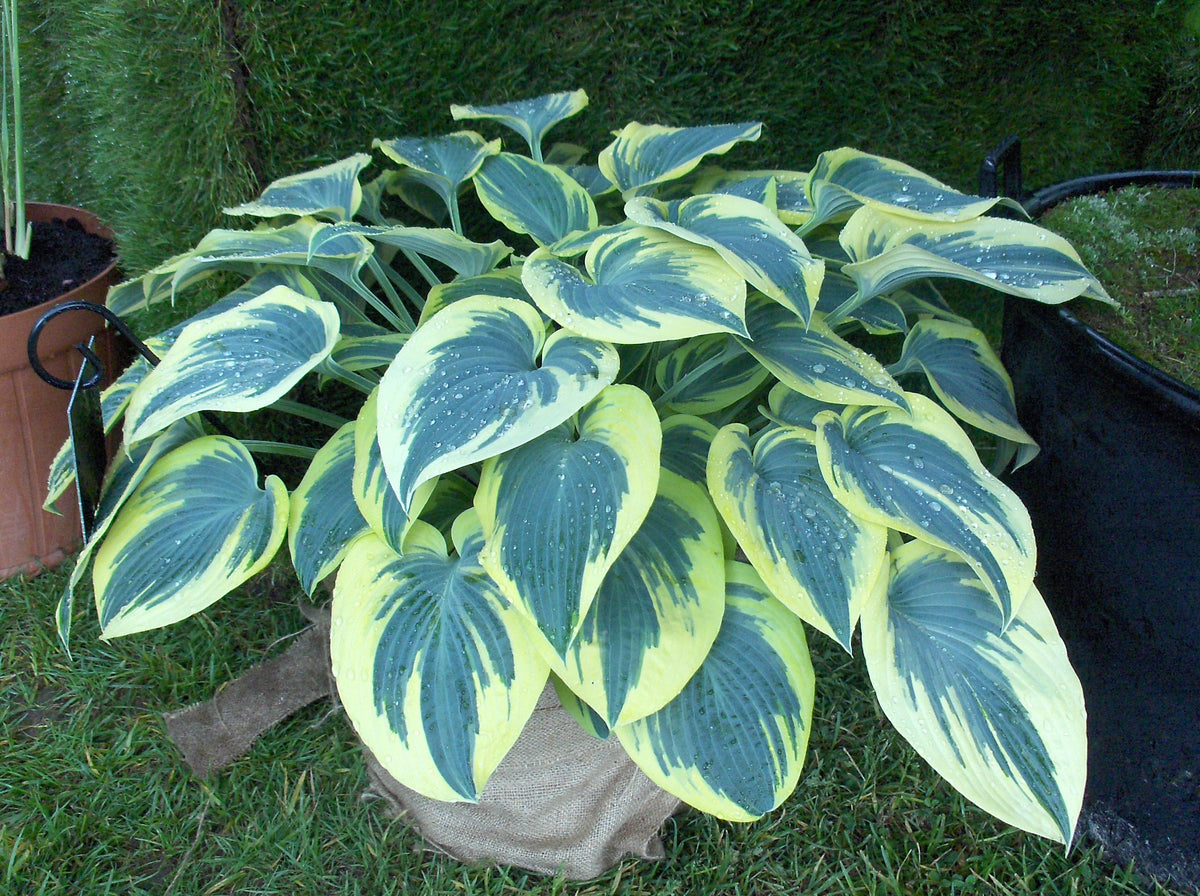
- First Frost: a blue centre with a cream edge, Hosta of the Year 2010.
See all our slug-resistant hostas, or browse the blue hostas, where many of the thick-leaved varieties are. Big Daddy and Blue Angel are also big plants, so our large and giant hostas are worth a look for a slug-prone border. Thin-leaved varieties are the ones to watch most closely; our guide to hosta varieties explains the differences in leaf colour and texture.

A spring routine against slugs
- Before the shoots appear: clear old leaves and other hiding places around your hostas, and look under pots and stones for slugs resting there.
- As soon as the first shoots show: start evening checks, especially after rain, and keep them up until the leaves have fully opened.
- Once the soil is above 5 °C: water slug nematodes onto moist soil around the plants in the evening, following the pack, and repeat after about six weeks if slugs are still about.
- Through late spring: water in the early morning rather than the evening, as the RHS advises, so the ground is drier at night when slugs move about.
- In early summer: check the undersides of the leaves now and then; most hostas are past the worst once the leaves have hardened.
New plants deserve extra attention, because a small division has fewer shoots to spare. Our guide to your hosta's first year covers the whole first season, our planting and care guide has the basics, and if you grow hostas in containers, our guide to hostas in pots explains how pots change the picture.

Common mistakes
- Waiting for the first holes before doing anything: by then the shoots have been eaten.
- Relying on copper tape or a ring of grit alone.
- Applying nematodes to cold soil early in the season, below the 5 °C they need.
- Watering in the evening, which leaves the ground wet just when slugs come out to feed.
- Planting thin-leaved varieties in the dampest, most slug-ridden corner of the garden.
In short
- Start protecting hostas the day the shoots appear, not when you see holes.
- Search with a torch on mild, damp evenings and remove slugs and snails by hand.
- Water in slug nematodes once the soil is above 5 °C, in the evening.
- Water your plants in the morning, not the evening.
- Plant thick-leaved varieties where slugs are worst.
Questions & answers
Do coffee grounds keep slugs off hostas?
There is no good evidence that they do. Strong caffeine solutions killed slugs in laboratory tests, but Washington State University found no published evidence that spent grounds keep garden pests away.
Will a hosta recover from slug damage?
The plant survives, but eaten leaves stay holed for the rest of the season. A healthy hosta comes up again next spring, so protect the new shoots from the start.
Do snails eat hostas too?
Yes, and the damage looks the same. Hand-picking works for both, but slug nematodes are unlikely to affect snails, so where snails are the main problem, evening checks matter even more.
Are any hostas completely safe from slugs?
No. Thick-leaved, slug-resistant varieties suffer far less, but young shoots of any hosta can be eaten in a wet spring.
Are slug pellets safe for pets and wildlife?
The RHS advises against all slug pellets because of the harm they do to wildlife. If you use them anyway, choose a type allowed where you live, scatter them thinly and keep them away from children and pets.