Hosta Virus X (HVX): symptoms and what to do
Quick answer
Hosta Virus X (HVX) is a virus that infects only hostas. It spreads through plant sap on tools, hands and mowers and through division of infected plants, not through insects or seed. Typical signs are ink bleed from the veins, uneven mottling, puckering and stunting. There is no cure: remove the whole plant, put it in the bin, clean your tools and do not plant a hosta in that spot for three years.
On this page
Hosta Virus X, usually shortened to HVX, is the most important disease of hostas. It cannot be cured, it can hide in a plant for years, and it spreads mainly through the way hostas are propagated and handled. The good news is that a few simple habits keep it out of your garden. Here is how to recognise it and what to do.
What is Hosta Virus X?
HVX is a potexvirus that was first described in 1996 by researchers at the University of Minnesota, who found it in 17 hosta cultivars from five American states. According to UConn Extension it infects only hostas, so your other garden plants are not at risk.
The virus lives in the plant's sap and moves through the same channels that carry water and nutrients. Walters Gardens explains that by the time symptoms show, the virus is already in all or most of the plant. That is why removing an affected leaf or cutting off one side of a clump does not help.
How does HVX spread?
- Through sap. Kansas State University lists hands, pruning tools and knives, and even a lawn mower or strimmer that cuts into a hosta.
- Through division and propagation. Every piece of an infected plant carries the virus. The original 1996 research already pointed to vegetative propagation as the main route.
- Not by insects or seed. The University of Arkansas Extension says researchers do not believe HVX spreads through insects, nematodes or seed.
What are the symptoms?
Symptoms vary with the variety, and some infected plants show none at all. The ones to watch for:
- Ink bleed: darker colour that runs out from the veins into the leaf, which the American Hosta Society names as one of the most common signs.
- Mottling: uneven, blotchy patches of light and dark green that do not follow the leaf's normal pattern.
- Puckering and twisting of leaves that should be smooth.
- Ring spots, brown dead patches and stunted growth, as listed by UConn Extension.
Symptoms can take a long time to appear. The University of Arkansas notes that some plants show nothing for three to four years after infection, while still being able to pass the virus on.
HVX or normal variegation?
| Normal variegation | Possible HVX | |
|---|---|---|
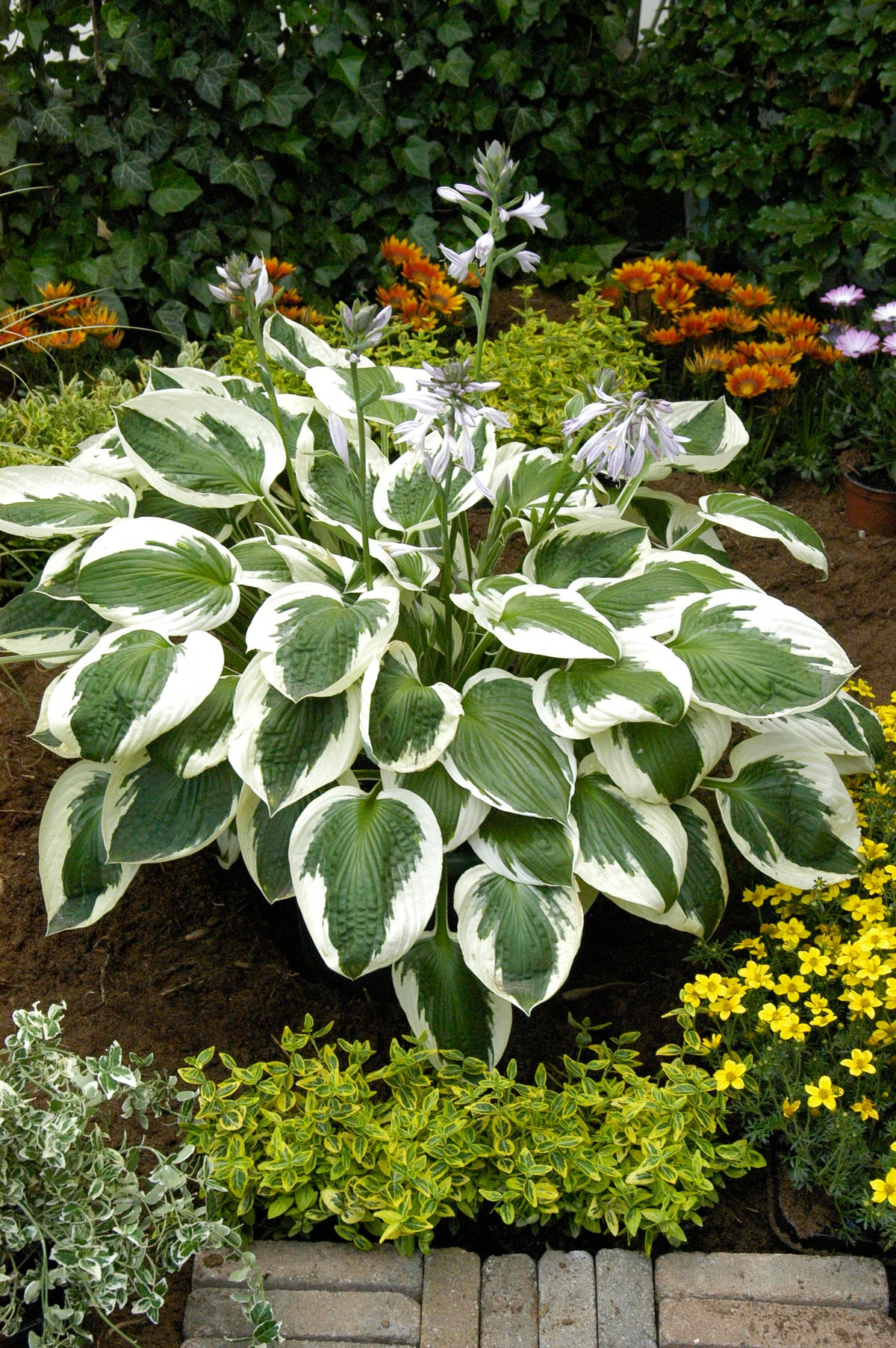
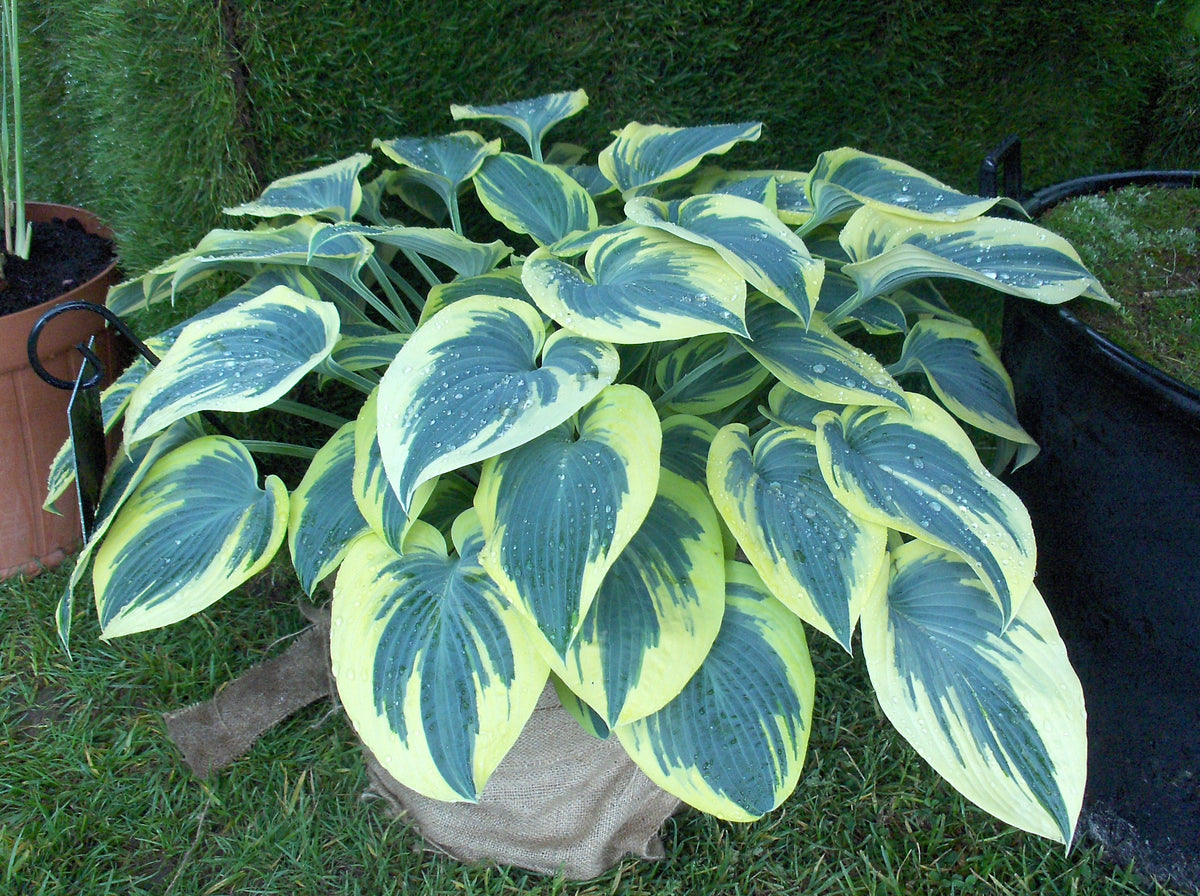
| Pattern | Clean edge, centre or streaks, repeated on every leaf | Irregular blotches that differ from leaf to leaf |
| Veins | Colour follows the leaf pattern | Darker colour bleeds out from the veins |
| Leaf surface | As described for the variety | Unexpected puckering, twisting or dead spots |
| Compared with the variety's photos | Matches | Looks different from other plants of the same name |
The Hosta Helper, a site sponsored by the American Hosta Society, puts the difference simply: mottling caused by a virus appears to bleed out from a vein, while the pattern of a healthy variegated plant is spread more evenly over the leaf. If a hosta looks unusual compared with the photo of its variety, be suspicious. The American Hosta Society warns that some infected plants have even been sold for their "unusual" markings.

Can HVX be tested?
Yes. A plant diagnostic laboratory can confirm the virus with an antibody test called ELISA, and UConn Extension mentions quick test strips for HVX that growers use. For a home garden, a test is mainly useful for a valuable plant you are unsure about. Remember that other, less common viruses also infect hostas, so a plant with clear virus symptoms should go even if HVX itself is not confirmed.
What to do with an infected hosta
- Dig it up completely, with as much of the root as you can.
- Put it in the household waste, not on the compost heap, as the American Hosta Growers Association advises.
- Clean your tools and wash your hands before you touch another hosta.
- Do not replant a hosta in the same spot for at least three years, as the American Hosta Society recommends.
- Watch nearby hostas that may have been touched by the same tools, and do not divide or give them away for a while.
- Tell the supplier if the plant was recently bought, with a photo of the symptoms.
How to keep HVX out of your garden
- Buy from a careful source and avoid plants sold for unusual mottled markings.
- Clean tools between plants when you divide or cut hostas: the American Hosta Society recommends a 10% bleach solution, about one part household bleach to nine parts water.
- Do not cut leaves from one hosta after another with the same knife or scissors without cleaning them.
- Keep mowers and strimmers away from hosta leaves at the edge of a lawn.
- Check new plants through their first season before you divide them or share them.
Our guide to dividing hostas shows how to work cleanly when you split a clump.
How we handle plant health
Every plant we send is checked by hand for healthy roots and at least one firm bud, and plants showing signs of rot, disease or damage are not shipped, as described on our sizes and quality page. If a hosta from us ever shows symptoms that worry you, email us a photo of the leaves with your order number. Under our 100% growing guarantee we will look at it with you and replace the plant or refund it; see returns and refunds.

Common mistakes
- Cutting off the affected leaves and hoping the plant recovers.
- Dividing a suspect plant to save the "healthy" half.
- Putting an infected plant on the compost heap.
- Buying a hosta because its mottled leaves look unusual and attractive.
- Going from plant to plant with the same knife without cleaning it.
In short
- HVX infects only hostas, spreads through sap and propagation, and cannot be cured.
- Look for ink bleed from the veins, irregular mottling, puckering and stunting.
- Remove infected plants completely and put them in the bin, not on the compost.
- Clean tools in a 10% bleach solution between plants.
- Send us a photo if a hosta from us shows symptoms.
Questions & answers
Can Hosta Virus X infect other plants?
No. HVX infects only hostas, so other plants in your garden are not at risk from it.
Can a hosta recover from HVX?
No. There is no cure, and the virus is already throughout the plant when symptoms appear. Removing leaves or part of the clump does not help.
Is it safe to plant a new hosta where an infected one grew?
Wait at least three years before planting another hosta in that spot, as the American Hosta Society advises.
Do slugs or insects spread HVX?
Researchers do not believe insects, nematodes or seed spread the virus. It moves through sap on tools, hands and machines, and through division of infected plants.
Can I compost an infected hosta?
No. Put it in the household waste so that no infected material returns to the garden.