Hosta varieties: a guide by size, colour and leaf
Quick answer
There are more than 6,700 registered hosta varieties, and they differ in three ways: size, from miniatures under 20 cm to giants over a metre wide; leaf colour, from blue and green to gold, white and mixtures; and extras such as fragrant flowers or thick, slug-resistant leaves. Choose by space and light first, colour second.
On this page
This guide sorts hostas the way you would choose them for a real garden: by the room they need, the colour of their leaves and the extra qualities some varieties bring. Every example is a variety we ship from the Netherlands as a bare-root division, two plants of one variety to a pack.
How many hosta varieties are there?
By the end of 2023 more than 6,700 hosta varieties had been registered with the American Hosta Society, and growers add new ones every year. Almost all of them are cultivars: plants picked out for a particular look and then multiplied by division or in a laboratory, so that every plant sold under the name matches the original.
Many new varieties start as a sport, a shoot that comes up looking different from the rest of the clump, with a wider edge, a brighter colour or thicker leaves. A grower who spots a good one can propagate it as a new variety. That is why some hostas look like close relatives: they are. Patriot, registered in 1991, is a sport of Francee: the same green leaf with a much broader white margin.
Seed is a different story. A hosta raised from seed is a new plant that rarely looks like its parent, so nurseries do not grow named varieties from seed.
Hosta sizes: from miniature to giant
Decide on size before anything else, because it tells you where a hosta fits and how many plants the space needs. Sizes describe the height of the leaf mound on a mature plant; the flower stems rise above it. Most hostas end up two to two and a half times as wide as they are tall.
| Size group | Height of a mature plant | Space between plants | Varieties to start with |
|---|---|---|---|
| Miniature and small | up to about 30 cm; miniatures stay under 20 cm | about 30 cm | Mini Skirt, Blue Mouse Ears, Pandora's Box, Golden Tiara |
| Medium | about 30–45 cm | about 50 cm | Halcyon, Francee, Patriot, Fire and Ice |
| Large and giant | 45 cm and taller, often more than 1 m across | 75–100 cm | Blue Angel, Sum and Substance |
These are the groups we use in the shop, and each product page gives the expected size of that variety. Other references split hostas more finely. The size standard published by the American Hosta Society has five classes, from mini (about 20 cm or less) to giant (about 76 cm and taller), measured on clumps at least five years old, and it gives smaller figures again for the warm American South. When a book and a catalogue disagree about a variety, that is usually the reason, and soil, light and water make a real difference too.

Give a new plant time. A bare-root division makes leaves and roots in its first season and fills out into a proper clump over the next two or three years. Most hostas reach their full size after three to five years, so judge a variety by its third summer, not its first.

Hosta colours: what blue, gold, white and variegated mean
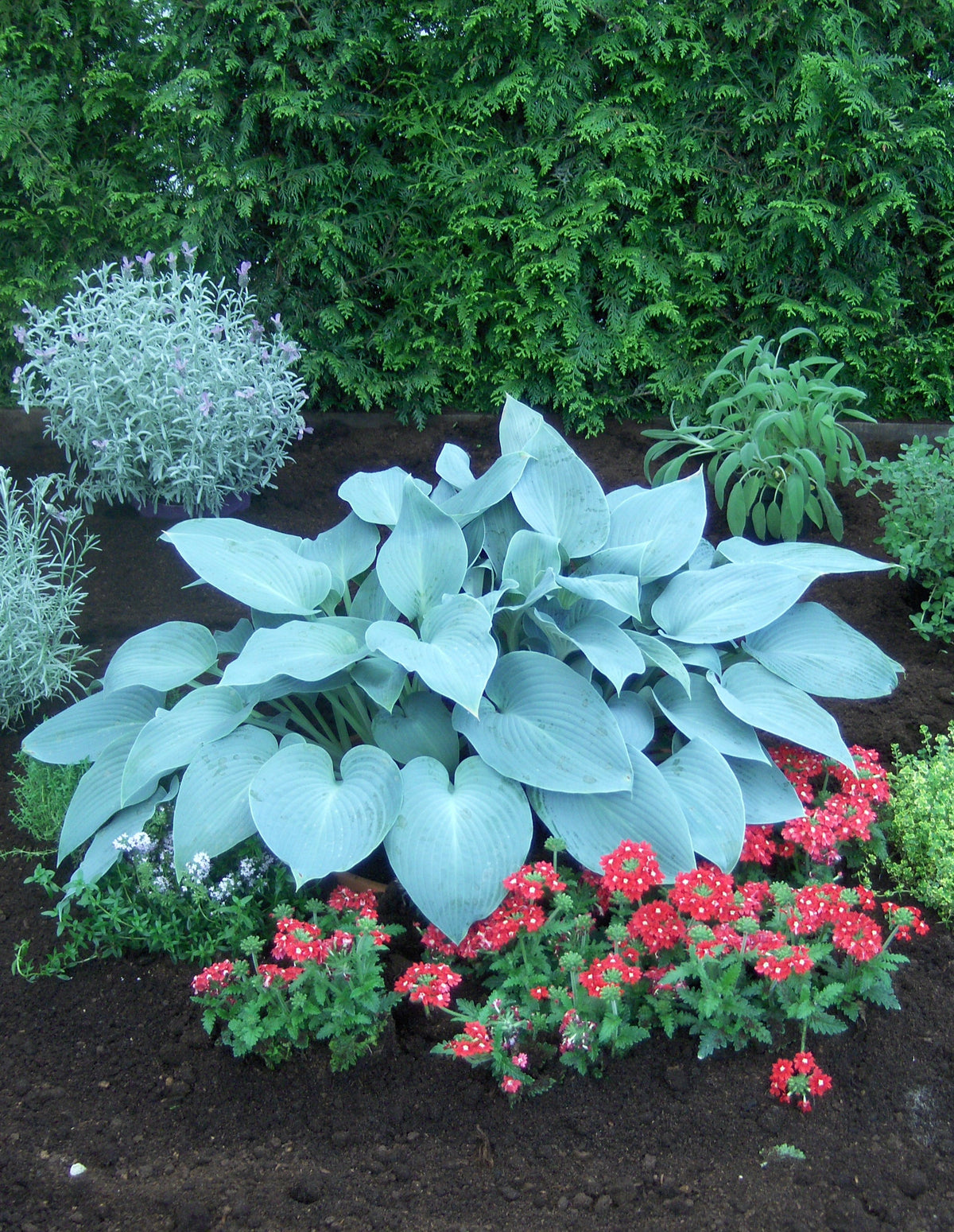
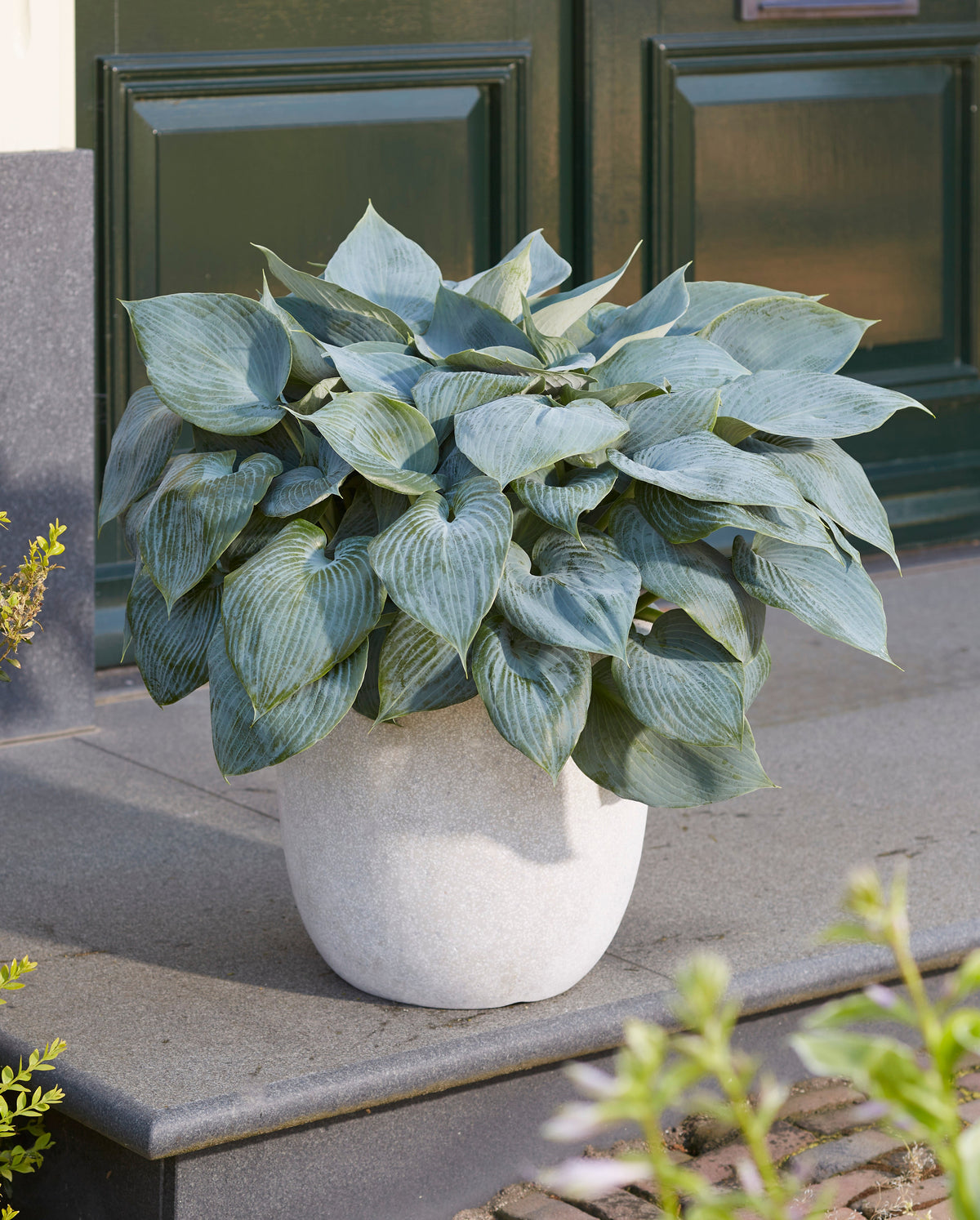
Blue hosta leaves are green underneath a fine, waxy bloom that scatters the light. The bloom looks best in spring and early summer in shade. Hot sun, a hard jet from the hose and some sprays strip it away, and once it has gone the blue does not come back until next year's leaves. Grow blue varieties such as Halcyon where they get little direct sun, and browse our blue hostas for larger or smaller ones. Many blue hostas also have thick leaves, which slugs find harder to eat.

Green hostas run from the glossy dark green of Devon Green to the fresh light green of a young Guacamole leaf. Plain green varieties make a calm background for flowers and for brighter hostas, and like all hostas they are at home in shade.
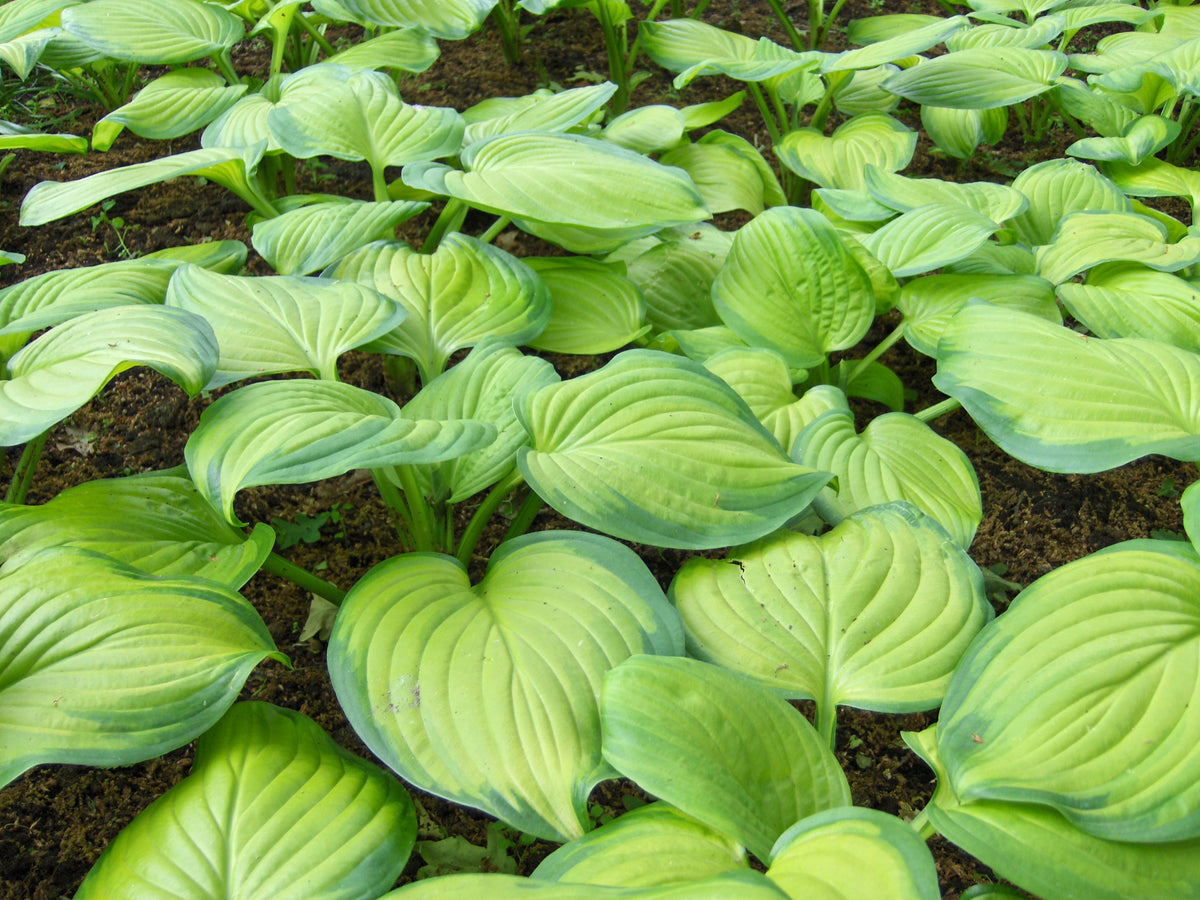
Yellow and gold hostas bring light into shade. Most of them need a little morning sun to turn their brightest, and they look pale or scorched in hot afternoon sun. The giant Sum and Substance takes more sun than most, as long as its soil never dries out.
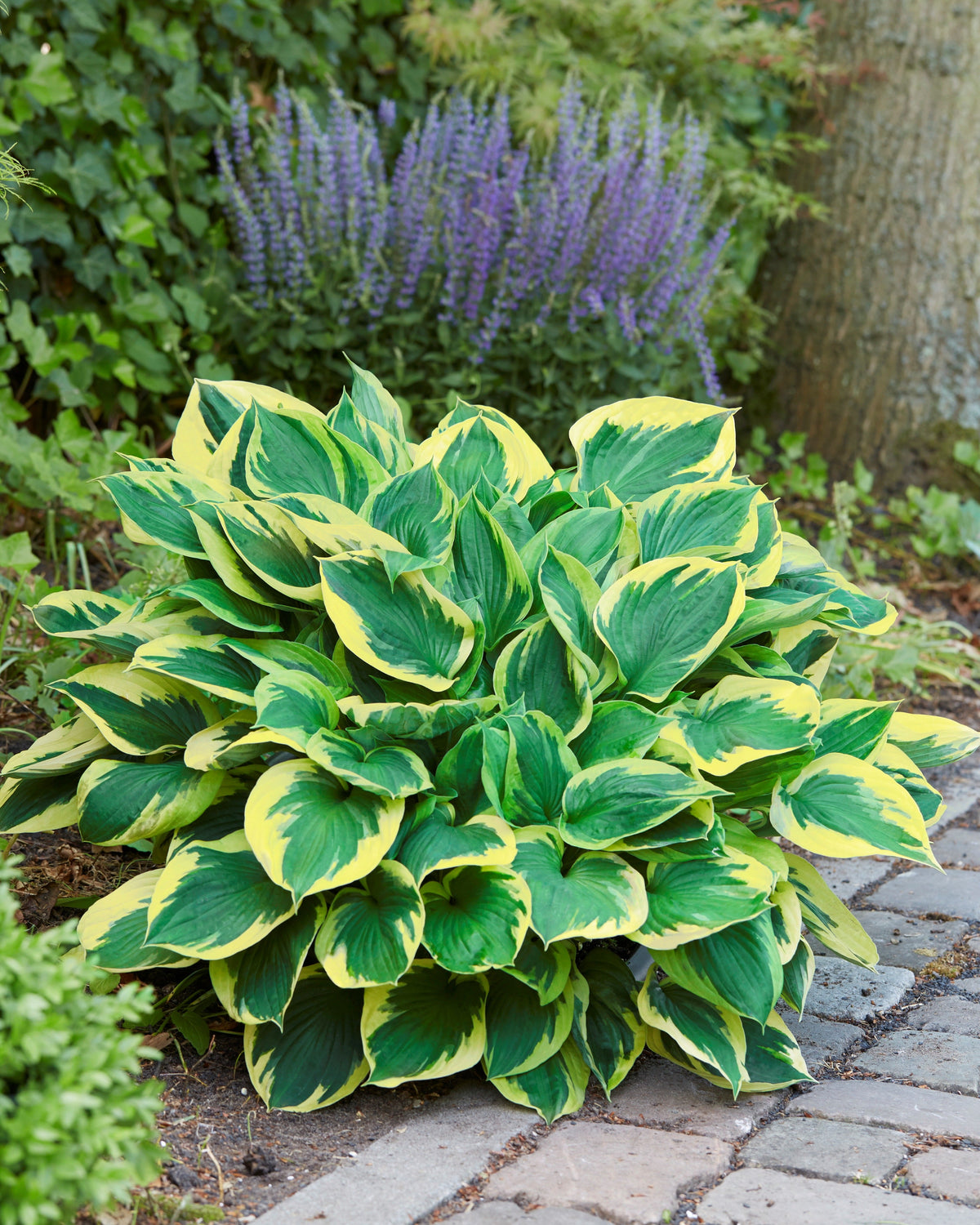
White and cream leaves contain less green, so less of each leaf can turn light into growth. White-centred varieties such as Fire and Ice and Pandora's Box grow more slowly than plain green ones, suffer sooner from drought and strong sun, and some take a while to settle in. Varieties with a white edge and a green centre, such as Francee and Patriot, are the safer first choice.

Variegated simply means more than one colour on a leaf. The second colour can sit at the edge, in the centre or in streaks: Patriot has a green centre and a white margin, Guacamole a light green centre with a dark green margin, and Little Treasure a cream centre with a blue-green margin. Our variegated hostas show the full range.

Some hostas change colour on purpose. Varieties whose leaves turn greener as the season goes on are called viridescent; those that turn lighter, for example from chartreuse to yellow, are lutescent, and a few even fade towards white. If a hosta looks different in July than it did in May, check the variety before you blame the spot.
Leaf shapes and textures
Colour catches the eye first, but leaf shape decides how a hosta looks from across the garden. Heart-shaped leaves, like those of Guacamole, are the classic hosta look. Narrow, pointed leaves, as on Cherry Berry, give a lighter, grassier effect at the front of a border. Broad, rounded leaves look solid and calm, and hold their own beside ferns and grasses.
Texture adds a second layer. Puckered leaves, often called rugose, have a quilted surface; on varieties such as Big Daddy they are thick and blue as well. Wavy or ruffled edges, as on Mini Skirt and Ruffled Mouse Ears, make even a small plant look busy and lively. When you put several hostas together, mixing a smooth leaf with a puckered or wavy one makes each of them easier to see.
Hostas with something extra
- Fragrant flowers. Most hosta flowers have no scent. Scented varieties generally come from Hosta plantaginea, a species that flowers in late summer. Guacamole and Royal Standard both have scented flowers.
- Thick leaves. Firm, thick or puckered leaves are harder for slugs and snails to chew. Halcyon, Devon Green, Blue Angel and the deeply puckered blue Big Daddy are good examples; see all our slug-resistant hostas.
- More sun. Sum and Substance, Golden Tiara, Royal Standard and Sunny Halcyon cope with more light than most hostas, provided the soil stays moist. Our guide to sun or shade for hostas explains how much is too much.
- Red stems. A few varieties have red leaf or flower stems that stand out against pale leaves, among them Cherry Berry, Raspberry Sundae and Sorbet®.

Which hostas are best for beginners?
Start with a variety that has proved itself in many gardens. Hosta of the Year has been awarded every year since 1996: until 2025 by a vote of American hosta growers, and from 2026 by the American Hosta Society as an award for garden performance. Winners are a sensible start, and plain or white-edged leaves forgive more than white centres. These six winners are all in our range:
| Variety | Size | Leaf colour | Hosta of the Year |
|---|---|---|---|
| Patriot | medium | green centre, white margin | 1997 |
| Guacamole | medium to large | light green centre, dark green margin | 2002 |
| Sum and Substance | giant | yellow | 2004 |
| Blue Mouse Ears | miniature | blue | 2008 |
| Mini Skirt | miniature | green centre, yellow margin | 2024 |
| Halcyon | medium | blue | 2026 |
You will find every winner we grow in our Hosta of the Year collection.
How to choose the right hosta for your garden
- Measure the space. Note how wide each plant can grow and pick the size group from the table above.
- Watch the light for a day. Deep shade suits blue and green hostas; a spot with morning sun suits gold and sun-tolerant varieties; hot afternoon sun is hard on almost all of them, white centres most of all.
- Decide what the hosta is for. Miniatures and small varieties work in pots, troughs and along path edges; medium hostas fill borders and cover ground; large and giant ones make a focal point. Our guide to growing hostas in pots covers containers in detail.
- Think about slugs. Where slugs are common, start with thick-leaved varieties and keep the thin-leaved ones for pots, where you can watch them.
- Choose the colour last. Contrast works well: blue next to gold, a white edge beside plain dark green, a small hosta in front of a big one.
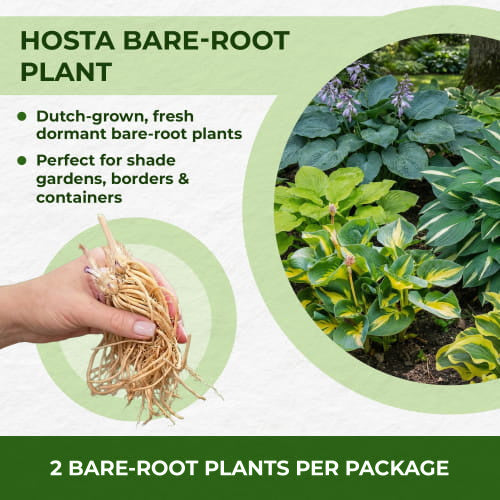
When your plants arrive, our planting and care guide covers depth, spacing and the first watering, and our article on bare-root hostas shows what comes in the box.
Common mistakes
- Choosing by colour alone and planting a blue hosta in full sun, where it soon turns green.
- Putting a white-centred variety in hot afternoon sun, where the pale parts scorch first.
- Planting a giant where only a medium hosta fits, then having to move it once it has settled.
- Judging a variety in its first summer, before it has reached its full size and colour.
- Buying one of everything: a border looks calmer with several plants each of fewer varieties.
In short
- Measure the space and pick a size group before you look at colours.
- Check the light: blue and white-centred hostas in shade, gold ones where they get morning sun.
- Choose thick-leaved varieties if slugs are common in your garden.
- Give each plant three to five years to reach its full size.
Questions & answers
Do hosta varieties change colour during the season?
Many do. Blue hostas turn greener as hot sun and hard watering strip their waxy coating, some varieties turn greener on purpose, and others turn lighter or more yellow as the season goes on. Light matters too: most gold varieties are brightest with a little morning sun.
Is a hosta variety the same as a cultivar?
In practice, yes. Garden hostas are cultivars, plants selected for a particular look and multiplied so that every plant matches the original. In our shop and guides we simply call them varieties.
How do I know how big my hosta will get?
Every product page gives the expected size of that variety, and our size groups tell you how much space to leave. Remember that the size is for a mature plant: most hostas need three to five years to get there.
Can I plant different hosta varieties together?
Yes, that is how most hosta borders are made. Keep the spacing the larger variety needs, put smaller ones in front and pair contrasting leaves, such as blue with gold or a white edge with plain dark green.
Will a hosta grown from seed look like its parent?
Usually not. Seedlings vary in colour, size and leaf shape, so a plant from seed is a new hosta. Named varieties are multiplied by division or in a laboratory to keep them true to type.