Hostas in winter: should you cut them back, and how to protect them
Quick answer
Hostas are hardy and need a cold winter rest, so there is little to do. Let the leaves die back after the first frosts, clear them away once they have collapsed, mark the spot and keep the soil well drained, because a wet winter does more harm than a cold one. Potted hostas need a sheltered spot raised off the ground. Only new shoots that have already started to grow need frost cover.
On this page
Hostas are among the easiest perennials to get through winter. They are hardy, they switch themselves off in autumn, and most winter losses come from waterlogged soil rather than from frost. Below you will find whether to cut hostas back, how to look after them in the ground and in pots, and what to do if a late frost catches new shoots.
Do hostas need cold in winter?
Yes. Hostas need a cold rest to grow well the following year. Sienna Hostas, a nursery that has won RHS Chelsea gold, says they need temperatures below 5 °C (41 °F) to enter dormancy, which is vital for vigour in the next season. That is why a hosta kept in a warm house all winter does badly, and why we advise leaving potted plants outside (see hostas in pots). The plants themselves are very hardy: the RHS rates Halcyon H7, hardy below −20 °C.
Why a wet winter is worse than a cold one
The same nursery notes that hostas are more likely to die from a wet winter than from a cold one. A crown that sits in cold, waterlogged soil rots. If your soil is heavy, work compost into the bed when you plant, as explained in our guide to the best soil for hostas, and avoid hollows where water collects.
Should you cut back hostas in autumn?
You do not have to. Hosta leaves die back by themselves after a few frosts, and Sienna Hostas prefers to leave them and clear them away by hand once they have collapsed. Many gardeners cut the foliage down after the first frosts instead, for a tidier bed and because rotting leaves give slugs and their eggs a sheltered place to spend the winter (see slugs and snails on hostas). Either way works. What matters is how you do it:
- Wait until the leaves have collapsed. Cutting a plant that is still green can tempt it into soft new growth that frost will kill.
- Cut a few centimetres above the soil with clean secateurs, or pull away the collapsed leaves, and take them out of the bed.
- Clean your tools between plants, because Hosta Virus X spreads in sap (see Hosta Virus X).
- Mark the spot with a cane or label, so you do not dig into a crown while the bed looks empty.
Looking after hostas in the ground
- If autumn is dry, water well until the first frost, so the roots go into winter with moisture in the soil.
- Do not feed after midsummer: late fertiliser pushes soft growth that winter damages (see feeding hostas).
- After cutting back, spread a thin layer of compost or leaf mould over the bed. Illinois Extension suggests working organic matter into the soil when you cut the leaves back, because it improves the soil structure and adds nutrients. Keep the mulch thin over the crowns.
Hostas in pots in winter
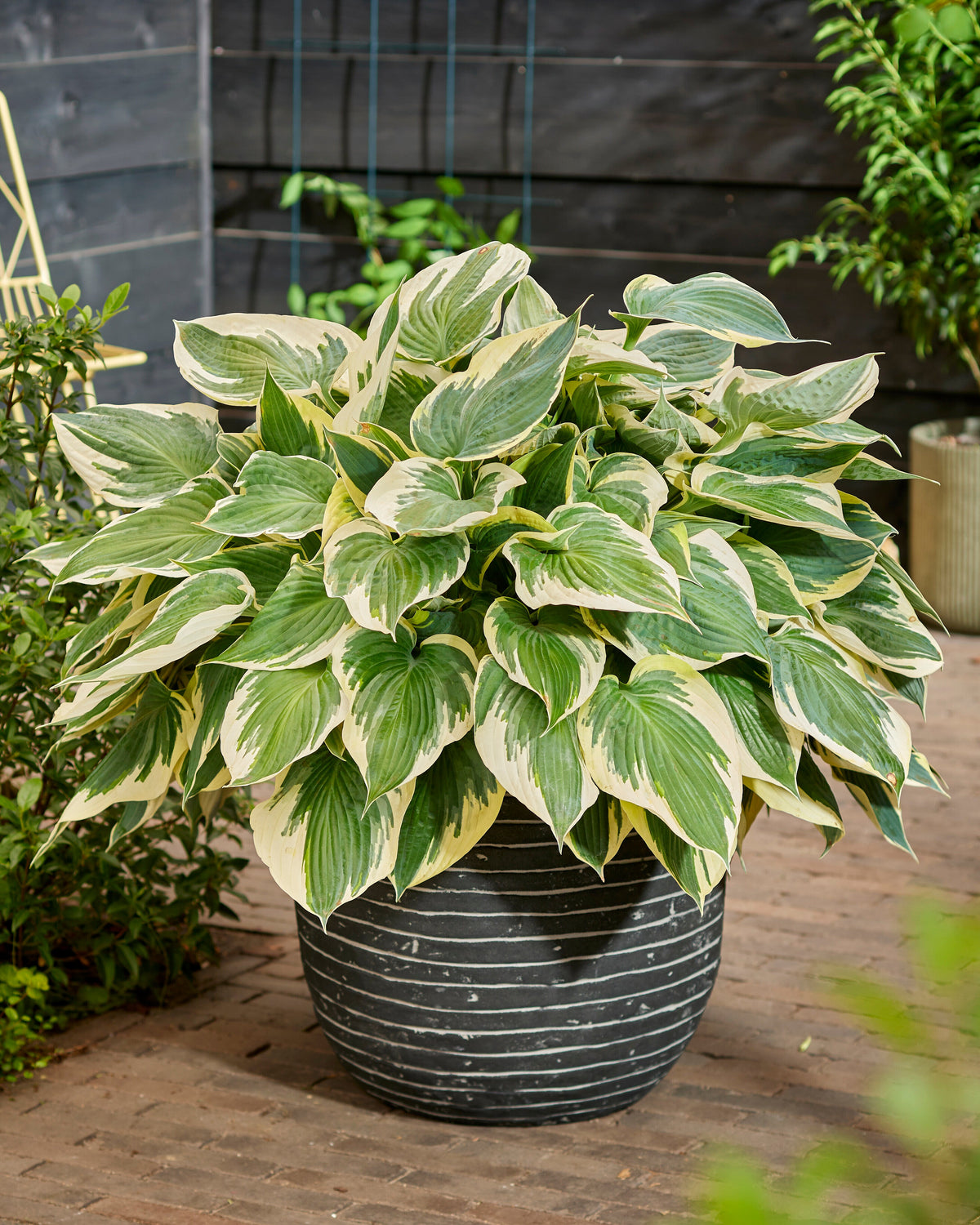
Roots in a pot are more exposed than roots in the ground, and pots easily become waterlogged. Leave the pot outside, stand it on feet or bricks so that rain drains away, keep the compost just moist and, in a hard frost, wrap the pot rather than the plant in hessian. Sienna Hostas also suggests putting young potted plants in an unheated shed or garage in late autumn, because they still get the cold they need there. Our guide to hostas in pots has the full routine.

When do you need to cover hostas for frost?
Only once they have started growing again. Sienna Hostas points out that dormant hostas do not need covering; the risk is a frost after new leaves have appeared. For a night or two, lay horticultural fleece over the clump, or an upturned bucket over a small plant, and take it off in the morning so the shoots get light and air.
What about new plants?
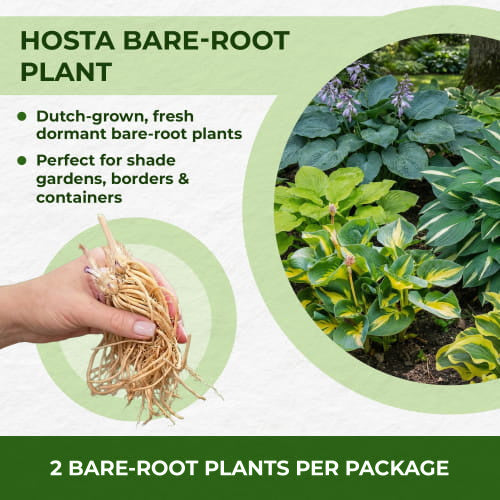
Our bare-root hostas ship from 1 March to 1 July, so they are planted in spring and have a whole season to root before their first winter. Our guides to bare-root hostas and to your hosta's first year explain what to expect.
Common mistakes
- Cutting hostas back while they are still green.
- Planting in a hollow or in heavy soil that stays waterlogged.
- Bringing potted hostas into a warm room for the winter.
- Leaving a pot standing in a full saucer.
- Feeding late in summer.
In short
- Hostas need cold to rest; leave them outside, pots included.
- Wet soil is a bigger danger than frost, so drainage comes first.
- Cutting back is optional: do it after the leaves have collapsed, with clean tools.
- Mark the crowns and keep any mulch thin over them.
- Cover only shoots that have already started to grow.
Questions & answers
Do hostas come back every year?
Yes. Hostas are hardy perennials: the leaves die back in autumn and the plant sends up new shoots from the crown in spring. Established clumps can be slow to appear, so read our guide to a hosta that is not coming up before you worry.
Can I leave the dead leaves on over winter?
Yes. Sienna Hostas, a nursery that has won RHS Chelsea gold, prefers to leave them and clear them away once they have collapsed. The main reason to cut them earlier is to deny slugs a sheltered place to spend the winter.
Should I bring potted hostas indoors?
No. Hostas need temperatures below 5 °C to rest, which is vital for vigour the next season. Leave the pot outside, raised on feet in a sheltered spot, or keep young plants in an unheated shed or garage.
Will frost kill my hostas?
Dormant hostas are very hardy. The risk is a late frost after new leaves have started to grow, which you can cover with fleece for a night or two. Waterlogged soil in winter does more harm than cold.
Do hostas need mulch in winter?
Not strictly, but a thin layer of compost or leaf mould after cutting back improves the soil. Keep it thin over the crowns.