Feeding hostas: when to fertilise and how much they need
Quick answer
Hostas are not heavy feeders. On decent soil an annual layer of compost is often enough. If you do fertilise, use a slow-release fertiliser just as the shoots start to grow in spring, follow the pack rather than adding extra, and stop by midsummer so the leaves harden before autumn. Too much nitrogen can fade the pattern on variegated varieties.
On this page
Hostas are not heavy feeders, and a hosta that is fed too much is no better off than one that is fed too little. Good soil, steady moisture and the right light do most of the work. Below you will find whether your hostas need fertiliser at all, which kind to use, when to apply it and when to stop.
Do hostas need fertiliser at all?
Often not much. The soil matters more than the fertiliser: a bed enriched with compost feeds hostas for years, as our guide to the best soil for hostas explains. University of Nebraska–Lincoln Extension puts it conditionally: if fertiliser is needed, apply a slow-release one just as growth begins in spring. A top-dressing of compost every spring is a gentle alternative, and it also keeps the soil moist and open.
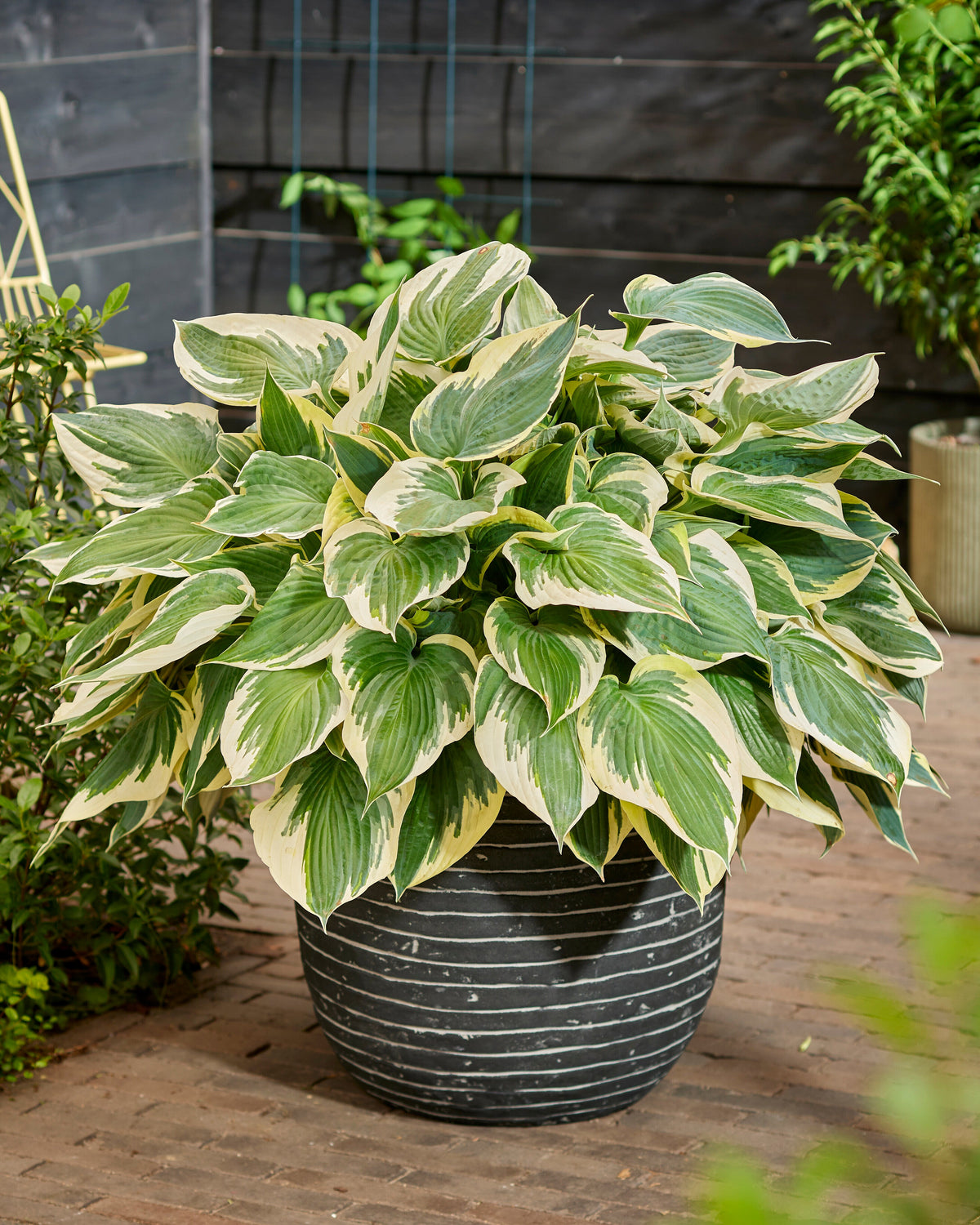
Feeding makes most sense when plants are small and pale, when the soil is poor or sandy, or when hostas grow in pots, where the compost is soon used up.
Which fertiliser should you use?
A balanced, slow-release granular fertiliser is the usual choice. Slow-release products feed for weeks or months, so the plant gets a steady supply instead of a spike. Sprinkle the granules on the soil around the plant, not on the crown or the emerging shoots, and water afterwards. Use the dose on the pack: it is a maximum, not a minimum.
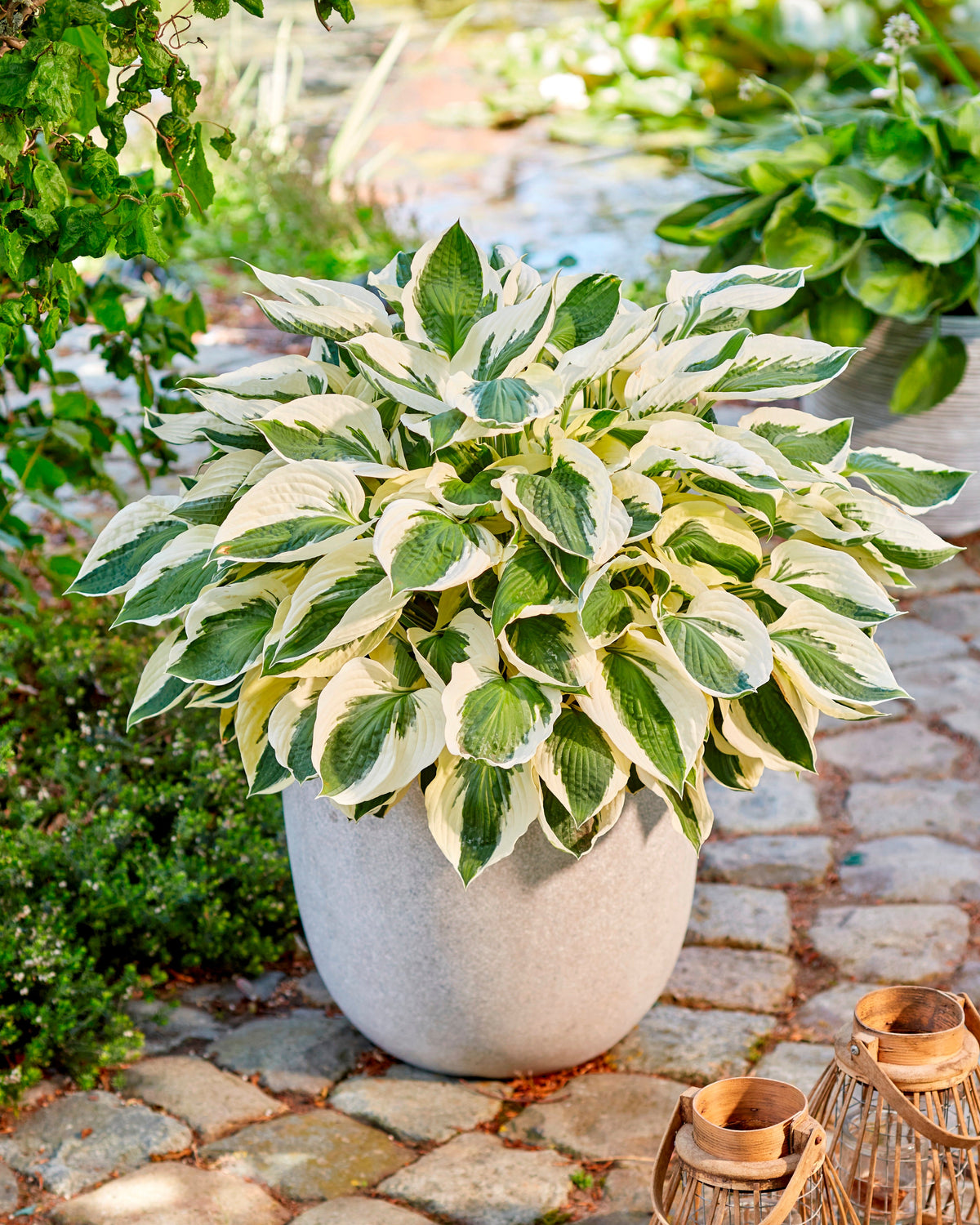
Be careful with high-nitrogen feeds. The same Nebraska publication notes that high nitrogen can diminish the intensity of the pattern on variegated hostas, so they can look plainer and greener than they should.
When to feed hostas
- Early spring, as the shoots appear. This is the one feed most extension advice agrees on.
- Early summer, only if needed. Plants in pots, or plants that are clearly small and pale, can take a light second feed.
- Mulch in early summer. Nebraska Extension suggests a loose layer of mulch about 2.5 cm (an inch) deep, which holds back weeds, reduces water loss and lessens compaction.

When to stop feeding
Stop by midsummer. Ohio State University Extension asks gardeners to finish fertilising by late July in its climate, because a plant still pushing tender growth in late summer can lose it to the first frost. Late feeding also gives slugs soft new leaves to eat. If you divide hostas in late summer, give them water and compost rather than fertiliser. Potted hostas follow the same rule: a liquid feed every month while they are growing, ending in midsummer, as in our guide to hostas in pots.
What about newly planted hostas?
A new bare-root division needs roots first, not fertiliser. Plant it in soil enriched with compost, water well and keep the soil moist all summer; our guide to your hosta's first year covers the whole season. If you feel the plant needs a boost, wait until it has leafed out.
Should you feed a hosta with yellow or brown leaves?
Not automatically. Yellow leaves are more often a sign of dry soil, waterlogging, too much sun or crown trouble than of hunger, and extra fertiliser will not fix those. Check watering and light first. Brown edges can even be caused by feeding: heavy fertiliser leaves salts around the roots, and the usual cure is to stop feeding and water thoroughly. Our guide to brown edges on hosta leaves shows how to tell the causes apart.
Common mistakes
- Feeding late in summer or autumn.
- Using a high-nitrogen feed on variegated varieties.
- Putting fertiliser on the crown or against emerging shoots.
- Adding more than the pack recommends.
- Fertilising when the real problem is drought or too much sun.
In short
- Good soil and compost matter more than fertiliser.
- If you feed, use a balanced slow-release fertiliser as the shoots appear in spring.
- Keep nitrogen moderate on variegated varieties.
- Mulch about 2.5 cm deep in early summer.
- Stop feeding by midsummer.
Questions & answers
What is the best fertiliser for hostas?
A balanced, slow-release fertiliser applied once, just as the shoots start to grow in spring, is the usual advice from university extension services. Follow the dose on the pack: more does not give better plants.
Do hostas need fertiliser every year?
Not always. On good soil an annual mulch of compost can feed them well enough. Feed if the plants are small or pale and the soil is poor.
When should I stop feeding hostas?
By midsummer. Feeding later pushes soft growth that has no time to harden before autumn and winter.
Should I fertilise a yellowing hosta?
Not automatically. Yellow leaves are more often caused by dry soil, waterlogging, too much sun or crown problems than by hunger. Check those first.
Can too much fertiliser harm hostas?
Yes. Too much nitrogen can fade the pattern on variegated leaves, and fertiliser salts can burn leaf edges. If you overdo it, stop feeding and water well.