How to choose hostas for your garden
Start with the place, not the plant. Four questions lead you to the right part of our range.
Light
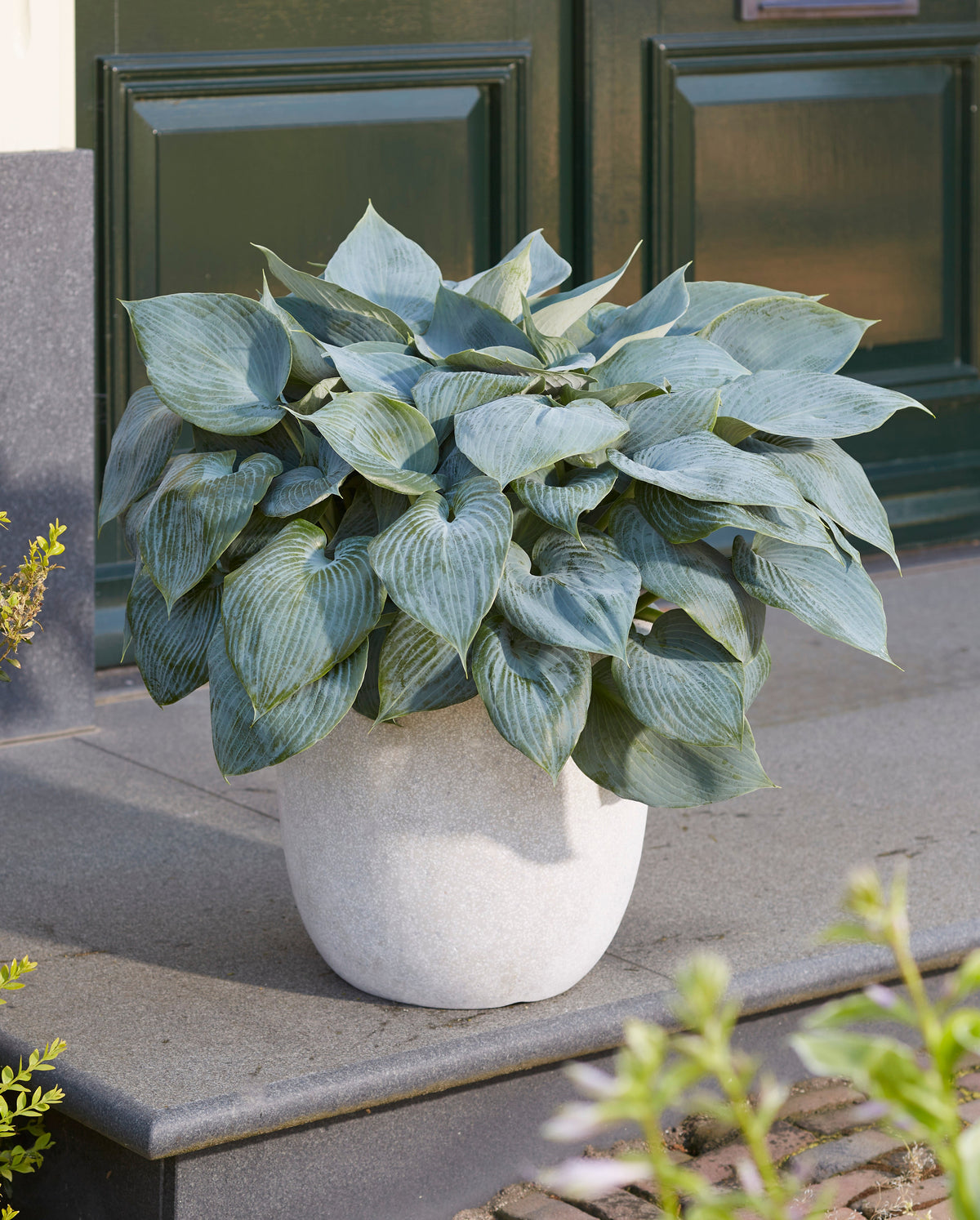
Green hostas cope best with deep shade, under trees or on the north side of a house, and blue ones keep their colour there longest. Light shade or a few hours of morning sun suit almost every hosta and bring out gold and variegated leaves. For a spot with afternoon sun, choose from our sun-tolerant hostas and keep the soil moist.
Space
Plan for the mature plant, not for the size it arrives at: a hosta keeps widening for several years and usually ends up broader than it is tall. Miniature and small hostas belong at the front of a bed and in pots, medium hostas in the middle and as ground cover, and large and giant hostas at the back or on their own as a focal point.
Colour
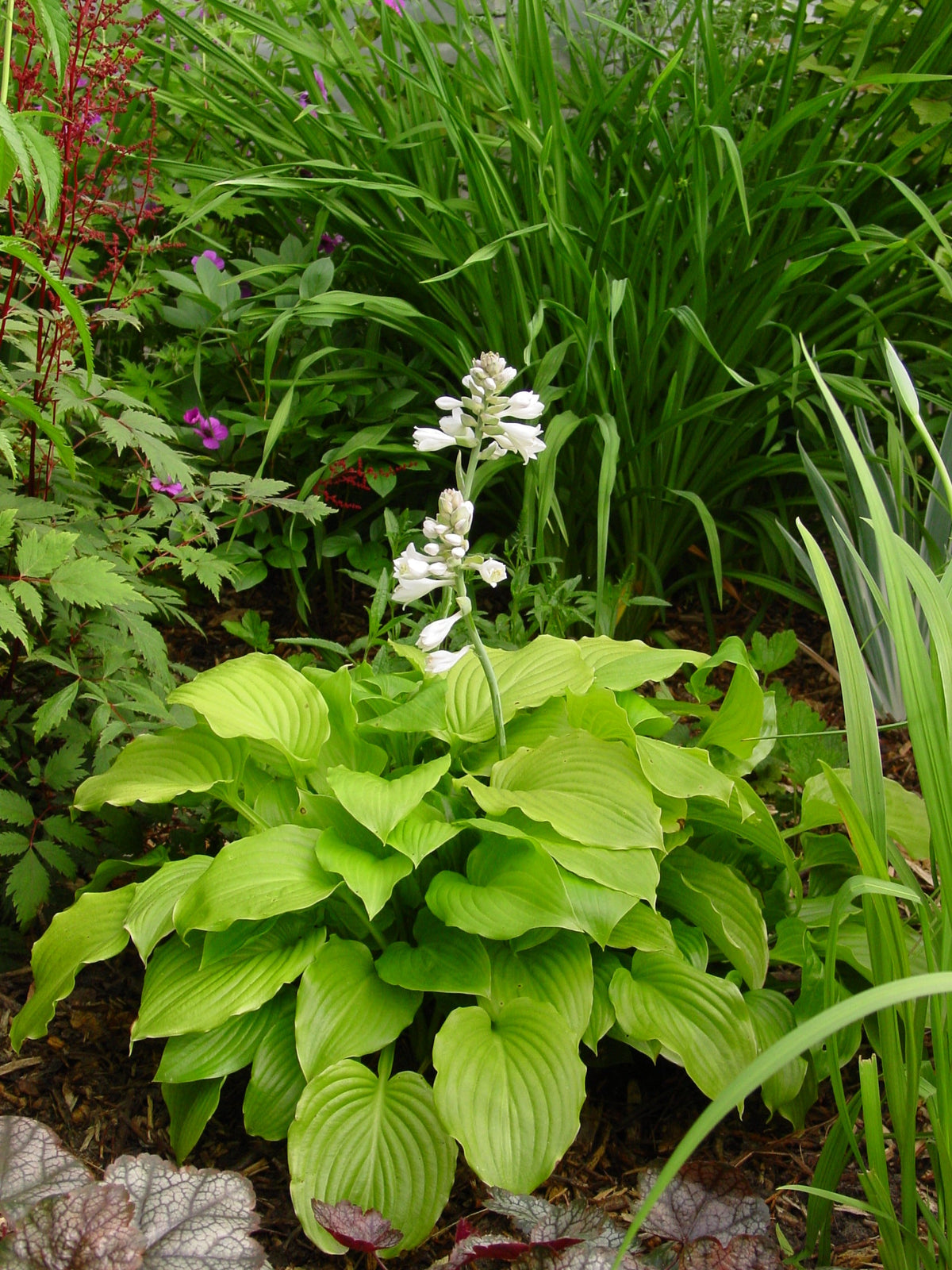
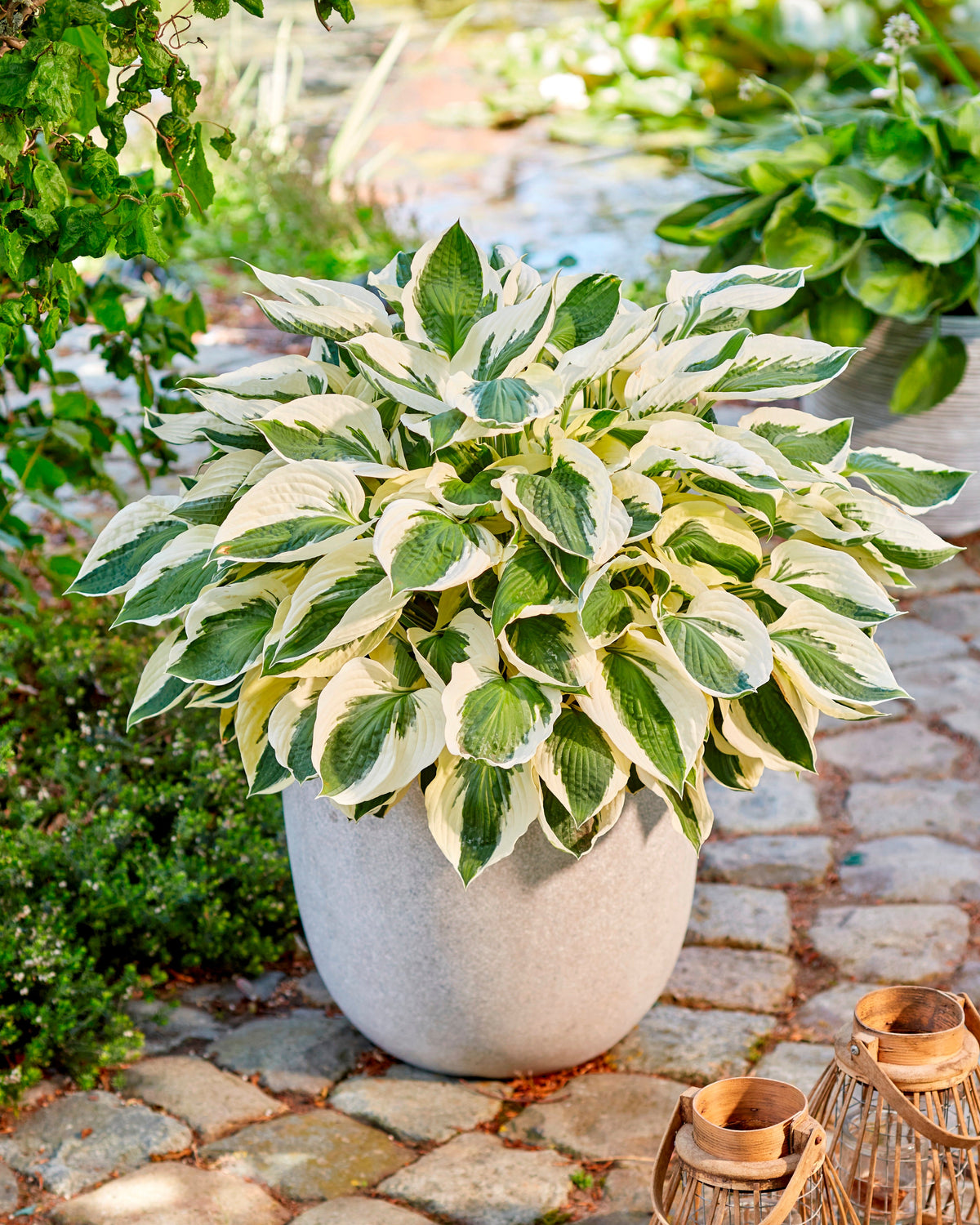
Leaf colour sets the mood. Blue hostas look cool and calm and green hostas make a restful background, while yellow and gold and white and cream hostas bring light into dark corners. Variegated hostas combine two or more colours in one leaf.
Particular needs
If slugs are a problem, start with slug-resistant hostas. For a terrace or a bench where you sit on summer evenings, add fragrant hostas. And to see what has just joined our range, look at our new varieties.
How many hostas to order
Every pack holds two plants of one variety, which makes planning easy. Using the spacing we give on each product page:
- Edging with small hostas, about 30 cm apart: roughly three plants per metre, so a 3-metre path edge takes five packs.
- Ground cover with medium hostas, about 50 cm apart: four plants, or two packs, per square metre.
- Large and giant hostas, 75–100 cm apart: about one plant per square metre. One pack is often enough to anchor a bed.
Odd numbers are a border tradition, but with hostas a matching pair works just as well: one plant on each side of a path, a step or a gate frames the view.
When your hostas arrive
Unpack them as soon as the parcel arrives and plant within a few days. If you have to wait, keep them somewhere cool and frost-free and make sure they do not dry out. Water well after planting, and keep the soil moist through the first summer while the roots settle in.