Hostas as ground cover: best varieties and spacing
Quick answer
Hostas make an excellent ground cover for shade: planted closely, their leaves meet and suppress weeds from late spring until autumn. Choose medium-sized, vigorous varieties, plant them a little closer than in a border, mulch the gaps until the leaves close, and expect full cover after about three seasons.
On this page
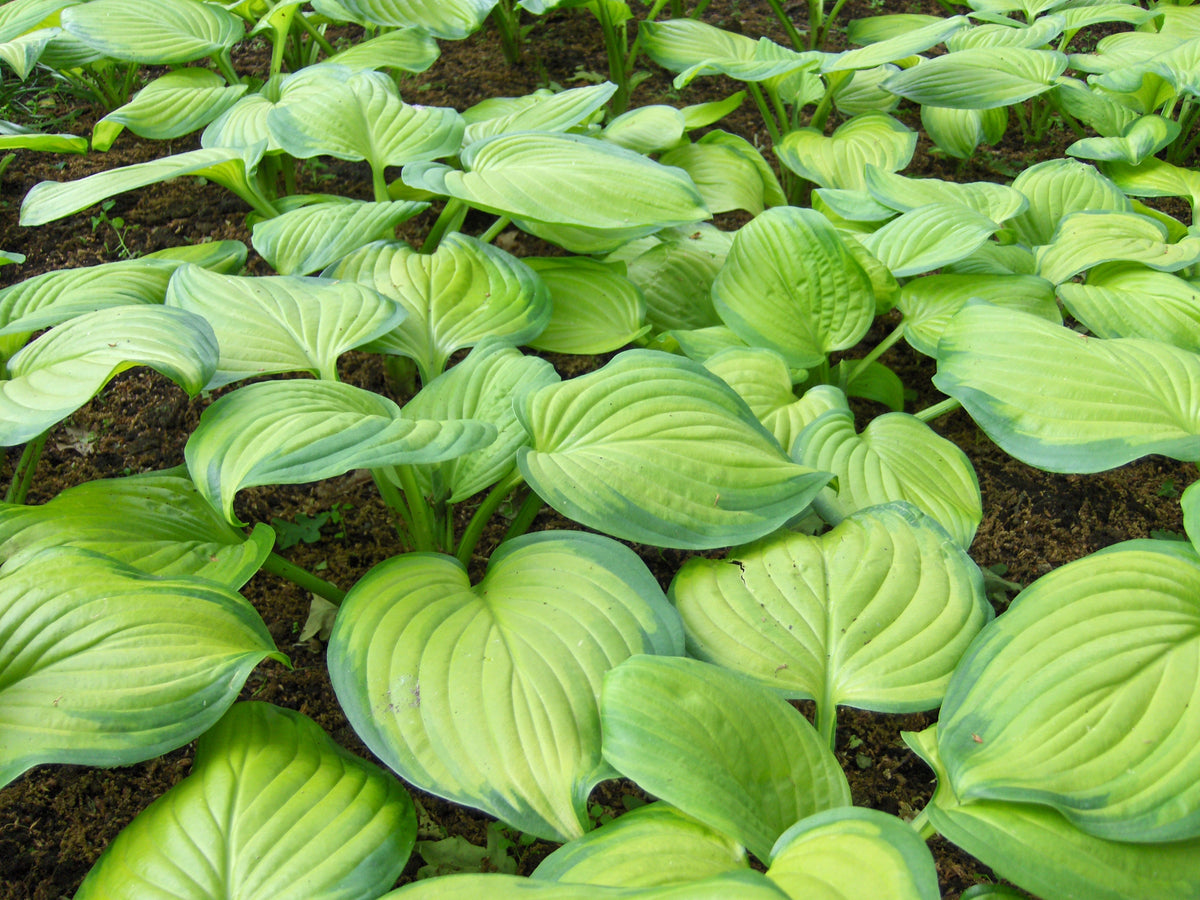
Planted closely in a group, hostas knit together into a carpet of leaves that covers the ground from late spring to autumn and leaves little room for weeds. Here is which varieties do the job best, how close to plant them and how to get a closed cover as quickly as possible.
Can hostas be used as ground cover?
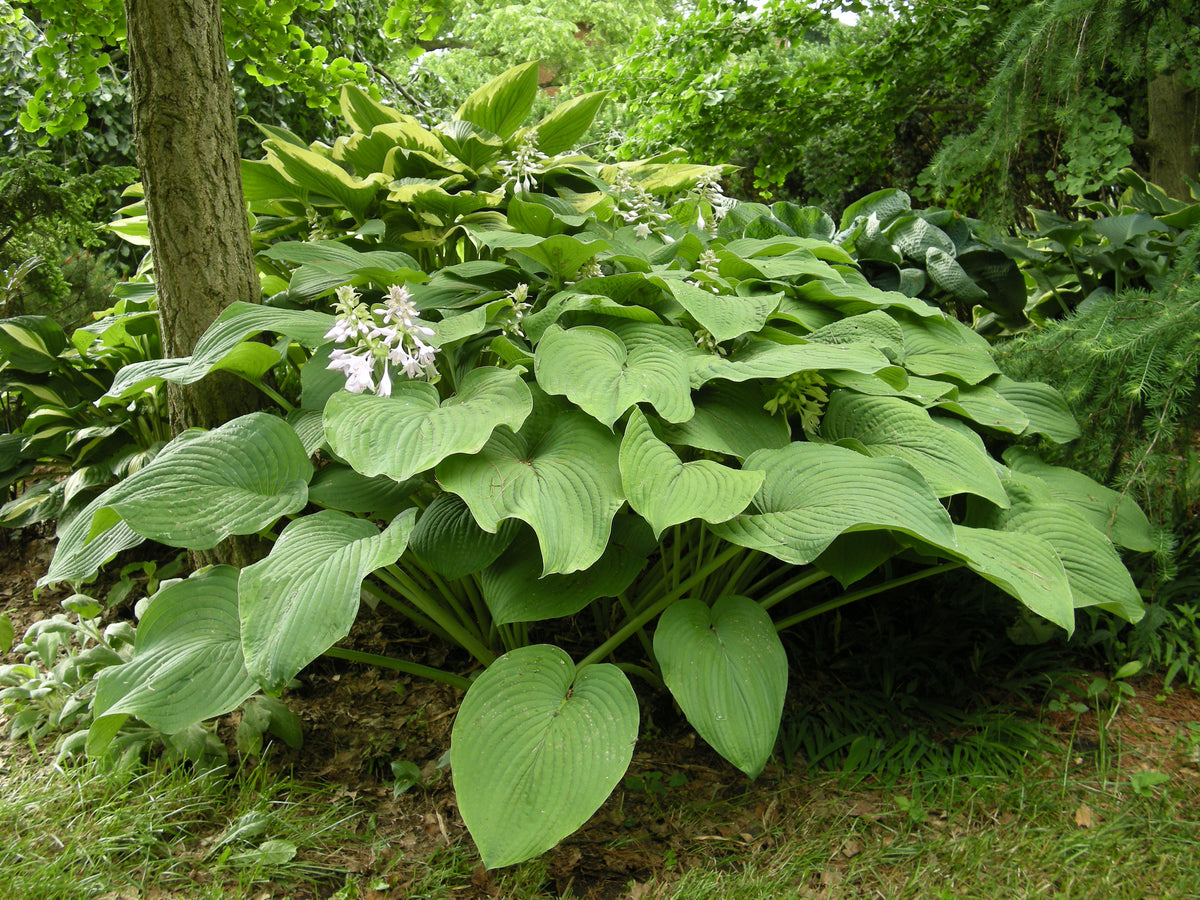
Yes, and they are one of the best choices for shade. A group of the same variety forms an even, dense layer of leaves that shades the soil and suppresses weeds through the growing season. University of Missouri Extension notes that hosta roots compete well with those of most trees, so a hosta carpet also works in the root-filled ground under deciduous trees, as long as it is watered while it settles.
Two things to know in advance. Hostas die back in winter, so the ground is bare from late autumn to mid-spring; underplant them with spring bulbs or combine them with evergreen partners if that matters to you. And a hosta carpet takes a few seasons to close, because hostas need three to five years to reach their full size.
Which hostas make the best ground cover?
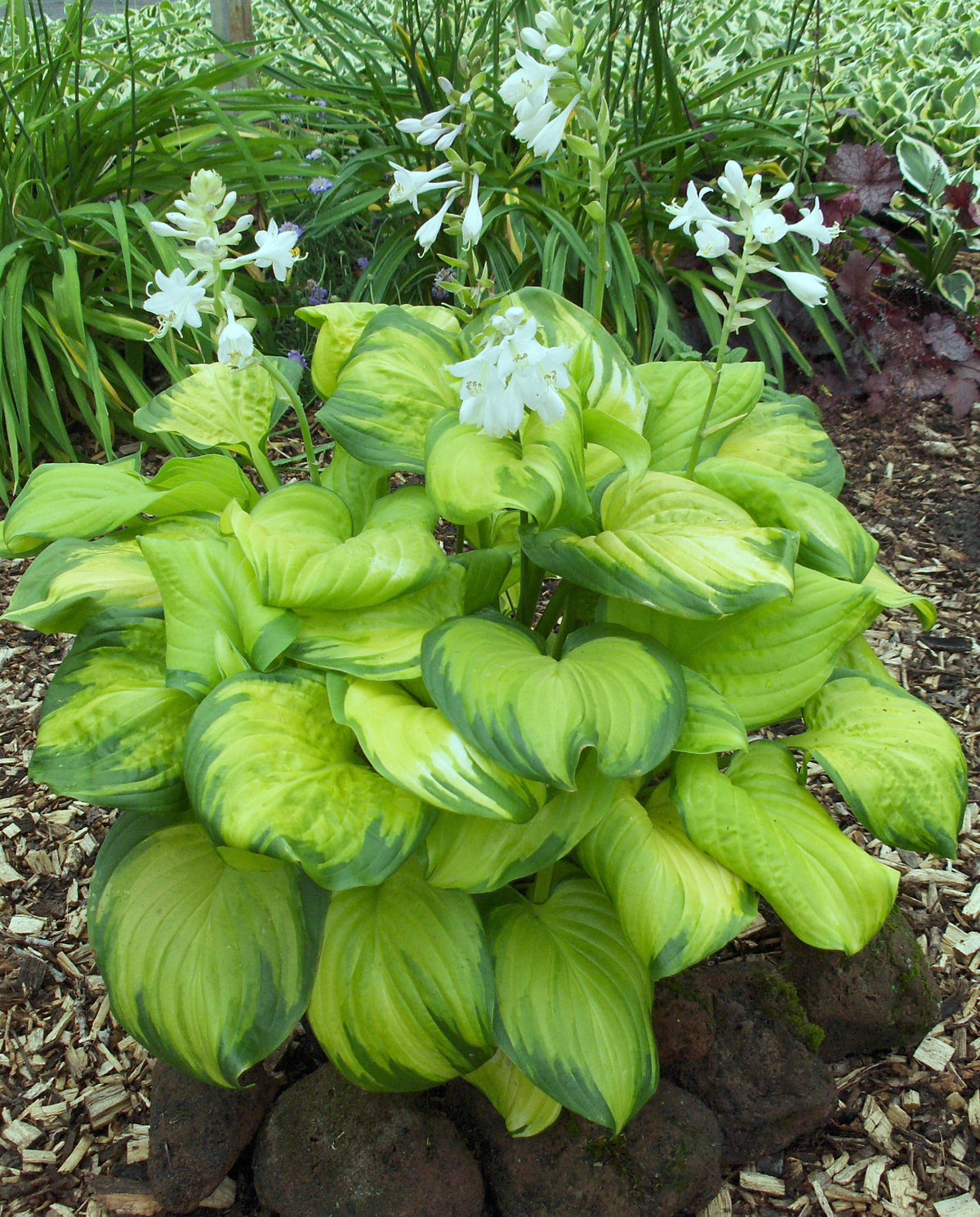
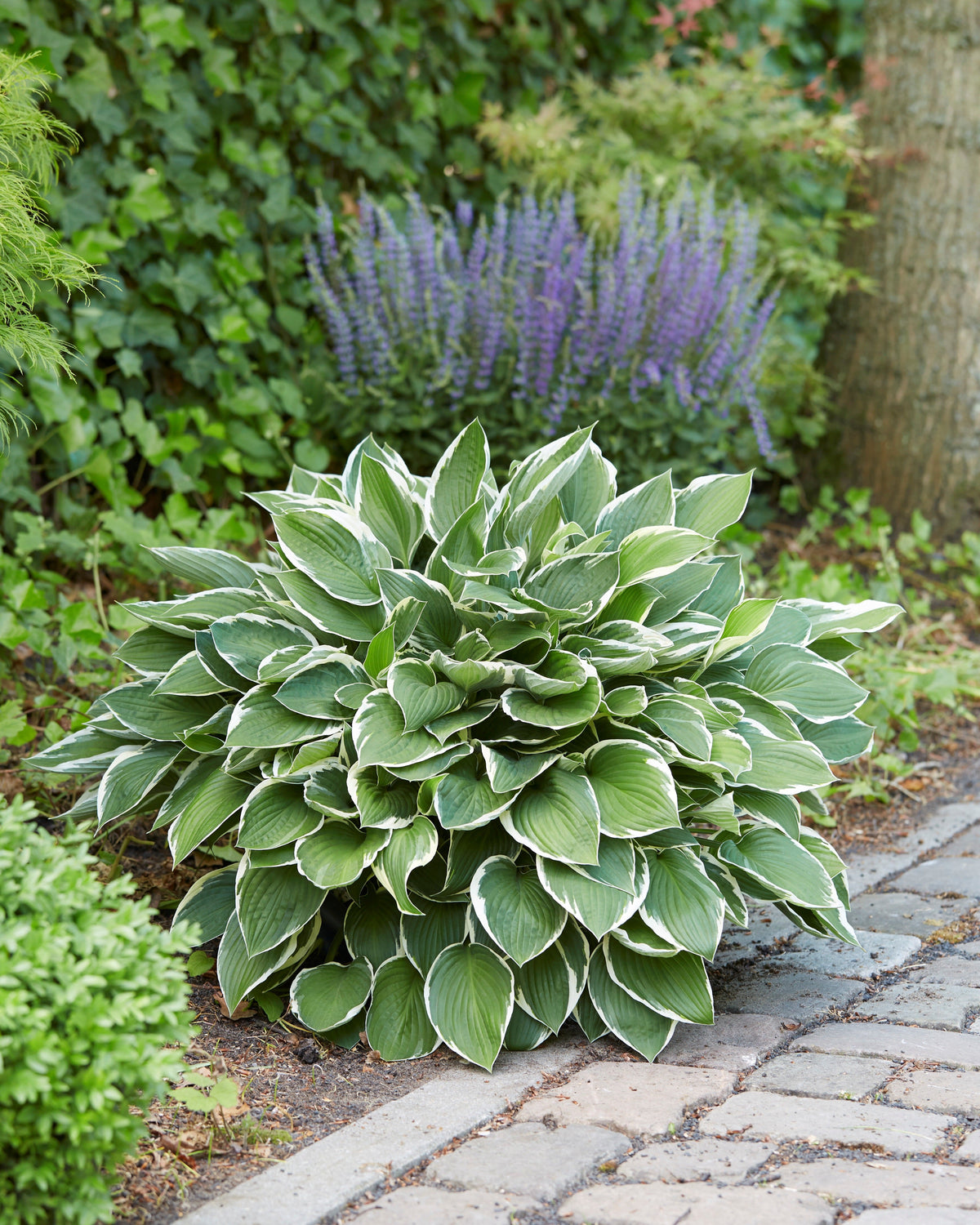
Look for medium-sized varieties with steady growth and leaves that overlap well. Plain green and simple edged leaves look calm over a large area; save striking patterns for a single specimen. Good choices from our range, all medium-sized:
- Devon Green: glossy, dark green leaves with good slug resistance.
- Twilight: dark green leaves with wide gold margins.
- Mama Mia: green leaves with bright yellow edges.
- Don Stevens: green with a yellow edge, for borders and ground cover.
- Post-It: all-yellow leaves that brighten a dim area.
- Buckshaw Blue: rounded blue leaves for deeper shade.
Our green hostas and medium hostas include many more varieties suited to planting in drifts.

How far apart should ground-cover hostas be?
Closer than for single plants in a border, so that the leaves meet sooner, but not so close that the plants crowd each other.
| Size | Spacing in a border | Spacing as ground cover |
|---|---|---|
| Small | about 30 cm | 25–30 cm |
| Medium | about 50 cm | 40–50 cm |
| Large | 75–100 cm | 60–75 cm |
Plant in a staggered pattern rather than straight rows, so that the gaps close evenly. Each of our packs contains two plants of the same variety, which makes it easy to plant drifts: four packs of a medium hosta cover roughly two square metres at 45 cm apart.
How to plant a hosta carpet
- Clear the ground of perennial weeds first; they are much harder to remove once the hostas are in.
- Improve the soil over the whole area with compost; see our guide to soil for hostas.
- Mark the positions in a staggered grid at the spacing above.
- Plant the divisions with the crown at soil level and water them in well.
- Mulch the gaps with bark or leaf mould to keep weeds down until the leaves close.
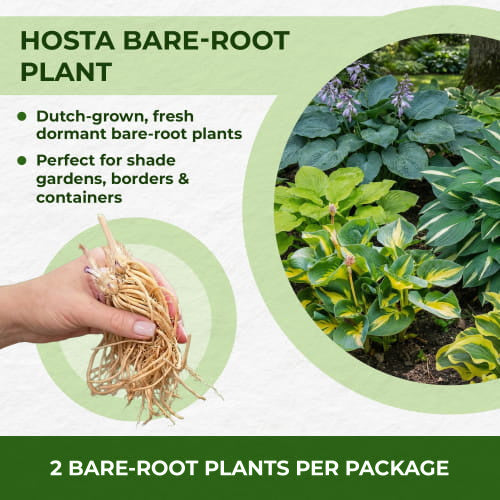
Bare-root divisions are an affordable way to plant a large area, and they settle in quickly in spring. Our guide to bare-root hostas explains what you receive and how to plant it.

Looking after hosta ground cover
- Water in the first summer. Young plants need steady moisture until their roots are established; see watering hostas.
- Weed until the leaves close. After two or three seasons the hostas shade out most weeds themselves.
- Watch for slugs in spring, when a large planting of young shoots is an open invitation; our slug guide explains what works.
- Clear the old leaves after the first frosts, which also removes hiding places for slugs.
- Divide when crowded, usually after five years or more, to fill new areas; see dividing hostas.
Common mistakes
- Mixing many different varieties, so that the carpet looks patchy.
- Planting into ground full of perennial weeds.
- Spacing so widely that the leaves never meet.
- Letting a new planting dry out in its first summer.
In short
- Choose one or two medium varieties with plain or simply edged leaves.
- Plant them a little closer than in a border, in a staggered pattern.
- Mulch the gaps and water well until the leaves close.
- Expect a closed carpet after about three seasons.
Questions & answers
Do hostas spread on their own?
Slowly. Most hostas form clumps that widen a little each year, and some spread by short underground stems. To cover ground quickly, plant several plants close together.
Do hostas keep weeds down?
Once the leaves have closed, yes: their shade suppresses most weeds from late spring to autumn. Until then, mulch the gaps and weed by hand.
Is the ground bare in winter?
Yes. Hostas die back in autumn and come up again in mid-spring. Plant spring bulbs between them or combine them with evergreen partners for winter cover.
How many hostas do I need per square metre?
At 45 cm apart, about five medium hostas per square metre; at 30 cm, about ten small ones.