Shade border ideas: four planting plans with hostas
Quick answer
A good shade border is built in layers: large hostas and tall partners at the back, medium hostas in the middle and small ones at the front. Repeat a few varieties in groups of three or five, contrast broad hosta leaves with fine ferns or grasses, and add spring bulbs for colour before the hostas wake.
On this page
A shady border can be the calmest, most lush part of a garden, and hostas are the plants that make it work. Below are four ready-made plans for different kinds of shade, each with hostas from our range and a few easy partners, plus the design rules that keep any shade border looking good.
Four rules for a good shade border
- Plant in layers. Tall plants at the back, medium hostas in the middle, small hostas and low partners at the front.
- Repeat, do not collect. Three or five plants of a few varieties, repeated along the border, look calmer than one plant each of ten.
- Contrast the leaves. Put broad hosta leaves next to fine ferns, grasses or feathery astilbe, and a plain hosta next to a patterned one.
- Think in seasons. Spring bulbs flower before hostas wake, hostas carry the summer and evergreen ferns hold the winter.
Plan 1: cool blue and silver for deep shade
For the shadiest part of the garden, where blue hostas keep their colour longest.
| Position | Plant | Number |
|---|---|---|
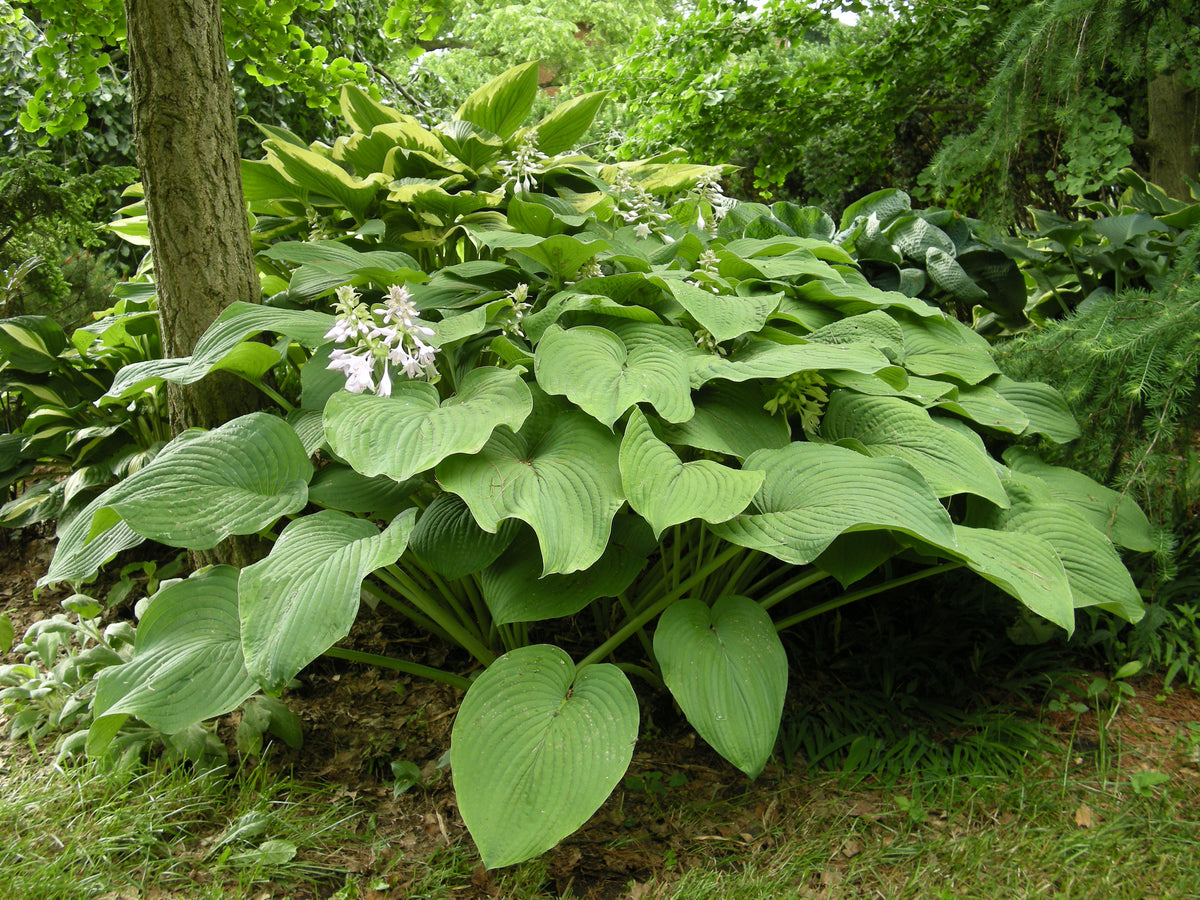
| Back | Big Daddy, giant, thick blue leaves | 1–2 |
| Middle | Halcyon, medium, blue, Hosta of the Year 2026 | 3 |
| Between | Japanese painted fern, grey and plum fronds | 3 |
| Front | Siberian bugloss 'Jack Frost', silver leaves | 3–5 |
| Spring | Snowdrops among the hostas | a handful |
Thick blue leaves also suffer less from slugs, which helps in a damp, shady bed. More blue varieties are among our blue hostas.

Plan 2: light for a dark corner
White edges brighten shade and stay visible at dusk.
| Position | Plant | Number |
|---|---|---|
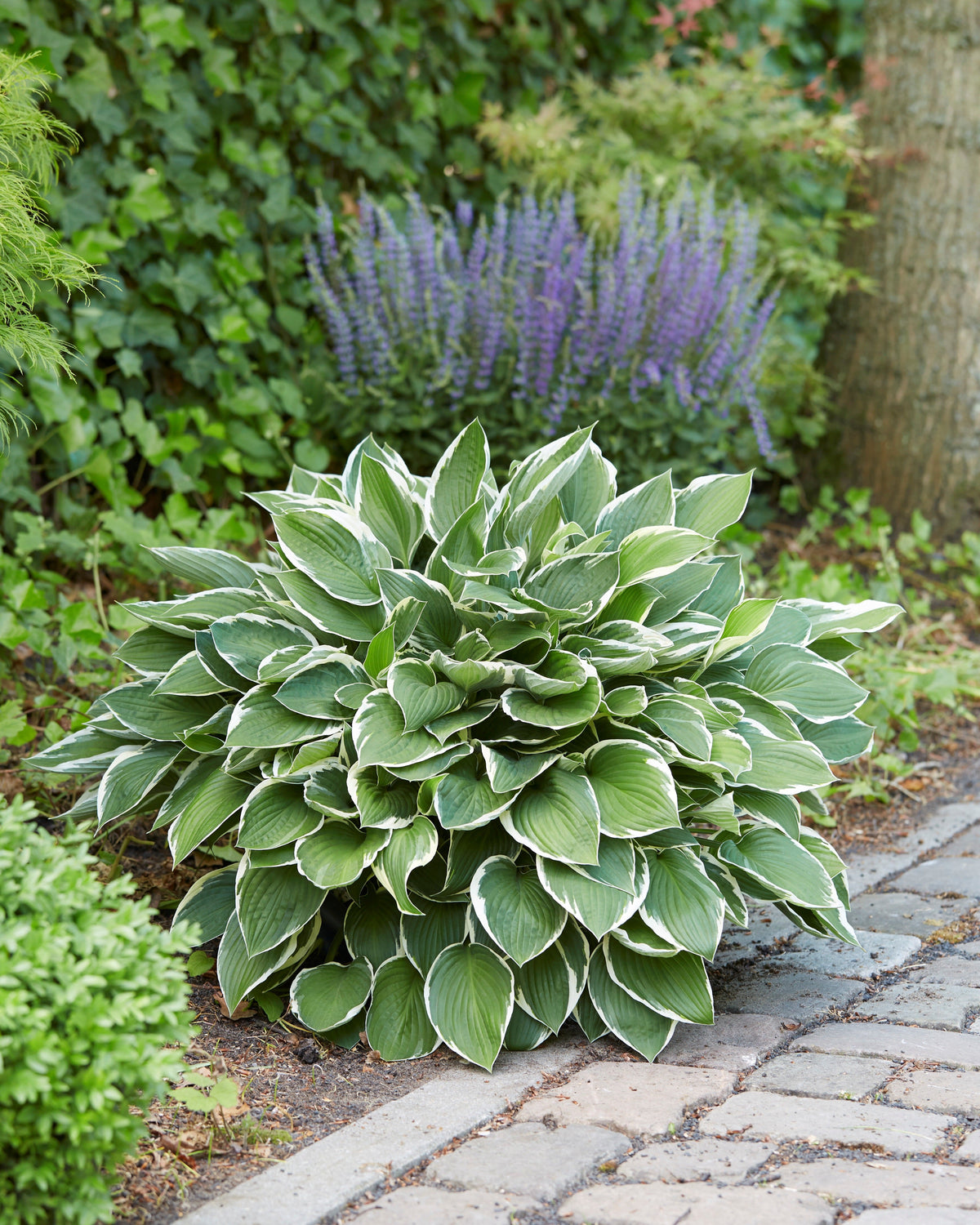
| Back | Robert Frost, large, blue-green with a white edge | 1–2 |
| Middle | Patriot, medium, broad white margin | 3 |
| Middle | White astilbe in moist soil | 3 |
| Front | Minuteman, compact, white-edged | 3–5 |
| Spring | White daffodils or snowdrops | a handful |
Keep white-edged rather than white-centred varieties for a first border: white edges are as easy to grow as plain green. See our white and cream hostas.
Plan 3: gold and green under a deciduous tree
For dappled shade with some morning sun, where gold hostas colour best.
| Position | Plant | Number |
|---|---|---|
| Back | Sum and Substance, giant, yellow | 1 |
| Middle | Devon Green, medium, glossy dark green | 3 |
| Between | Copper shield fern | 3 |
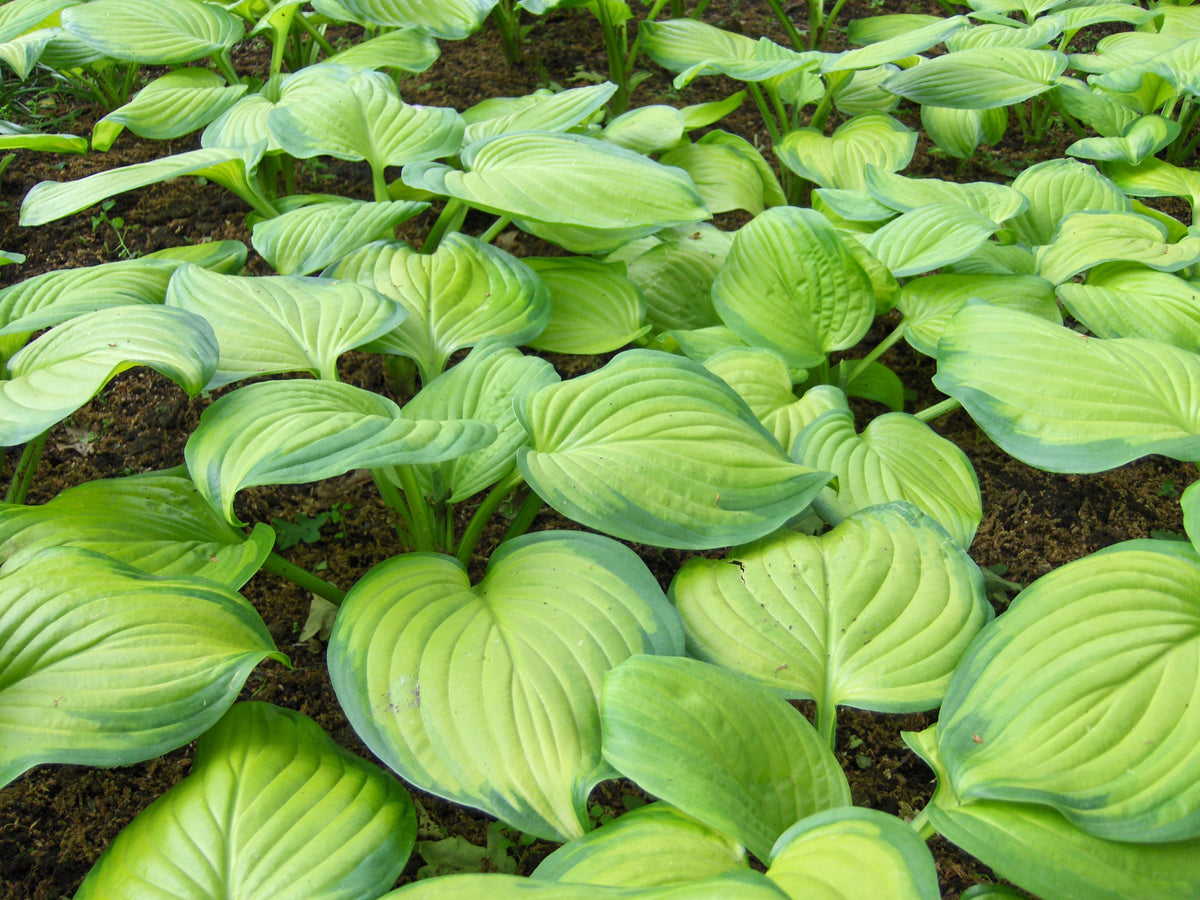
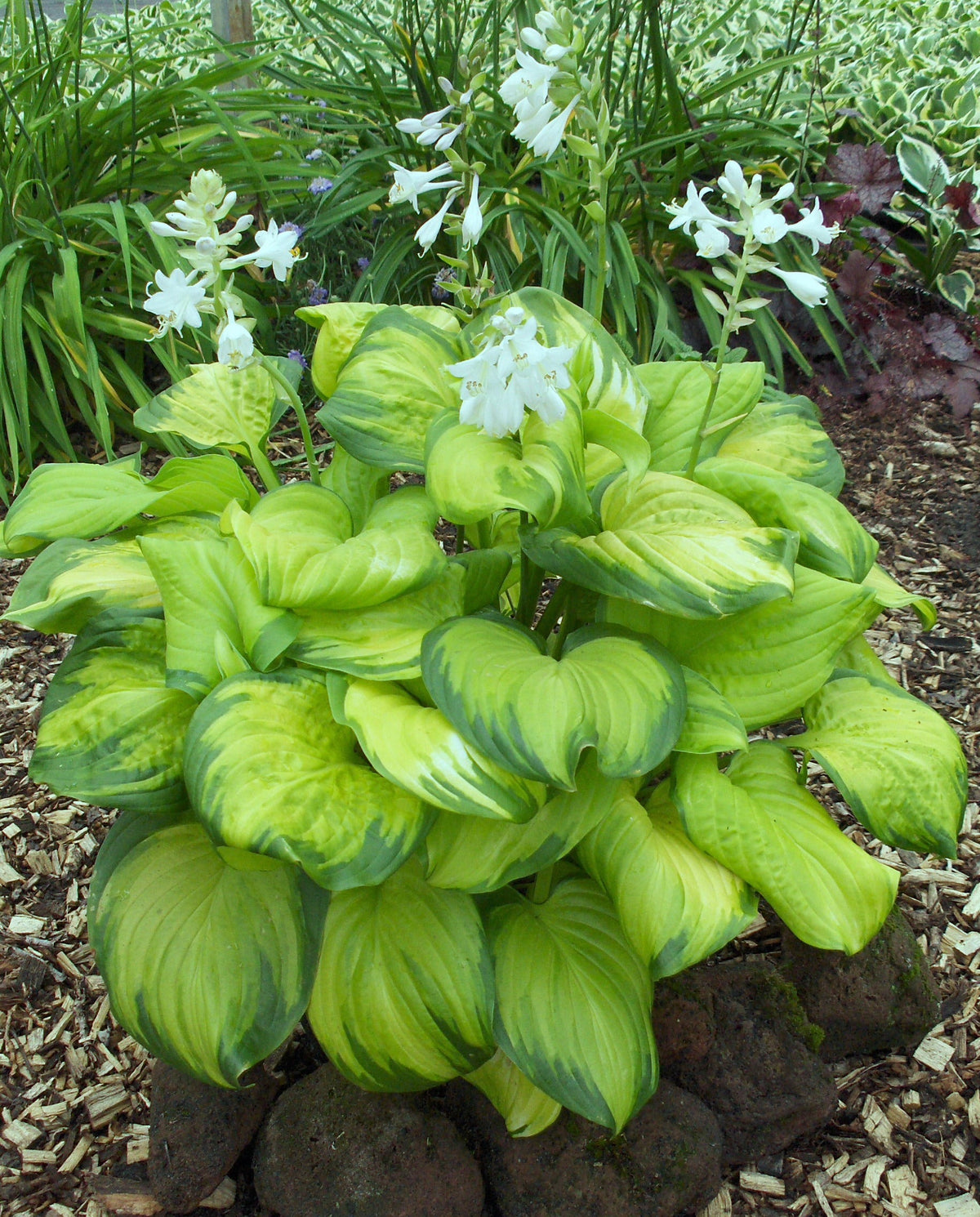
| Front | Golden Tiara, small, gold edge | 3–5 |
| Edge | Barrenwort (Epimedium) for the driest spots | 3 |
Under trees the soil dries out quickly, so water this bed deeply in its first summer; our guide to hostas under trees explains how.

Plan 4: a small border by the house
For a narrow, shady bed of about a metre deep, along a north wall or a path.
| Position | Plant | Number |
|---|---|---|
| Back | Guacamole, medium to large, fragrant flowers | 2 |
| Middle | Stained Glass, medium, yellow centre | 2–3 |
| Front | Mini Skirt and Blue Mouse Ears, miniatures | 3 each |
| Between | Foam flower (Tiarella), creamy spikes | 3 |
Fragrant varieties belong close to a door or a path, where the scent is noticed. More are in our fragrant hostas.

Spacing and planting
Set out the hostas first at their full spacing: about 30 cm for small varieties, 50 cm for medium ones and 75–100 cm for large and giant ones. Then fit the partners into the gaps. Dig compost into the whole bed before planting, plant the crowns at soil level and mulch afterwards; our planting and care guide has the details. Hostas need three to five years to reach full size, so fill the gaps meanwhile with bulbs or a few ferns rather than fast spreaders.
For more partners see what to plant with hostas and hostas and ferns; to cover larger areas, our guide to hostas as ground cover.
Common mistakes
- Buying one of everything, so that the border looks restless.
- Putting a giant at the front, where it hides everything behind it.
- Planting too close together for an instant look, then having to move plants after three years.
- Choosing moisture-loving partners for dry shade under trees.
In short
- Plant in layers: giants at the back, miniatures at the front.
- Repeat a few varieties in groups of three or five.
- Contrast broad hosta leaves with fine-leaved partners.
- Match the plan to your shade: blue for deep shade, gold where there is morning sun.
Questions & answers
How many hostas do I need for a border?
It depends on the size of the bed and the varieties. As a guide, plan one giant per metre at the back, a medium hosta every 50 cm in the middle and a small one every 30 cm at the front.
How deep should a shade border be?
A metre is enough for small and medium hostas with a few partners. With giants at the back, allow 1.5–2 metres so that the front plants are not swamped.
What flowers in a shade border before hostas come up?
Spring bulbs such as snowdrops and small daffodils flower before hostas wake, and the hosta leaves later hide the fading bulb foliage.
Can I mix hostas of different colours in one border?
Yes, as long as each has a clear contrast with its neighbour, such as blue beside gold or a white edge beside plain green. Repeat each variety a few times so the border looks planned.