Hostas and ferns: the best pairings for shade
Quick answer
Hostas and ferns are a natural pair: both like moist, humus-rich soil in partial or full shade, and the fine, divided fronds of a fern make the broad hosta leaf stand out. Choose ferns that suit your moisture, give each plant its full spacing and keep fast spreaders such as ostrich fern away from small hostas.
On this page
If you could plant only one partner for hostas, a fern would be the obvious choice. The two grow in the same places and look completely different, so each makes the other look better. Here is why the pairing works, which ferns to choose and how to put them together.
Why do hostas and ferns go so well together?
- The same conditions. Both grow best in partial or full shade, in soil that stays moist and is rich in organic matter.
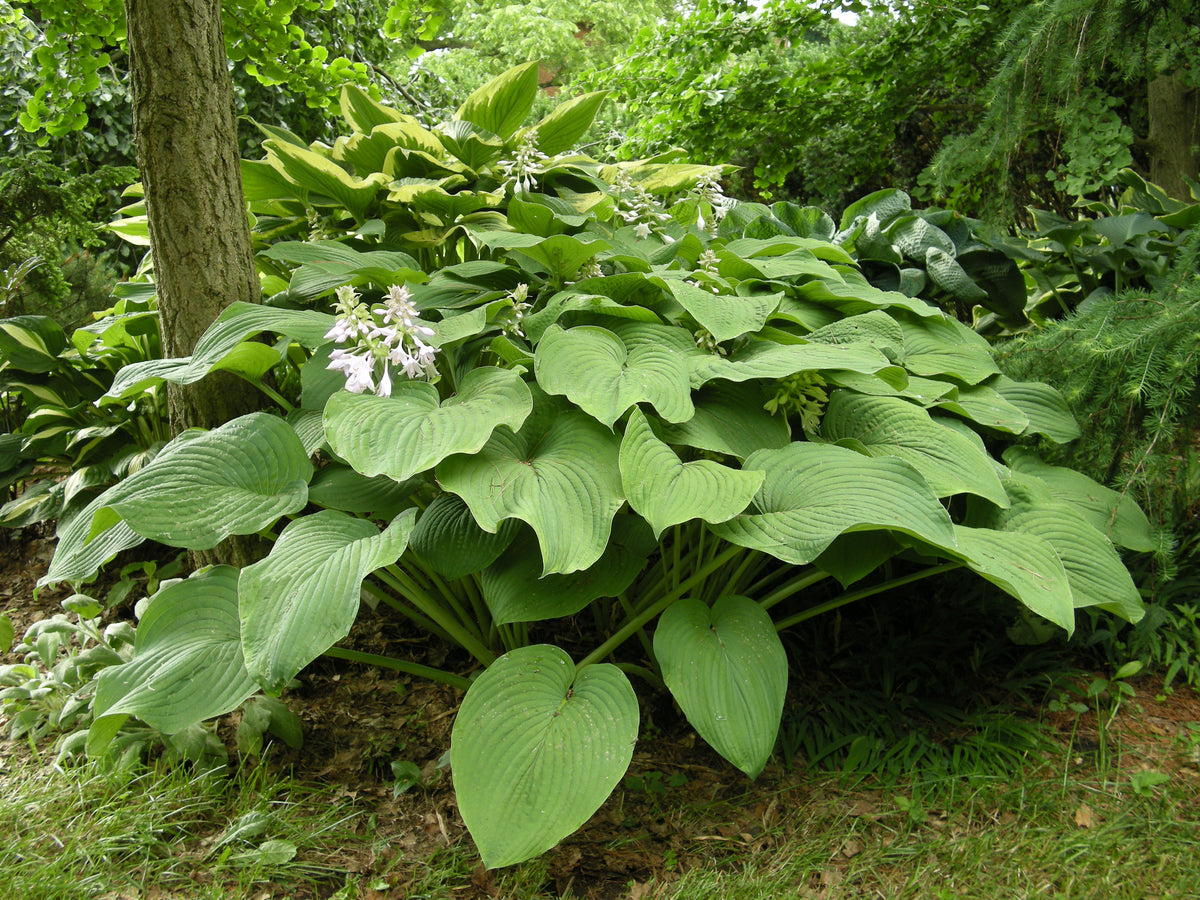
- Opposite textures. A hosta leaf is broad and solid; a fern frond is finely divided and airy. Iowa State University names ferns among the best partners for hostas for exactly this contrast.
- Different shapes. Hostas form low mounds, many ferns grow as upright shuttlecocks or arching fountains, which gives a shady bed height and movement.
Which ferns suit hostas best?
| Fern | Look | Good to know |
|---|---|---|
| Japanese painted fern (Athyrium niponicum var. pictum) | Grey fronds with a red-purple centre | Needs moist soil and a sheltered, shady spot; RHS hardiness H5 |
| Copper shield fern (Dryopteris erythrosora) | Young fronds often unfold coppery pink | The RHS says it tolerates dry shade once watered regularly in its first season; H4 |
| Male fern (Dryopteris filix-mas) | Upright green shuttlecocks | A tough European native for ordinary shady soil |
| Soft shield fern (Polystichum setiferum) | Soft, finely cut, evergreen fronds | Keeps its fronds in winter, when hostas are dormant |
| Hart's-tongue fern (Asplenium scolopendrium) | Glossy, strap-shaped evergreen leaves | A simple leaf, so pair it with puckered or patterned hostas |
| Ostrich fern (Matteuccia struthiopteris) | Tall, bright green shuttlecocks | Walters Gardens warns it spreads quickly by underground runners |
Evergreen ferns are especially useful next to hostas. In winter and early spring, when the hostas have disappeared underground, their fronds keep the bed from looking empty.
Pairings that work
Blue hostas with silver ferns
A blue hosta such as Halcyon or the giant Big Daddy beside a Japanese painted fern gives a cool scheme of blue, grey and plum. Both like the same sheltered, moist shade, where blue hostas keep their colour longest. See all our blue hostas.

White edges with dark green fronds
The crisp white margins of Patriot or Francee glow against the plain green of a male fern or soft shield fern. Plain fronds suit patterned hostas best, so that the leaf pattern stays the focus.
Gold hostas with copper ferns
A gold hosta such as Golden Tiara with the coppery young fronds of a copper shield fern makes a warm combination for a spot with a little morning sun, which gold hostas need to colour well.
Giants with tall ferns
A big plain hosta such as Kingsize or Blue Angel needs a partner of similar scale. Upright male ferns behind it, or a group of ostrich ferns in a corner of their own, keep the proportions right.

How to plant hostas and ferns together
- Prepare the soil once for both. Dig plenty of compost into the whole bed; our soil guide explains how.
- Place the hostas first at their full spacing: about 30 cm for small varieties, 50 cm for medium ones and 75–100 cm for large and giant ones.
- Put the ferns between and behind them, allowing for the fern's own spread.
- Group in odd numbers. Three ferns of one kind look calmer than one each of three kinds.
- Mulch and water. A layer of leaf mould or compost suits both plants; keep the soil moist through the first summer.
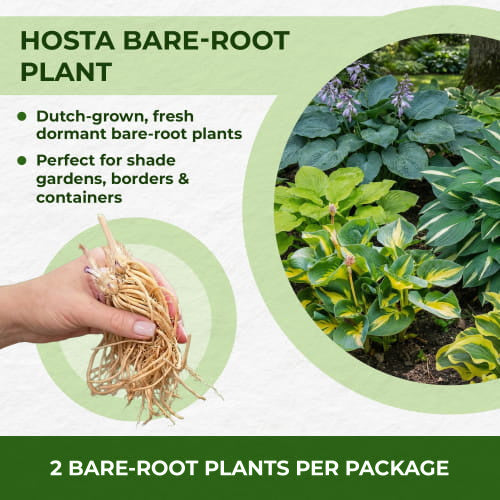
Hostas travel from us as bare-root divisions in spring, which is also a good time to plant ferns. For more partners, from astilbe to Solomon's seal, see our guide to what to plant with hostas, and for a whole bed, our shade border ideas.
Common mistakes
- Letting ostrich fern loose among small hostas, where its runners take over.
- Planting moisture-loving ferns such as Japanese painted fern in dry shade under trees.
- Combining a patterned hosta with a patterned fern, so that neither stands out.
- Planting ferns too close to young hostas, which then have no room to reach full size.
In short
- Hostas and ferns want the same moist, humus-rich shade.
- Set broad hosta leaves against finely divided fronds.
- Choose evergreen ferns for winter interest while hostas rest.
- Give hostas their full spacing and keep spreading ferns in their own corner.
Questions & answers
Do ferns compete with hostas?
Not if both get their spacing. Clump-forming ferns stay put; only running ferns such as ostrich fern spread into their neighbours, so give those a corner of their own.
Which fern stays green in winter?
Evergreen ferns such as soft shield fern and hart's-tongue fern keep their fronds through winter, which fills the gap while hostas are dormant.
Can hostas and ferns grow in dry shade?
Only with help. Copper shield fern copes with dry shade once established, and thick-leaved hostas manage best, but both need regular watering in their first season. See our guide to hostas under trees.
When should I plant hostas and ferns?
Spring suits both. Our hostas ship as bare-root divisions from 1 March to 1 July, so you can plant the whole bed at once.