Hostas under trees: how to grow them in dry shade
Quick answer
Yes, hostas can grow under trees, but the soil there is dry as well as shady, so plan for water. Choose thick-leaved or plain green varieties, plant small divisions in pockets between the roots without piling soil over them, mulch well and water deeply whenever it is dry, all through the first growing season.
On this page
The shade beneath a tree looks made for hostas, yet many of them struggle there. The trouble is rarely the shade itself: it is the dry, root-filled soil that comes with it. With the right varieties and some extra care in the first season, hostas can do very well under trees.
Why is the ground under trees so difficult?
Because the tree gets to the water first. Its roots fill the top layer of soil and compete with anything planted among them, and Iowa State University notes that beds under trees dry out sooner for exactly this reason. The canopy adds to it: the RHS points out that plants under a dense crown can go short of water, nutrients and light all at once, and that the soil under conifers is usually dry.
The light changes from tree to tree as well. The RHS describes dappled shade as light filtered through a fairly open canopy all day, and deep shade as less than two hours of direct sun. Hostas grow in both, but the deeper and drier the spot, the more the choice of variety and the watering matter. Our guide to sun or shade for hostas explains how light affects leaf colour.
Can hostas really grow under trees?
Yes, and several extension services name them as good candidates. Nebraska Extension lists hosta alongside astilbe as a sound choice for planting under trees, and University of Missouri Extension goes further, saying hosta roots compete well with those of most tree species. The RHS is more cautious: it calls hostas not really suited to dry soils and points gardeners towards thicker, waxier-leaved types where the ground is drier.
| Source | What it says | What it means for you |
|---|---|---|
| RHS | hostas dislike dry soil; thicker-leaved types cope better | choose the variety with care |
| Iowa State University | beds under trees dry out sooner | water more often than elsewhere |
| University of Missouri Extension | hosta roots compete well with tree roots | once settled, hostas hold their own |
| Nebraska Extension | hosta is a good choice under trees | plant small and add no soil |
Taken together, the message is consistent: hostas can thrive under trees once established, but they need help to get there.
Which hostas cope best with dry shade?
Look for leaves that are thick, waxy or puckered, and for plain green or blue colouring.
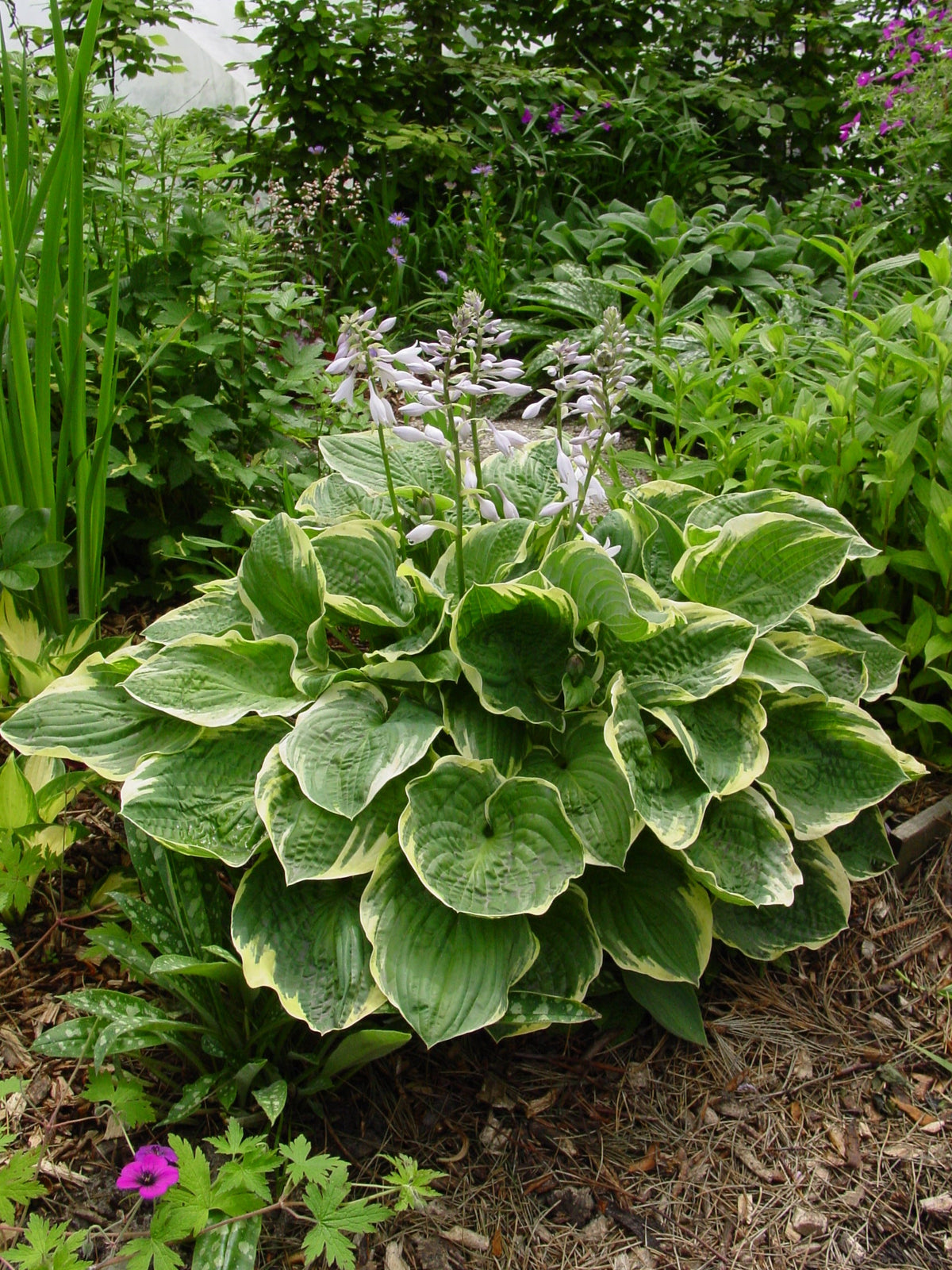
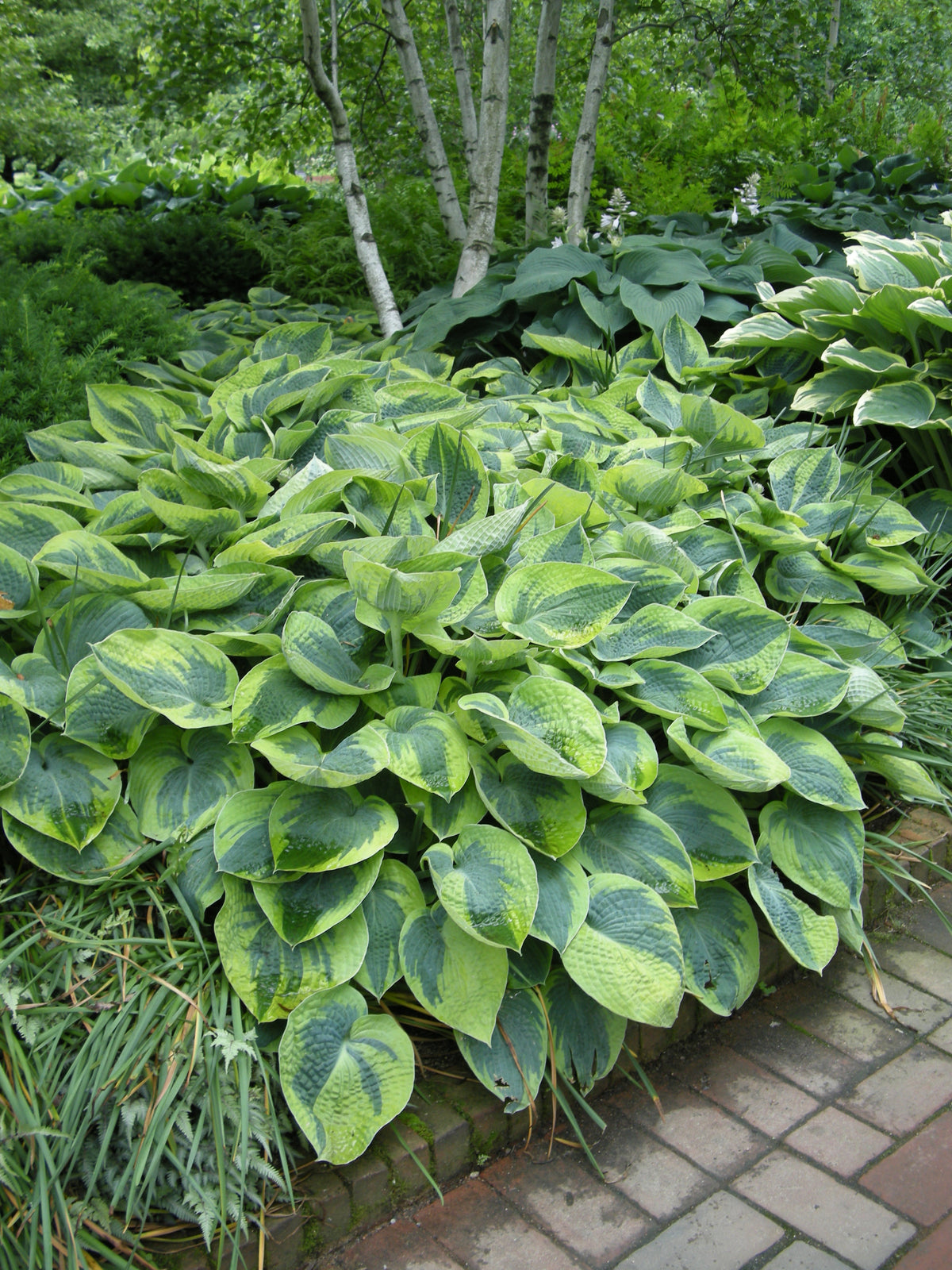
- Thick leaves. The RHS recommends thicker, waxier-leaved hostas for drier soils, and notes that firm leaves are also eaten less by slugs. Tokudama Flavocircinalis, a medium hosta with thick, puckered blue leaves edged in yellow, and the giant Big Daddy, with thick, puckered blue leaves, are good examples, and Christmas Tree has the same quilted texture in dark green with a yellow edge. Our slug-resistant hostas are a good place to look, because thick leaves are what helps them resist slugs too.
- Plain green leaves. Nebraska Extension points out that the more white or cream a hosta carries in its leaves, the weaker it grows, so plain green varieties are better equipped for a hard spot. Devon Green, glossy, dark green and medium-sized, is the variety the RHS itself names as less eaten by slugs. For a big space there is the green giant Kingsize, shown at the foot of a tree below; our green hostas include many more.
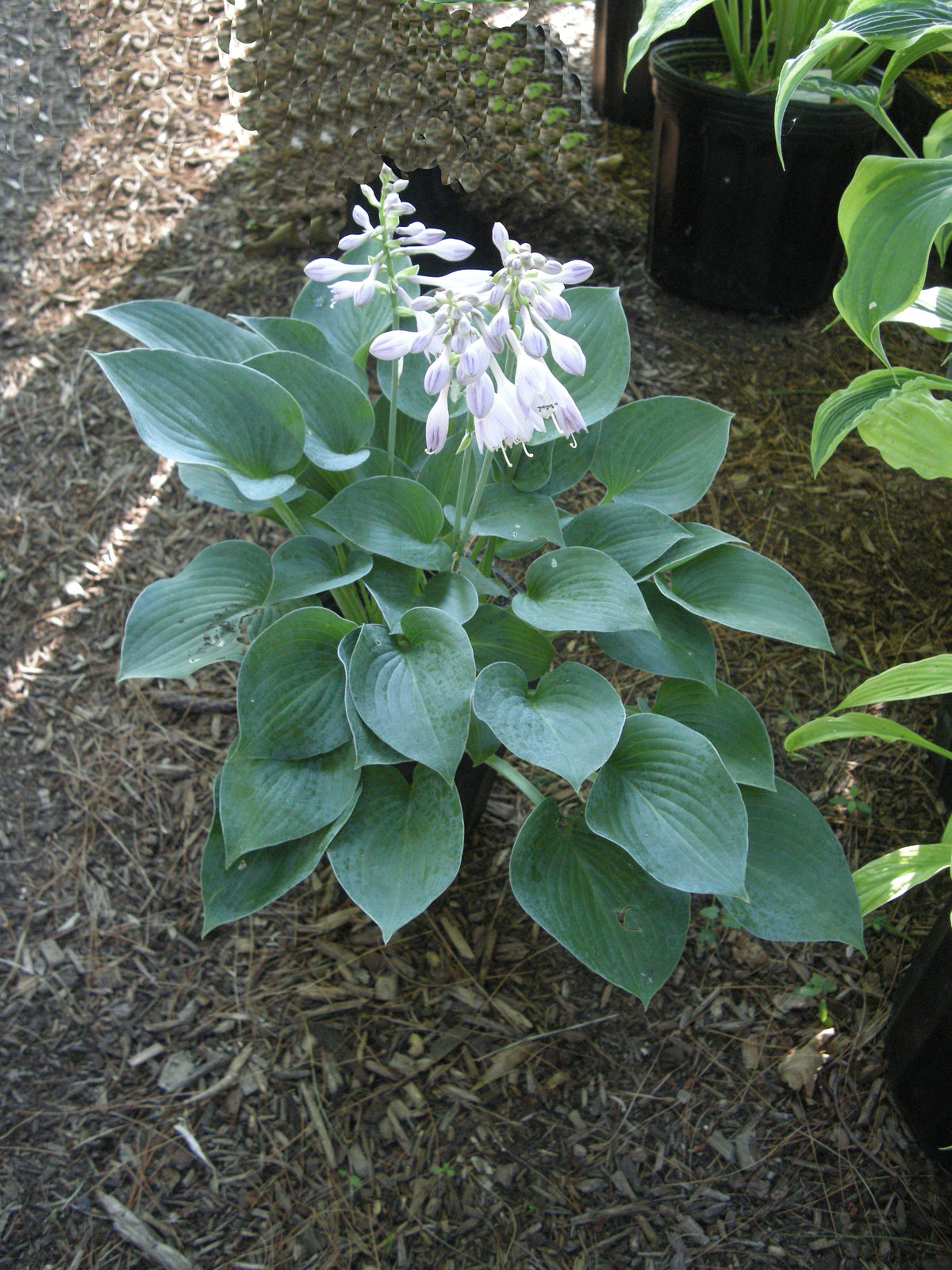
- Blue for the darkest corners. Iowa State says blue hostas need heavy shade to keep their colour, which suits them to the deep shade of a dense canopy, as long as you keep up the watering. See our blue hostas.
- White centres for moist beds only. Heavily variegated varieties grow more slowly and feel drought sooner, says the Hosta Helper website, which the American Hosta Society sponsors; keep them out of the driest places.
- Some sun at the edge. Where the edge of the canopy gets a few hours of sun, choose from our sun-tolerant hostas and water them even more generously.

Where exactly to plant under a tree
- Under deciduous trees rather than conifers. The RHS calls it very difficult to establish plants under conifers, where the soil is usually dry and an evergreen canopy shades the ground all year.
- Not right against the trunk. Keep a little distance from the trunk itself, because that is where the tree roots take the most water.
- On the rainy side. The RHS observes that plants often do better on the south-west side of a tree, where rain is more often driven in under the canopy.
- Within reach of the hose. The plant you cannot easily water is the one that dries out first.
Give each hosta the room it would get in an open border, half a metre or so for a medium variety and 75–100 cm for a giant, even if the ground looks bare at first. Plants packed closely together only add to the competition for water, and a hosta under a tree has enough of that already.
How to plant hostas among tree roots
Small plants make it much easier. Nebraska Extension advises buying small plants so that the holes can stay small, and a bare-root division, just a crown, its buds and a bundle of roots, is about as small as a hosta gets.
- Find the gaps. Probe gently with a trowel and dig where it goes in easily, in the open spaces between the tree's roots. If you hit a thick root, move over a little and try again rather than cutting through it.
- Make a pocket. Open a hole a little wider than the roots of the division and blend some well-rotted compost into the soil from it, as the RHS suggests for any planting under trees.
- Soak and plant. Soak the roots for 1–2 hours, then plant the division with its crown at soil level or a touch below, roots spread out.
- Keep the ground level. Do not pile extra soil or build a raised bed over the tree's roots. Nebraska Extension warns that even a thin layer of added soil can harm a tree, and that the decline may only show two to five years later.
- Water in and mulch. Water the pocket thoroughly, then spread 5–10 cm of organic mulch, the depth Nebraska Extension recommends.
Our planting and care guide covers crown depth and spacing, and our guide to soil for hostas explains how to improve poor ground.

Watering and mulching through the first seasons
This is where most hostas under trees succeed or fail. The RHS advises watering plants under trees in dry spells for at least their first full growing season. Nebraska Extension recommends deep, infrequent watering: about 2.5 cm of water a week while the plants establish, then every two weeks. For a hot summer, University of Missouri Extension puts a hosta's needs a little higher, at about 4 cm a week, and suggests watering early in the morning so that the leaves dry quickly.
- Water deeply. In practice, 2.5–4 cm of water means 25–40 litres for every square metre. A quick sprinkle only wets the surface, whereas the RHS wants hosta soil moist to a depth of at least 15 cm.
- Check under the canopy. A leafy crown keeps much of the summer rain off the ground, so the soil beneath a tree can be dry after a wet week. Push a trowel into the soil before you decide.
- Mulch every spring. The RHS recommends deep mulching each spring under trees; leaf mould, garden compost and shredded bark all help the soil hold water.
- Keep an eye on dry summers. Iowa State expects beds under trees to need watering more often, so even settled hostas there are worth a deep soak in a long dry spell.
For hostas elsewhere in the garden, our guide to watering hostas covers timing and amounts.

Good partners for hostas in dry shade
A few other plants share this difficult spot well:
- barrenwort (Epimedium), one of the rare plants that Walters Gardens says will survive dry shade;
- copper shield fern, which the RHS says tolerates dry shade if it is watered regularly in its first season;
- hardy cyclamen (Cyclamen hederifolium) and stinking iris (Iris foetidissima), both among the RHS's top picks for planting under trees;
- bugle (Ajuga reptans), an evergreen ground cover that Walters Gardens suggests for shade under large trees.
More combinations are in our guide to what to plant with hostas.

Common mistakes
- Piling new topsoil or building a raised bed over the tree's roots.
- Planting right against the trunk, where the tree takes the most water.
- Watering little and often instead of deeply.
- Stopping the watering after a wet spring, before the plants have had a full season.
- Choosing thin-leaved or white-centred varieties for the driest spot.
- Trying to establish hostas under dense conifers.
In short
- Pick thick-leaved, plain green or blue varieties for the spot.
- Plant small divisions in pockets between the roots, away from the trunk, without adding soil on top.
- Mix compost into each hole and mulch again every spring.
- Water deeply, about 25–40 litres per square metre a week in dry weather, through the first full season.
- Check the soil under the canopy before you trust the rain.
Questions & answers
Do hostas harm the tree they grow under?
Not according to the sources we checked. The risk to the tree comes from the gardener: Nebraska Extension warns that piling soil over the roots reduces the air they get and can harm a tree years later, and it advises digging small holes between the roots rather than through them.
Can I grow hostas under conifers?
It is hard. The RHS calls it very difficult to establish plants under conifers, because the soil is usually dry and the shade lasts all year. If you want hostas there, grow them in large pots where you control the water.
Can I plant hostas under trees in autumn?
The RHS favours autumn planting under trees, because plants can settle before the leaves come out in spring. We ship hostas only in spring, from 1 March to 1 July, so plant them as soon as they arrive and water them through the whole first growing season, which the RHS asks for anyway.
Is there enough light for hostas under a dense tree?
Usually, as long as some light gets through. Plain green hostas manage with the least light, and blue ones keep their colour best in heavy shade. Iowa State says yellow and gold varieties need roughly four to six hours of sun for their best colour, so in deep shade they look paler.