


Pre-Ordering Hostas: How It Works, When We Ship and What to Expect
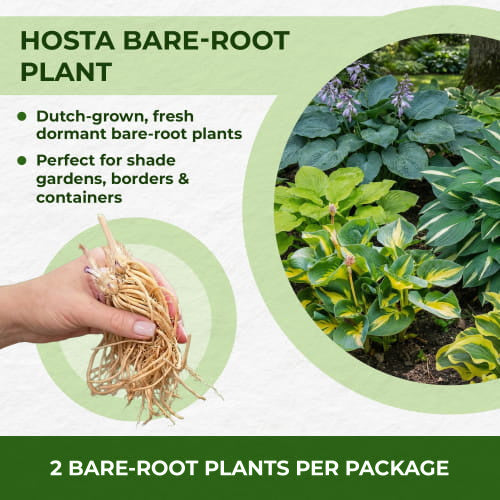
Order and pay now, and your bare-root hostas ship from 1 March. Here is how pre-ordering works and what to expect when your plants arrive.
3 min read

White and cream hostas bring the brightest colour a shady garden can have.
White & cream hostas
A white edge outlines each leaf like a pencil line, a white centre glows from the middle of the clump, and a few varieties, such as White Feather, unfold almost entirely white in spring. At dusk, when other colours fade, these leaves are the last to disappear.
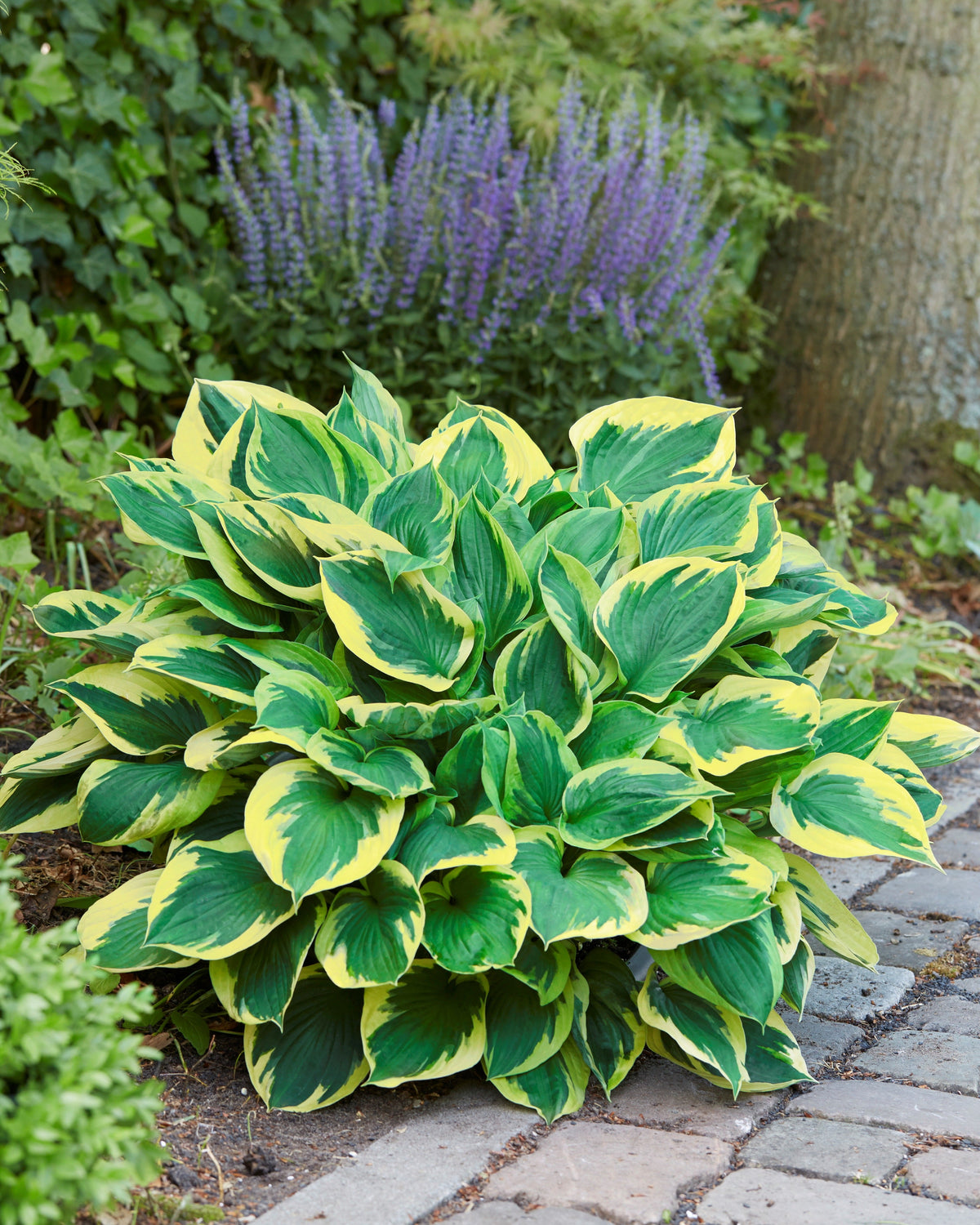
Cream is the softer version: warmer, closer to ivory, and often the colour that a yellow margin turns into as summer goes on. This collection holds both, from the crisp white-edged Diamond Tiara to the cream-centred Whirlwind. Many well-known hostas belong here, from Patriot to Fire and Ice, and some add fragrant flowers, such as Fragrant Bouquet with its cream edge.
Most of them prefer shade or light shade, out of hot afternoon sun, and white-edged varieties are as easy to grow as plain green ones. Every pack contains 2 plants of the same variety and comes with our 100% growing guarantee. We ship from 1 March to 1 July.
The easiest to grow. White-edged hostas have plenty of green to feed the plant and are as vigorous as plain varieties. Undulata Albomarginata even copes with some sun, and Let's Twist Again, a twisted sport of Patriot, adds movement to the leaf.
The showiest, and a little more demanding. Kiwi Spearmint and its wavy sport Twisted Spearmint, the larger Night Before Christmas and the compact Loyalist all frame a white centre with green. Give them shade, shelter and steady moisture.
White Feather, its bigger relative White Feather XXL and Zebra Stripes, with greenish veins, open their leaves white or almost white. They are the most unusual hostas in this collection.
A leaf that comes up white has hardly any chlorophyll at first. In White Feather the green develops as the season goes on, so the plant turns from white to green by summer and can feed itself. Silver Feather and Lemon Feathers, new in our range, also emerge white. Give these hostas rich soil, steady moisture and a sheltered spot, and do not worry when the white fades: that is how the plant keeps going.
White tissue burns before green does. Plant white-centred and all-white hostas in light shade, with morning sun at most; white edges cope with a little more. Brown, papery patches in the white parts mean the plant is getting too much sun or too little water.
White edges are at their crispest in late spring, just after the leaves unfold. Some soften to cream as summer goes on, and white centres may take on a faint green tint in deep shade. By autumn the white parts often look a little papery; that is the natural end of the season, not a sign of disease, and next spring the new leaves come up fresh.
Cream margins look warmer than white and blend more easily with yellow and gold plants. Many start pale yellow in spring and settle to cream by midsummer. Queen Josephine and the large Moerheim have cream edges, while Little Treasure puts cream in the centre of a small leaf.
For the front of a bed or a pot, choose a compact variety such as Loyalist, Diamond Tiara, Zebra Stripes or Little Treasure. Kiwi Spearmint, Let's Twist Again and Undulata Albomarginata fill the middle of a border, while Night Before Christmas, Spring Morning and Moerheim grow larger. The biggest white-edged hosta here is the giant Regal Splendor, with silvery blue leaves.
White needs a dark partner to shine. Next to a blue hosta it looks cool and elegant; next to dark green leaves or ferns it looks crisp. Keep white-centred varieties a little apart from one another, so that each clump keeps its glow, and use plain green hostas or blue hostas as the frame.
Mostly, yes. White-centred and all-white hostas do best in light shade with morning sun at most, while white-edged ones cope with a little more light. Undulata Albomarginata, Whirlwind and White Feather XXL are among the few that take some sun, as long as the soil stays moist.
If it is an all-white variety such as White Feather, that is normal: its leaves are meant to green up over the summer. In a white-centred hosta, a plain green shoot is a reversion; remove it with its own roots as soon as you see it in spring, so it does not take over.
Yes. Royal Standard and Plantaginea Grandiflora have large, fragrant white flowers in late summer, and Blue Angel and Stained Glass flower near-white. Most other hostas flower in shades of lavender. The scented ones are in our fragrant hostas.
Order and pay now, and your bare-root hostas ship from 1 March. Here is how pre-ordering works and what to expect when your plants arrive.
3 min read
Bare-root or potted hostas? An honest comparison of price, choice, timing and how well each grows, so you can pick the right one for your garden.
4 min read
Problems & pests
Crisp brown edges on hosta leaves are usually scorch: the leaf loses water faster than the roots can supply it, because of dry soil, hot afternoon sun, wind or competing roots. Check the soil moisture and the light first. If the brown streaks stop at the veins, or the stems collapse at the base, look for foliar nematodes or crown rot instead.
4 min read