No hosta is completely slug-proof, especially young shoots in spring. Combine these varieties with simple measures, such as removing hiding places and protecting new shoots, for the best result.
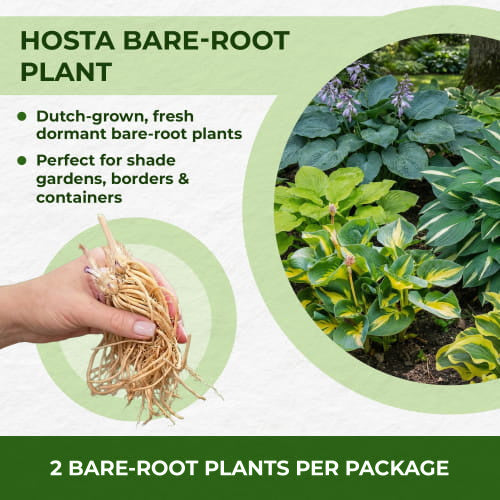
Every pack contains 2 plants of the same variety and comes with our 100% growing guarantee.
What makes a hosta slug-resistant
Slugs and snails feed by rasping away the leaf surface, so they start with soft, thin leaves. Three qualities slow them down:
- Substance. Hosta growers use this word for leaf thickness. A leaf with heavy substance feels stiff, almost leathery, and slugs make slow progress on it.
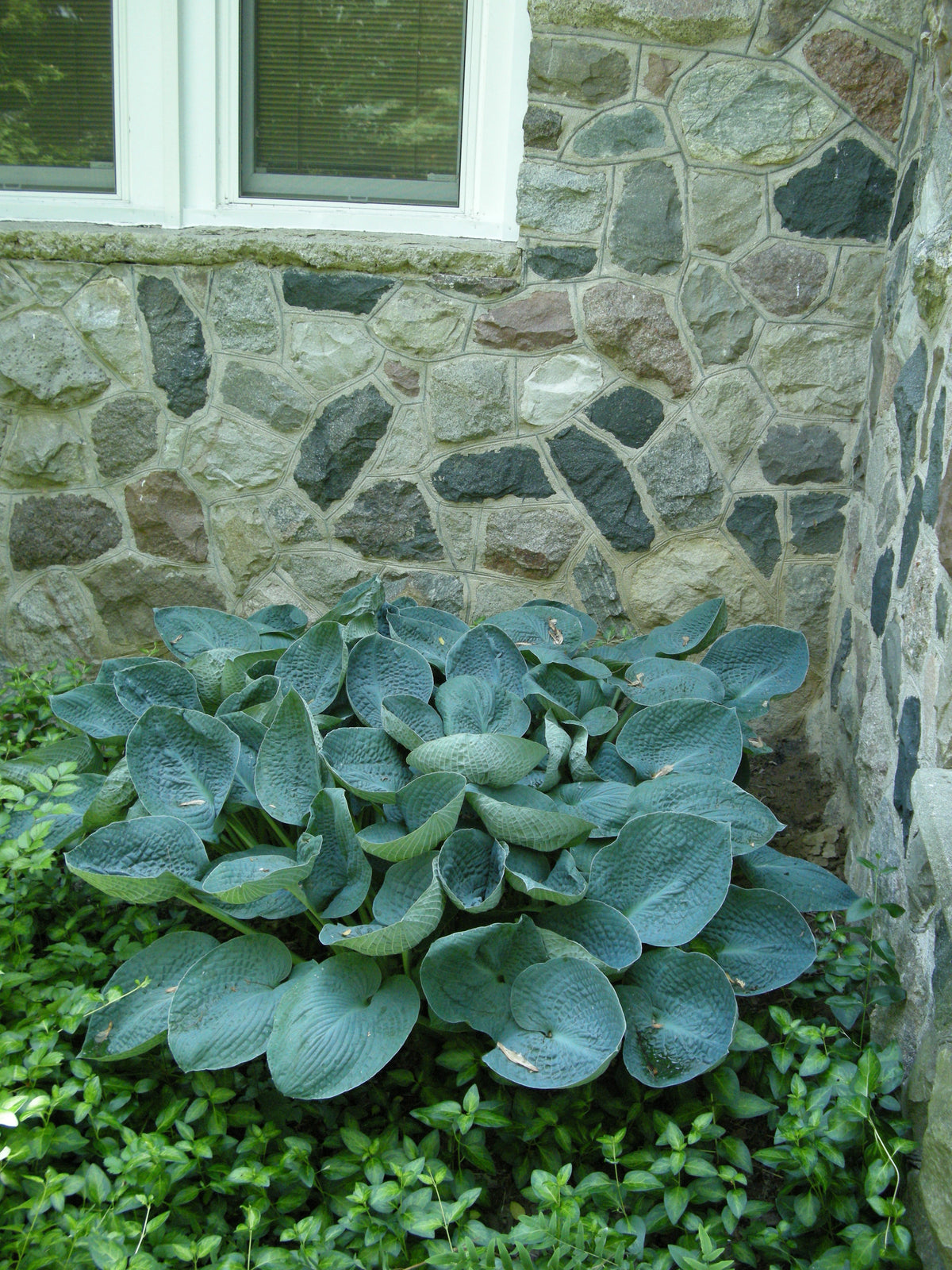
- Wax. The powdery coating that makes a leaf look blue also makes it harder to graze.
- Texture. Puckered, quilted leaves usually come with heavy substance as well.
That is why so many slug-resistant hostas are blue. They descend from Hosta sieboldiana and Hosta tokudama, or from the Tardiana group bred in Britain, which gave gardens Halcyon and Hadspen Blue.
Choosing a slug-resistant hosta
Blue and blue-green
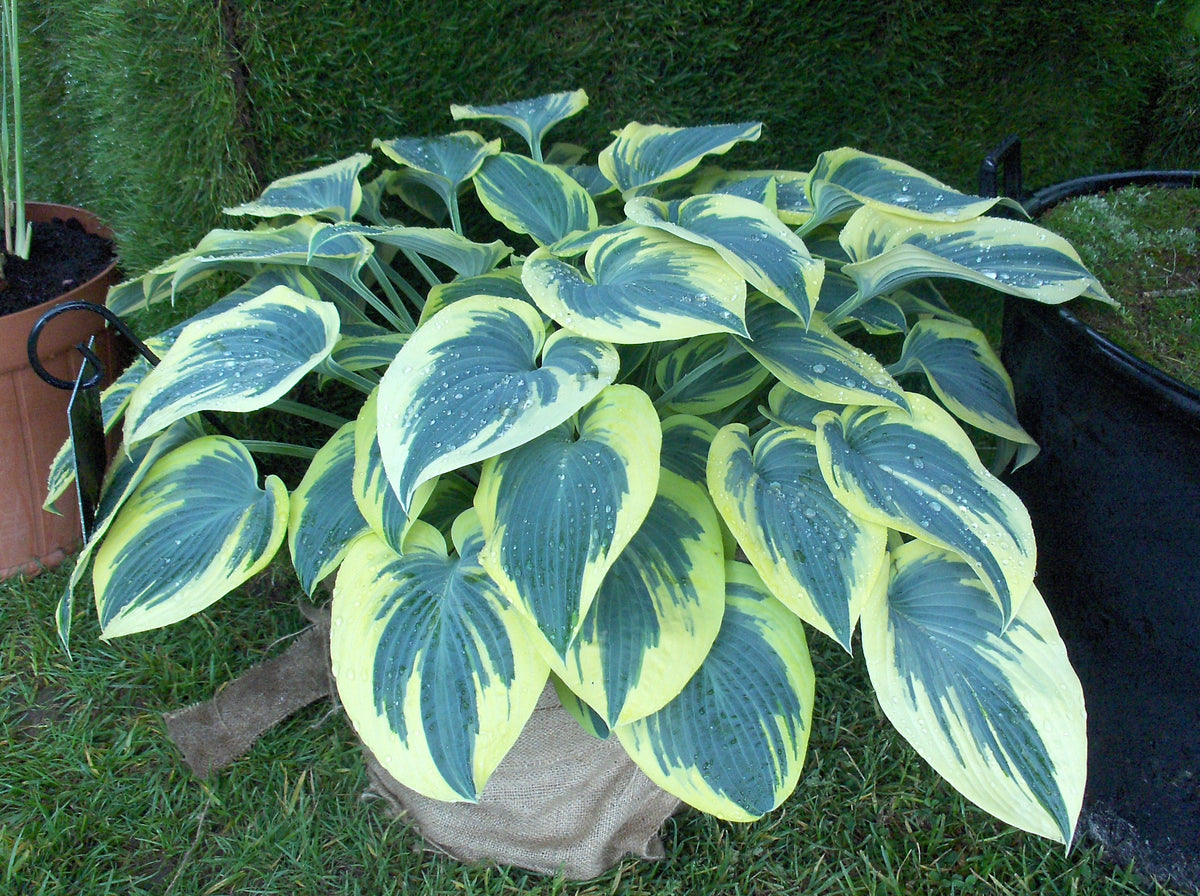
The biggest group, from compact to large. Bullet Proof is a medium-sized blue, Hadspen Blue stays small enough for edging, and Big Daddy brings heavily puckered leaves to the back of a border. For a lighter look, Blue Ivory adds a white edge and Autumn Frost a cream-yellow one.
Green and gold
Thick leaves are not only a blue trait. Devon Green has glossy dark green leaves, and Sunny Halcyon is a yellow sport of Halcyon with the same firm leaves. Gold-centred Smash Hit and Sunset Grooves combine resistance with bright colour.
From small to giant
Among the small varieties, Ayesha joins Blue Mouse Ears. At the other end, Liberty and Victory, both Hosta of the Year winners, are giants with thick leaves. Find more big varieties in our large and giant hostas.
Where they make the biggest difference
Slugs thrive where it is damp and mild: near lawns, hedges and water, in beds edged with stone or timber, and in regions with wet winters, from Ireland to the Netherlands. In gardens like these, a slug-resistant variety can mean the difference between leaves that stay smooth until autumn and leaves full of holes by midsummer. They are also the best choice for shady corners you cannot check every evening.
A bed that slugs leave alone
If slugs rule your garden, plant a whole bed with resistant varieties rather than a single one. Mix a blue such as Bullet Proof, a glossy green such as Devon Green and a gold such as Sunny Halcyon: three colours of a similar size, all with tough leaves. Add Big Daddy or Liberty at the back for height and a band of Blue Mouse Ears along the front.
Getting the best from them
Slug resistance works best on established plants. Plant in spring, so the clump can build strong roots before its first winter, and keep it growing well: a vigorous hosta pushes its shoots up quickly and spends less time at the tender stage that slugs love. Feed with compost in spring rather than with a lot of fertiliser, which produces soft, lush growth.
Expect the resistance to grow with the plant. Young hostas have thinner leaves than mature clumps, and the leaves get thicker as the clump settles in, so the first season is the one to watch.